A synthetic fragrance may contain up to 3000 ingredients, none of which are required to be disclosed by the FDA. According to theCampaign for Safer Cosmetics, hair care products are especially problematic because 95% of them list “fragrance” as an ingredient, without revealing more about what makes them smell so good.
Synthetic fragrances are the most common type in beauty products and hair perfume simply because they are inexpensive, unlike the highly concentrated oils derived from botanical sources. For example, it can take over 10,000 hand-picked flowers to produce a single vial of essential oil, and that kind of loving labor doesn’t come cheaply.
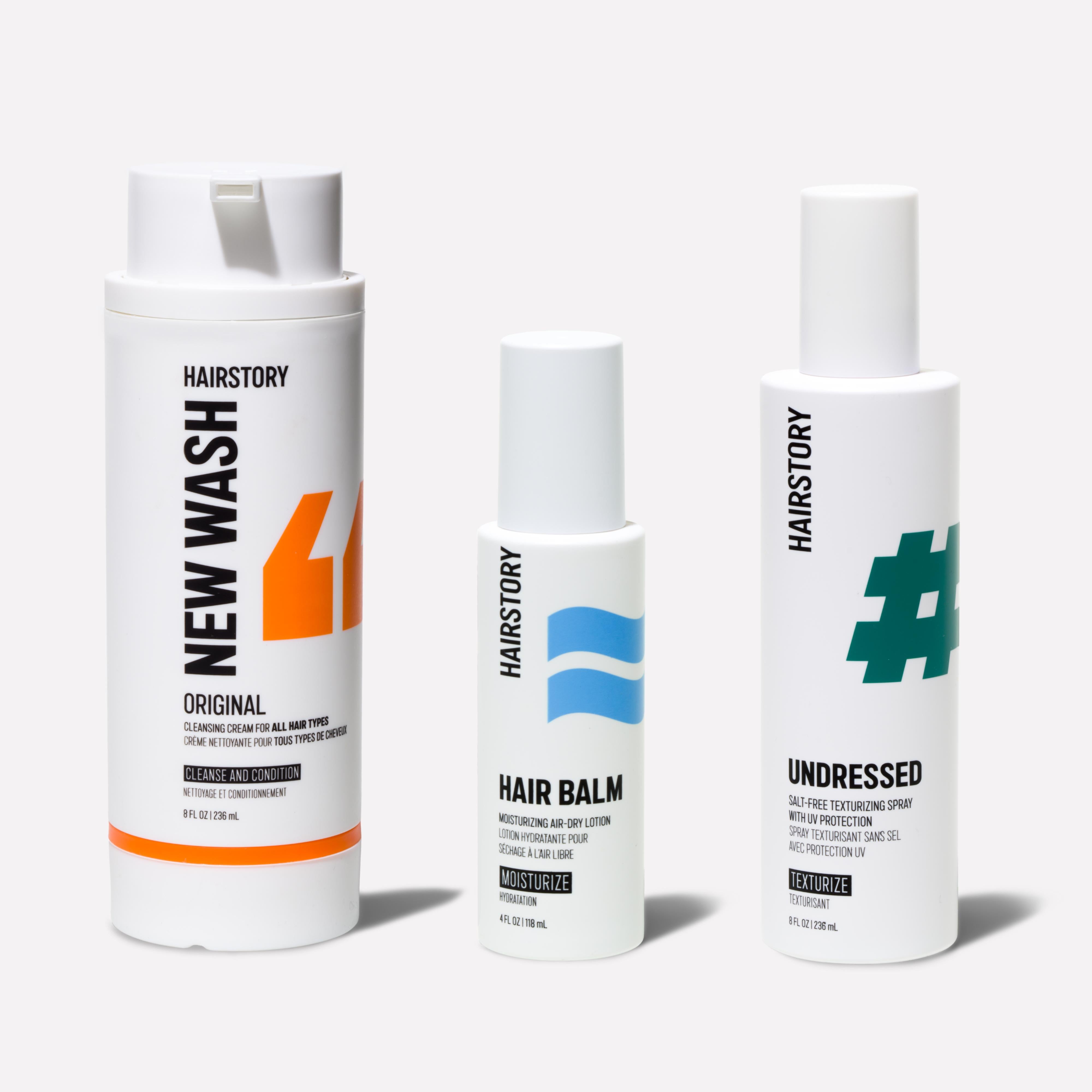
At Hairstory, we use 100% natural fragrances comprised of natural, essential oils in New Wash (our paraben-free shampoo alternative) and all of our products. We also make it a policy to go beyond the legal requirement and list those oils on our ingredient list.
WHAT IS A “NATURAL” FRAGRANCE?
Natural fragrances are made up of essential oils, absolutes, extracts, CO2s, and aromatic components isolated from essential oil. While natural fragrances are made in a laboratory, they are not made from synthetic materials. Read more about essential oils that are good for hair.
WHAT IS THE DIFFERENCE BETWEEN A “NATURAL” FRAGRANCE AND A “SYNTHETIC” FRAGRANCE?
A natural fragrance is made of ingredients limited to florals, botanicals, or musks, while synthetic scents can be made by blending chemically-composed material to create countless variations.
WHY ARE SYNTHETIC FRAGRANCES SO COMMON?
Your nose probably can’t tell the difference between a synthetic fragrance and one made from essential oils, so many companies can’t justify the expense when it comes to looking at the bottom line: the profit margin. Fragrance ingredients are also regarded as somewhat of a trade secret, and since the USFDA doesn’t require disclosure on product packaging, anything goes.
However, things are different in the EU, where product ingredients are generally considered guilty until proven innocent, and regulation is far more stringent than in the United States. Since fragrance is often the culprit when a user experiences an allergic reaction or skin irritation with a product, this helps discover which ingredient(s) may be the cause. Regulations in the EU are outpacing those in the US as more and more ingredients are tagged as problematic, and we have already taken note, with plans to comply.
HOW ARE FRAGRANCES COMPOSED?
Creating a balanced fragrance is as much an art as it is a science, and one must literally have a “nose” for it. Each scent is intended to be unique and usually consists of several layers that are revealed to the senses in stages according to how readily they evaporate.
The top notes are the first scents you smell, and first to dissipate, lasting from about five minutes up to two hours. The middle, or heart notes give the fragrance its character, arriving and fully developing within ten minutes and lingering for up to three hours. The base notes ground and balance the fragrance, emerging within 30 minutes and lasting for several hours or even days.
Here is a chart that illustrates the basic “structure” of a scent and the categories of its many notes:
IS FRAGRANCE BAD FOR HAIR?
The bottom line: While fragrance itself will not damage your hair, it can provoke allergic reactions. It’s important to read ingredient labels carefully, especially when it comes to fragrance. If the hair product doesn’t list its aromatic components, you have every right to beware and ask what they’re hiding. You also want to steer clear of phthalates – a group of harmful chemicals often hidden under the ingredients, listed as ‘fragrance.’ If you are one of those people with hair fragrance sensitivities, a sensitive scalp, or even sensitive skin, you also have the right to know. So speak up... and smell the posers.