Why Is My Hair Falling Out? Here's What's Normal Shedding—and What's Not
First things first: Hair sheds. That's biology.
The average person loses 50–100 hairs per day, according to the American Academy of Dermatology (AAD). With ~100,000 follicles on your scalp, that's way less dramatic than it feels when you see a tangle of strands in your hairbrush.
Hair grows in three phases:
- Anagen (growth phase): lasts 2–7 years
- Catagen (transition phase): ~2 weeks
- Telogen (resting/shedding phase): ~3 months
At any given time, 85–90% of your hair is in the growth phase while about 10–15% is in telogen according to NIH data. When more hairs shift into telogen at once, you'll notice increased shedding. This is called telogen effluvium—and it's one of the most common types of stress-related hair loss.
Red flags that go beyond "normal" shedding:
- Noticeably wider part
- Thinner ponytail circumference
- Increased scalp visibility
- Shedding that lasts longer than 3–6 months
If that's you, keep reading.
Why Is My Hair Falling Out? (The Big 3 Causes)
1. Stress (Yes, Really)
Physical or emotional stress can push a large percentage of hairs into telogen at once. Research shows that telogen effluvium can begin 2–3 months after a major stress event — illness, surgery, burnout, even rapid weight loss.
In fact, a 2022 review in Dermatology and Therapy confirmed stress-induced inflammation directly disrupts the hair growth cycle by elevating cortisol and inflammatory cytokines.
Hair is not "fragile." But your follicles are biologically responsive to what your body is processing.
The upside? Stress-related shedding is usually temporary. Once the trigger stabilizes, growth can resume within 3–6 months.
2. Hormonal Changes (Especially Estrogen + Androgens)
Hormones are powerful. When they fluctuate, hair feels it.
Common hormonal triggers:
- Postpartum estrogen drop
- Perimenopause and menopause
- Thyroid imbalance
- Starting or stopping hormonal birth control
- Polycystic ovary syndrome (PCOS)
Female pattern hair loss (known as androgenetic alopecia) affects up to 40% of women by age 50, according to the Journal of the American Academy of Dermatology. It's linked to sensitivity to dihydrotestosterone (DHT), a derivative of testosterone that miniaturizes hair follicles over time.
Miniaturization = shorter growth cycles + finer strands.
Hormonal hair loss typically shows up as:
- Gradual thinning at the crown
- A widening part
- Less density overall (but not patchy bald spots)
This type tends to be progressive without intervention—not ideal, but it's still manageable.
3. Inflammation + Scalp Health
Your scalp is skin. And skin health matters.
Chronic scalp inflammation—from harsh detergents, over-washing, buildup or microbiome imbalance—can disrupt follicle function. Research in Experimental Dermatology shows inflammatory pathways are directly involved in both androgenetic alopecia and telogen effluvium.
Here's where Hairstory challenges the norm:
Traditional shampoos rely on anionic surfactants (like SLS/SLES) designed to strip oil—the same stuff that's in dish soap. When shampoo leaves your hair feeling squeaky clean, that means it's compromising your scalp barrier. And when the scalp barrier is disrupted, inflammation risk increases.
Healthy follicles require:
- Balanced sebum
- Strong barrier function
- Reduced oxidative stress
Translation: Growth starts at the scalp.
If you're curious how non-detergent cleansing supports barrier health, read our guide to why traditional shampoo can disrupt scalp balance.
How to Stop Hormonal Hair Loss
First: You can't "shampoo" away hormonal shifts. But you can create conditions that support growth.
1. Minoxidil (The FDA-Approved Option)
Topical minoxidil is FDA-approved for androgenetic alopecia. Studies cited in the Journal of the American Academy of Dermatology show 5% minoxidil increases hair count by 18–45% after 24–48 weeks of consistent use.
How it works:
- Extends anagen (growth phase)
- Increases follicle size
- Improves blood flow
Important realities:
- It requires daily use
- Noticeable results can take up to 3–6 months
- Shedding may temporarily increase before improving
Minoxidil treats the symptom (miniaturization), not the hormonal root cause—but it is clinically proven.
2. Address Internal Triggers
Hair is often the last tissue to receive nutrients and the first to signal imbalance. And internal imbalances require internal solutions.
Up to 30% of women with hair shedding have underlying iron deficiency, even without anemia, according to the Journal of Clinical and Diagnostic Research.
Other labs to consider with a trusted provider:
- Ferritin
- Thyroid panel (TSH, T3, T4)
- Vitamin D (low levels are associated with several alopecia types)
- Hormone panel if symptoms suggest imbalance
If your shedding feels excessive or persistent, guesswork can be a waste of time. Ask for labs—that's the fastest, most reliable way to identify a nutrient deficiency and determine your next steps.
3. Reduce Scalp Inflammation
Studies show oxidative stress markers are elevated in people experiencing pattern hair loss. Supporting scalp barrier integrity may help create a more favorable growth environment.
This is where routine matters:
- Avoid harsh detergents, like those in traditional shampoos
- Avoid aggressive mechanical friction, like rubbing your hair with a towel
- Avoid over-washing
- Support scalp hydration
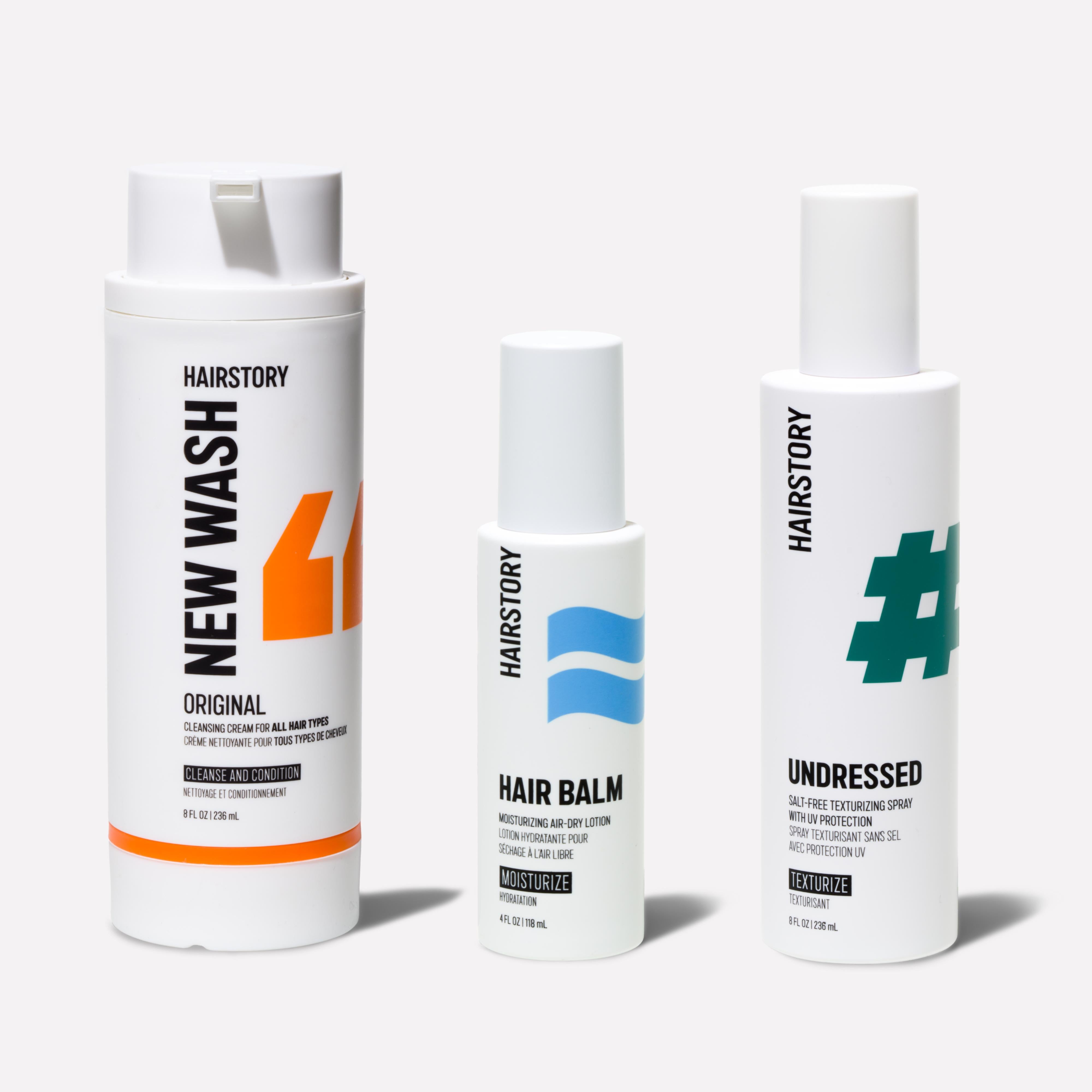
New Wash—Hairstory's detergent-free cleansing and conditioning shampoo alternative—was designed to cleanse without disrupting the lipid barrier and let you go longer between wash days. No detergents. No lather. And no more cycle of over-stripping and over-producing oil.
How to Grow Hair Faster (What Actually Works)
Let's reset expectations.
Hair grows about 0.5 inches (1.25 cm) per month, or roughly 6 inches per year, according to the American Academy of Dermatology. That rate is largely genetically determined.
You can't dramatically speed up growth. You can prevent breakage and support stronger strands—which makes hair appear to grow faster because it's not snapping off.
Protect the Growth Phase
The anagen phase length determines how long your hair can grow. Chronic inflammation and stress can shorten it.
Try these strategies:
- Manage stress (easier said than done, but cortisol is real)
- Prioritize protein (hair is ~95% keratin)
- Ensure iron sufficiency
A 2020 review in Skin Appendage Disorders confirmed that nutritional deficiencies significantly impact hair cycling. If you suspect a deficiency, start with your primary care provider or a board-certified dermatologist. They can order targeted labs and interpret results in context—not just flag what's "normal," but what's optimal for hair health.
Prevent Breakage
If your ends are splitting faster than your roots grow, you'll never see length gains.
Reduce:
- High heat styling (above 300°F increases the chance of structural damage)
- Rough towel drying
- Tight styles that cause traction
Support:
- Conditioning between washes: Apply Hairstory Hair Balm for extra moisture after washing and between wash days
- Gentle detangling: Hairstory New Wash naturally detangles as you cleanse, and Hairstory Primer delivers extra detangling moisture and protection
- Scalp-first cleansing: Deep-clean your scalp and rebalance your microbiome with Hairstory Pre-Wash
- Heat protectant: Hairstory Primer, Styling Gel and Bond Serum provide heat protection up to 450°F
Our approach has always been simple: Stop attacking your hair and it stops fighting back.
Consistency Over Hype
Hair cycles operate on 3–6 month timelines. Any solution promising dramatic change in 2 weeks? Marketing.
Clinical hair studies typically measure results at 24 weeks minimum. That's your benchmark.
Patience isn't sexy. But it's biologically accurate.
When to See a Dermatologist
If you experience:
- Sudden patchy bald spots
- Scalp pain or burning
- Shedding lasting longer than 6 months
- Hair loss accompanied by systemic symptoms
It's time to consult a board-certified dermatologist.
Conditions like alopecia areata (affecting ~2% of the population globally) or thyroid disorders require medical diagnosis and targeted treatment.
The Bottom Line
Most hair loss is driven by stress, hormonal shifts or inflammation—not "bad products" or one wrong wash day. Up to 90% of cases are non-scarring, meaning follicles are still alive.
Support the scalp and reduce inflammation with Hairstory's gentle, non-toxic formulas. Address internal triggers. Consider clinically proven treatments like minoxidil when appropriate. And most importantly: Don't let it get you down.
Read More
- The Best Hair Growth Tips
- Hair Detox: Cleansing the Scalp
- How to Have Healthy Hair
- Tips on Regrowth After Postpartum Hair Loss
The information in this article is for educational purposes only and is not intended as medical advice. Always consult a board-certified dermatologist or qualified healthcare provider if you have concerns about your hair or scalp health.