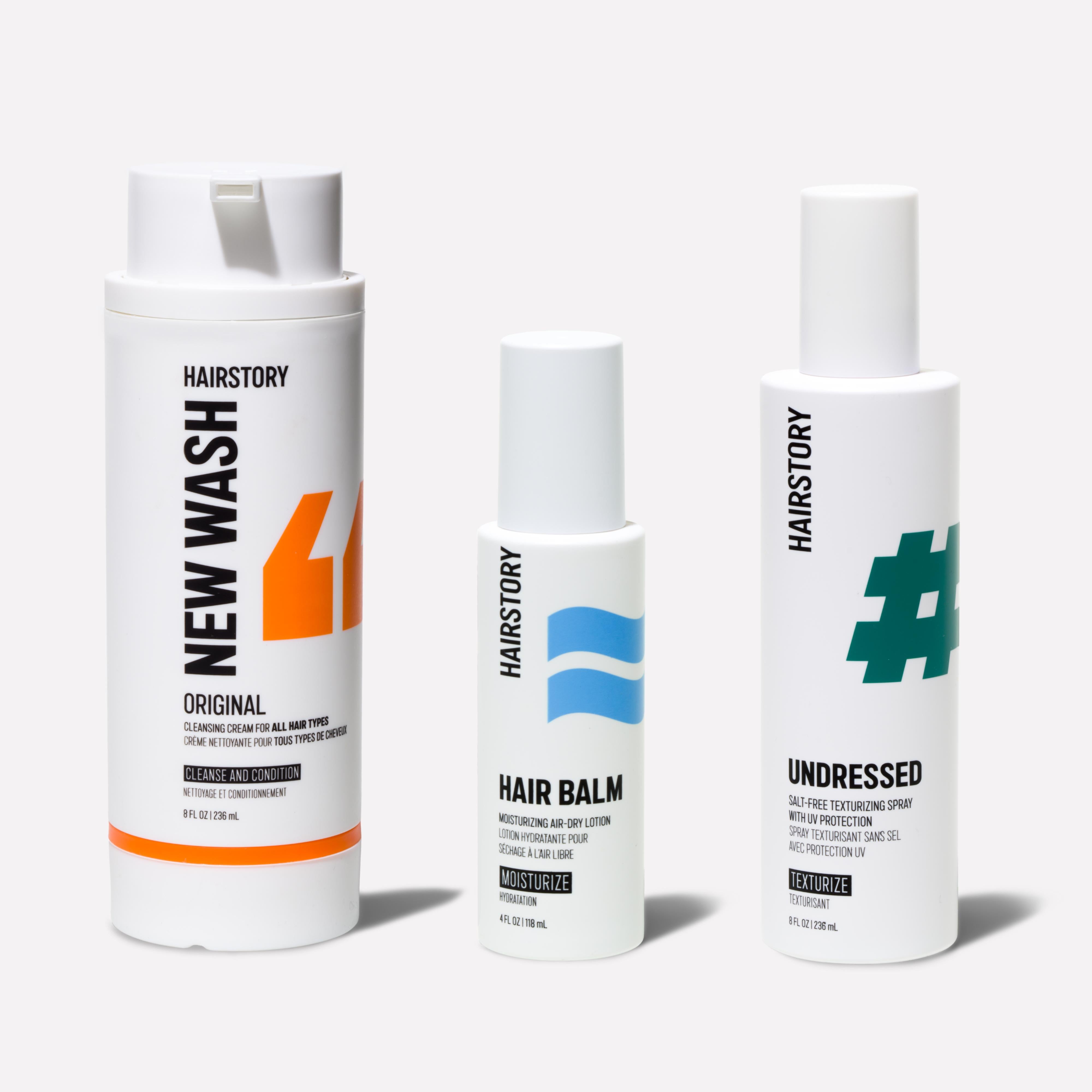
When we say New Wash is haircare for all hair types, we mean all of them. But that claim only holds up once you understand what New Wash is actually doing — and what it's not doing.
New Wash is a detergent-free cleansing cream. Not a better shampoo. A completely different approach to washing your hair, one that starts with your scalp and works from there. Hairstory pulled over 25,000 verified customer reviews and organized them by hair type so we can all see the highlights and benefits of New Wash, no matter what's going on with your hair. Whether you're a hairdresser or a client, or someone who just snuck in here, there's something in this for you.
Here is what eight different hair types actually experienced.
Grey and Silver Hair
This fun bunch dominates our reviews with their loyalty, claiming New Wash maintains whiteness and a softer texture. Among grey and silver-haired customers, 483 said exactly that, most of whom are repeat customers over multiple years of use.
Here's what's happening. Grey hair loses its pigment-producing melanocytes over time, making the shaft more porous and more vulnerable to yellowing, especially with detergent-based shampoos that lift the cuticle and let environmental pigments settle in. When you stop stripping the scalp and let the sebum film do its job, you remove one of the biggest drivers of brassiness and coarseness. This breakdown of detergents and surfactants explains why that film matters so much.
"I've been using New Wash for 3 years now, and there's no way I'll ever use shampoo again on my fine grey hair. My whites are white, my hair is not fluffy, and I don't need to clean it as often."
Curly Hair
The curly community has historically had a hard time with traditional shampoo because of the geometry of the hair shaft. The more coiled the curl pattern, the harder it is for sebum to travel from the follicle down the length of the strand. All of which is why curly hair is structurally prone to dryness and frizz — it doesn't matter how much conditioner gets layered on top.
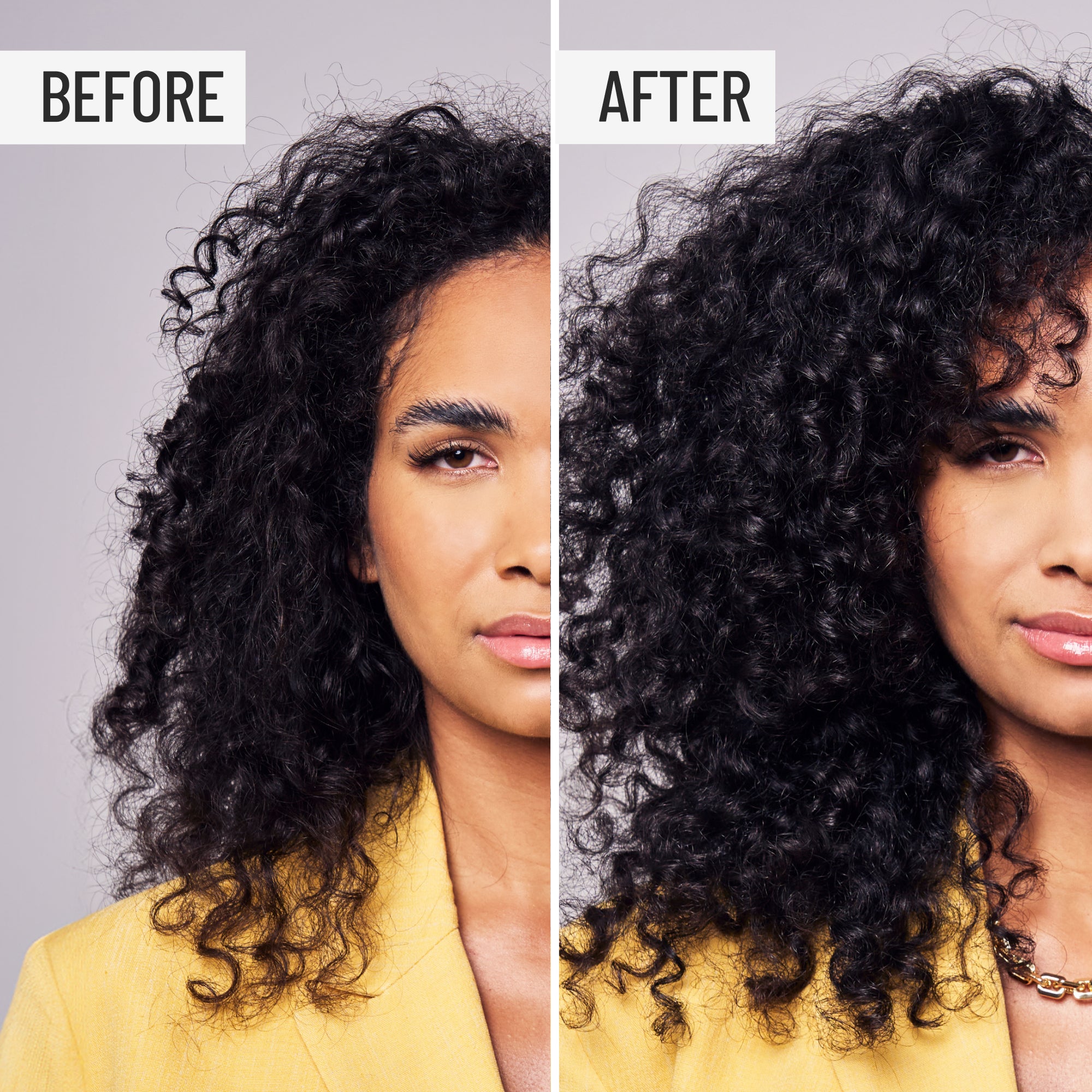
We have DevaCurl converts. Curly Girl Method converts. Ditching a trusted routine is not easy, yet 3,060 people made the switch and said New Wash restored curl definition and reduced frizz. Co-washing, the method many of them came from, conditions hair without truly cleansing the scalp. New Wash does both in one step.
Color-Treated and Dyed Hair
Color is expensive. It's also a time commitment. And detergent-based shampoos — even the ones marketed as color-safe — are consistently one of the primary reasons color fades faster than it should. Detergents do not distinguish between sebum and pigment molecules. They strip what they find.
Hairstory ran a controlled study with four samples of blue-dyed natural hair extensions: water only, New Wash at ten washes, New Wash at 100 washes, and Kérastase's color-protective shampoo at ten washes. Kérastase faded after ten washes. The other three samples showed no measurable color loss. New Wash fights for color vibrancy, and 1,398 customers agreed.
Your cleanser is either working for your color or against it.
Wavy Hair
Most people with wavy hair have no idea what their hair actually does without all the product. Detergents coat the hair shaft with residue that flattens natural movement, and wavy hair gets treated like misbehaving straight hair rather than its own texture category. 1,407 wavy-haired customers said they experienced better wave definition, reduced frizz, and a genuine surprise: their hair was wavier than they'd ever known. Not because New Wash created a new texture, but because it stopped hiding the texture that was already there.
Damaged and Over-Processed Hair
This is the category we want to address most carefully because the language around it is the most misleading in the industry. The market has conditioned people to expect words like repair, renew, and strengthen from within.
Bleach, repeated coloring, and keratin treatments create real structural disruption to the hair shaft. And because that disruption is visible as frizz, split ends, and lack of shine, the market responds with products promising to repair, renew, and strengthen from within.
Your hair shaft is dead. The moment hair keratinizes and emerges from the follicle, it is no longer a living structure. The NIH has published research confirming that the only living part of the hair system is the follicle itself. Products marketed as "repair" just coat the cuticle with film-forming agents that temporarily smooth lifted scales. The look improves. The underlying damage has not changed.
What you can do is stop making it worse and start caring for the living thing: your scalp. In the damaged and over-processed category, 960 customers who had already tried K18, Olaplex, and Living Proof said New Wash stabilized and improved their hair during the recovery stage. Not because it repaired anything, but because it stopped the chemical assault at the source.
Thick and Coarse Hair
The skepticism here is fair. Nobody with thick, coarse hair wants to add more weight. But here's what's actually happening: your scalp has been conditioned to overproduce sebum in response to chronic stripping. Think of it like a furnace stuck in overdrive. When the stripping stops, overproduction continues through one full skin cell turnover cycle — around 27 days — before the scalp recalibrates. That is the adjustment period.
Among thick, coarse-haired customers, 1,736 people said the same thing: softer, more manageable hair and none of that straw situation after washing. That's not a small number.
Fine and Thin Hair
Fine hair has low porosity, meaning the cuticles are sealed tight and do not absorb moisture easily, which leads to product buildup and the grease cycle that drives daily washing. Daily washing with detergent shampoo only makes it worse: strip, overproduce, repeat. 4,275 people with fine hair washed less, got more volume, and had a shorter adjustment than they expected.
Oily and Greasy Hair
New Wash contains essential oils, so the question — why would you clean oil with oil — is fair. The answer is in chemistry. New Wash is a mixture of essential oils and fatty alcohols, a non-aggressive clean-up crew that emulsifies well in water and cleans without stripping because its properties are gentle by nature.
Hairstory proved this at Steven Peterson's salon in Salt Lake City by coating a hair extension in motor oil and washing it with New Wash without pre-rinsing. The motor oil was completely removed. No sulfates and no squeaky-clean feeling — because New Wash doesn't strip the protective lipid layer of the shaft.
Among oily-haired customers, about 1,077 people in the adjustment period said that their scalp remained oilier than before. It's simply because your scalp is getting used to this new environment — it doesn't quite know its potential yet. The remaining 1,350 started washing less once the stripping cycle ended. That's the goal.
The Pattern Across All Eight
Nearly every hair type describes the same arc: skepticism, an uncertain adjustment period, and then a shift they describe as permanent. The data from more than 25,000 reviews confirms it.
New Wash does not treat the visible hair. It changes the relationship between your scalp and your cleanser. When you stop stripping the scalp, it stops overcompensating. That is not complicated science. It just takes longer than one wash to show up.
Try it. Stick with it through the adjustment. Then come tell us we were wrong.
Find your New Wash — one formula for every hair type.
Keep Reading
- WTF Are Detergents and Surfactants?
- The Surfactant Spectrum: Why No Detergent Is Mild Enough
- Co-Washing Is Not an Alternative to Shampoo
- Why Shampoo Is Worse for Color-Treated Hair
The information in this article is for educational purposes only and is not intended as medical advice. Always consult a board-certified dermatologist or qualified healthcare provider if you have concerns about your hair or scalp health.