When it comes to sustainability, reducing the size and amount of packaging can make a big difference
Have you ever ordered a small item only to have it delivered in a giant box or envelope – something that could hold ten, if not more, of that item? Did the box come filled with packing peanuts that flew everywhere as you tried to locate your item? Or was the package protected by bubble wrap, which you, or your kids gleefully popped, annoying everyone around them?
Regardless of what the large box or envelope was filled with, it was an exercise in unnecessary waste. Packing peanuts cannot be recycled because they don’t break down well at recycling plants. Bubble wrap is made from a film plastic, and it isn’t recyclable either – they get tangled in the machines. And those large boxes or envelopes? Even if they can be recycled, using so much material for a small item is dishonoring the tree that was cut down to make the box. Companies can, and should, do better. But how?
SUSTAINABLE PACKAGING FOR BEAUTY: LEADERS COMING TOGETHER
At Hairstory’s 2021 Sustainable Beauty Summit on April 8, four sustainability leaders discussed what companies should aim for when it comes to packaging. The talk, moderated by Pure Wow’s beauty director Jenny Jin, touched on what it means to be a sustainable business, the factors they consider when making important decisions they make, and what we all need to think about when it comes to sustainability.
HOW TO MAKE PACKAGING SUSTAINABLE: A JOURNEY, NOT A DESTINATION
If we want to remain on this planet as a species, something has to change. The health of our earth is in danger and our lives aren’t sustainable as is. For the companies that have an eye towards the future, they’re making changes, big and small, for a better, more sustainable tomorrow.
“We've been talking about less is more for years,” said Hairstory’s head of product development Jackie Gilbert Bauer. “It’s a hard choice, and you want to do it all. We've chosen to reduce the carbon footprint and the amount of input as our primary focus. It’s about the amount of stuff. Switching to selling our wash in pouches means that we use a third as much plastic as a bottle of the same size. It also cuts out the carton entirely. Pouches are flatter, so they reduce landfill.”
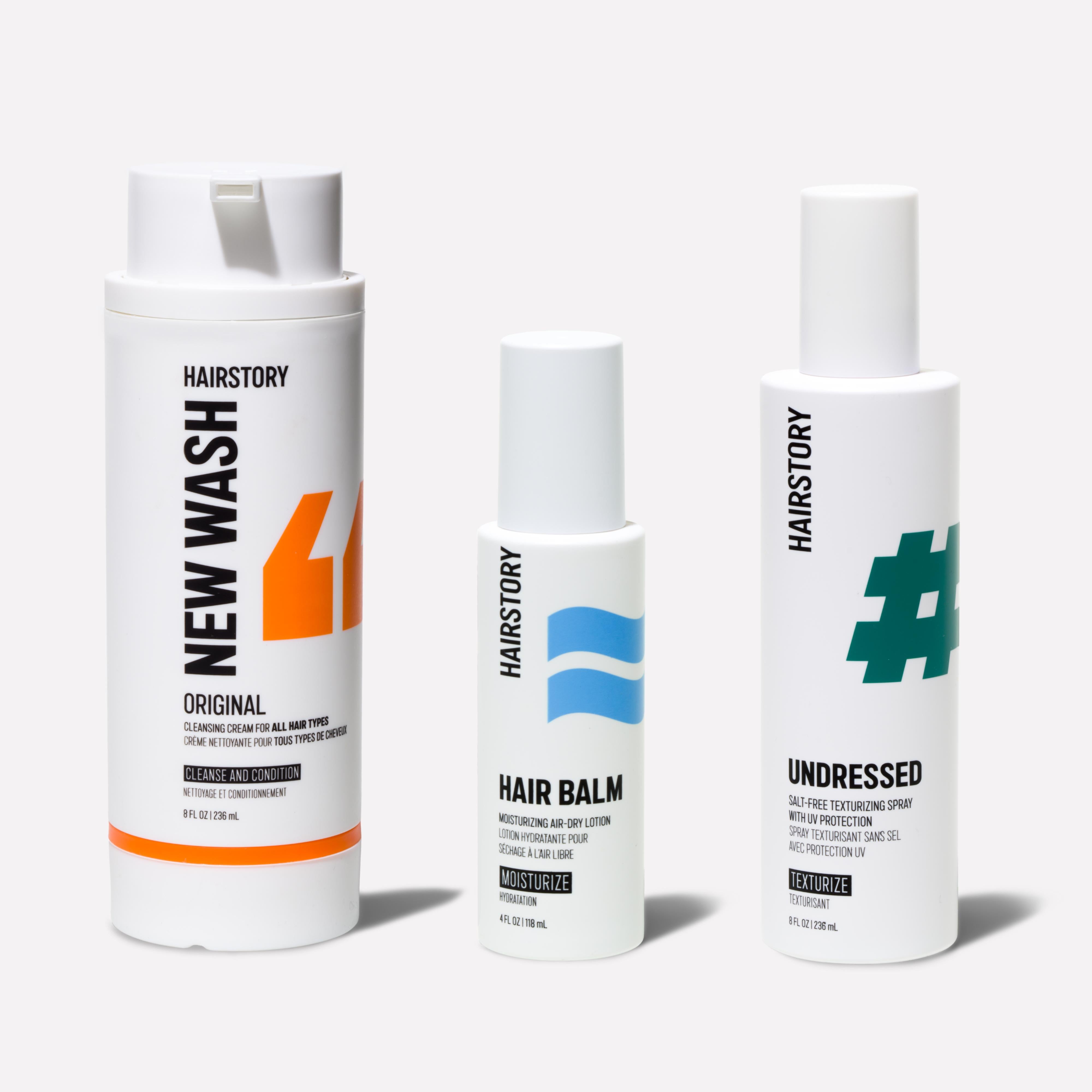
It doesn’t stop at the new reduced-plastic pouches. Hairstory’s creamy cleanser serves as both an environmentally friendly shampoo and conditioner alternative. They offer a refillable aluminum pump bottle to store their product. Along with their styling products, they’ve taken people's hair care routines from around five or six items down to just two or three. Using fewer products reduces the amount of packaging needed, which translates to less waste, whether it’s recyclable or not.
“When someone has a routine that they love, the logical thing to do is to give them a container to keep in their home and the largest refill possible so they can refill when they want,” Gilbert Bauer explained. “A larger refill means we're sending it one time. It means that people are potentially only throwing something out every three months, or sometimes six months. And that's a huge reduction in waste.”
REDUCE, REUSE, RECYCLE
That tried and true phrase, “reduce, reuse, recycle” is top-of-mind today for many companies on the sustainability journey. But, as Gilbert Bauer pointed out, people don't recycle as much as they should. So, for many companies, “reduce” is the “R” of choice. Reducing the amount of stuff we own, which includes product packaging, can lower our carbon footprint.
“I wish that consumers, myself included, would reduce the products they buy, but at the end of the day, I do believe that consumers purchase things to feel good and to make themselves feel empowered as they go about their day,” said Stephanie Hon, the founder, and CEO of Cadence, a company that sells magnetic, refillable, portable plastic containers with the goal of helping people eliminate single-use travel-sized products. “So as a brand, we really believe that it's our job to allow consumers to continue on their habits in the most sustainable way possible. We encourage consumers to buy in bulk versus buying single-use plastic. The recycling system is not perfect, but for bulk bottles versus single-use, the propensity and likelihood of that getting recycled is much higher.”
Humans will buy things, Hon believes. When there are options available that allow the consumer to make a thoughtful, careful, and mindful purchase, she hopes that’s what they’ll choose.
WHY USE SUSTAINABLE PACKAGING?: CONSUMPTION IS THE ELEPHANT IN THE ROOM
Sustainability has an Achilles heel – consumption. The reality is, no one person or product-based company will ever be fully sustainable.
“The only answer to sustainability is lowering consumption,” Tom Szaky, the founder and CEO Terracycle pointed out. “And this is the case no matter how vegan, Fairtrade, or whatever a thing that you bought is. If you didn't buy it, that land that had the farm, it could have been a forest. There's no such thing as good consumption. Anything we do in sustainable business is bending consumption to be a little better. But the idea of consumption is inherently the problem. Somehow humanity as an aggregate is going to have to lower consumption.”
Szaky advocates for making consumption “fundamentally more circular.” His hope is that more companies and consumers will begin to honor the molecules that the material is made from.
“Let them keep creating value, whether it's through really good, durable, reusables that we just get cleaned and refilled, or whether it's through things that are really made from high contents of recycled content, packaging that will be recycled or, ideally, both. Or it’s through eliminating packaging altogether,” he said.
THE SUSTAINABLE PACKAGING REVOLUTION
How do you create a revolution? First, you start with an idea. Your idea becomes a mission, and, in the case of people like Farmacy Beauty’s original co-founder Mark Veeder, that mission becomes the impetus for a new company, called Sk*p, which is launching on Earth Day.
“Our mission is to lead the revolution to break the beauty’s addiction to plastic,” Veeder explains. “I know that’s a big statement, but that’s what we’re focusing on. For us, it is straight on reducing plastics because we feel that that is the place that we can make the biggest difference.”
To do this, Sk*p is launching a line of clean beauty products with formulas and healthy ingredients sold in completely sustainable and recyclable cartons made with over 80% paper from responsibly managed forests.
COULD VS. WOULD – IT’S ABOUT HOW YOU ASK THE QUESTION
There are a few facts about plastic that everyone should know. First, not all plastic is recyclable. Second, even if it is recyclable, that doesn’t mean your local plant will recycle it. If it’s not profitable, they won’t do it. So, what happens to it?
“The idea that plastic literally disappears once in the ocean or littered on land or in a landfill is nice, but it's not actually possible,” Gilbert Bauer explained.
“Nothing disappears completely. Something might dissolve or evaporate, compost, or degrade, but it doesn't cease to exist.”
Companies taking efforts towards sustainability are tasked not only with figuring out what will make the biggest environmental impact but educating consumers about what their decisions and sustainability mean. Educated consumers have the power to vote with their dollars correctly and effectively.
“When it comes to recycling, the key question that we have to really think about is not what could a consumer do? What could a brand do? What could an end-of-life manager do? But what will they do,” Szaky said. “There's immense irony in people trying to do the right thing only to realize they’re doing the wrong thing.”
Asking, and answering, that question is what leads environmentally conscious companies to make different decisions regarding sustainable packaging.
“With Sk*p, we change the products where it starts,” Veeder explained. “Our cartons are made out of paper, and they don't have any secondary packaging. So already, we're reducing waste from the beginning. Paper is 100% renewable, so we're trying to do something that that will reduce the end of life as we renew the resource. It's something that is profitable to recycle, and you can recycle it about seven times until the pulp gets too small. We're never going to be 100% perfect, but our motto is harm reduction, not perfection.”
WE DON'T NEED A FEW PEOPLE DOING THINGS PERFECTLY, WE NEED LOTS OF PEOPLE DOING THINGS IMPERFECTLY
No one’s perfect, and no system is perfect. There’s no perfect solution to the climate crisis, but there are companies out there doing what they can to make a difference in consumers’ lives.
“We are always thinking about how can we reduce the number of times a consumer has to go and buy something else which quickly gets tossed in the garbage,” said Hon. “Every brand has a different ethos and a different set of rules they abide by. For us, the first is durability. The second is making products that use materials that already exists.”
Hon also points out that it’s a business’s job to create products with the consumer in mind. Consumers, she explained, often have different priorities than businesses, so businesses should create products based on their customers.
“It's about making decisions on how things come into the world, rather than dealing with it when you're trying to get rid of it,” Gilbert Bauer noted. “It's also about overconsumption. It's crazy, and I’m a culprit, too. But we have to try and reduce as much as we can. Try to reduce, try to reuse.”
It’s an important message we should all take to heart.