How to Boost Your Hair Growth Rate As You Age

How to Boost Your Hair Growth Rate As You Age

By Aline Decat

Published on September 27, 2024 — 8 min read

Share this article

Home / The Archive / How to Boost Your Hair Growth Rate As You Age

How Hair Changes as You Age — and How to Support Healthy Growth | Hairstory

How Hair Changes as You Age — and How to Support Healthy Growth

It's a fact of life: age brings changes from head to toe, and our hair sends clear signals that time is passing. Graying and thinning — fewer hairs on your head, plus each strand becoming finer — are unavoidable. But understanding why these changes happen is the first step toward managing them well. A great hair care routine paired with the right hair care products can go a long way toward protecting your hair as you age.

Why Hair Growth Slows with Age

A single hair strand has a normal life of two to seven years and grows an average of half an inch per month, or about six inches a year. Age, diet, genetics, and overall health all determine how fast and how well hair grows.

Hair growth rate is influenced by genes, environment, and the products you use. Hereditary traits, endocrine and thyroid disorders, reduced hormonal support, and nutritional deficiencies can all contribute to thinning. Some shedding is entirely normal — it is typical to lose 50 to 100 hairs a day.

The hair growth cycle includes a resting phase called the telogen phase. This phase should last approximately three months, but certain disorders and illnesses can extend it, preventing the hair shaft from entering the anagen (growth) phase. If you are experiencing thinning, we recommend choosing healthy hair care products and visiting your doctor to ensure your thyroid and endocrine systems are functioning properly.

Common Hair Changes with Age

Graying Hair: Why It Happens

Color changes are among the first signs of aging. Hair follicles produce less melanin over time, causing hair to appear gray. This typically begins at the temples and extends elsewhere. Body and facial hair may also gray, but often later than scalp hair.

It is a myth that plucking gray hair causes more to grow in its place. Plucking can, however, traumatize the follicle and compromise future healthy hair growth.

Genetics determine when and where gray hair appears. No supplement, vitamin, or product will prevent it. Chemical color is the only temporary remedy, though it is a high-maintenance commitment. Melanin not only gives hair its color but also adds substance, so graying often means finer strands and reduced volume overall.

Thinning Hair: What to Expect

Hair thickness changes over time regardless of color. Hair is composed of many layers of a protein called keratin, and a single strand is typically rooted for two to seven years before it falls out and new growth replaces it. As hair ages, its life cycle shortens, new growth tends to be finer, and many follicles stop producing new hairs altogether.

According to the American Hair Loss Association, approximately 25% of men may begin showing signs of baldness before age 21; 66% will experience hair loss by 35, and 85% will have significantly less hair by 50. Women can develop a similar pattern as the scalp becomes more visible with age. Menopause is a key factor for women in their 50s, when sex hormones that stimulate follicle activity diminish and testosterone becomes relatively more dominant.

Take note: Sudden hair loss can be a sign of an underlying health issue and warrants a visit with your doctor. It may also indicate an allergic reaction to shampoo or other hair care products.

How to Support and Boost Hair Growth

1. Wash Less Frequently

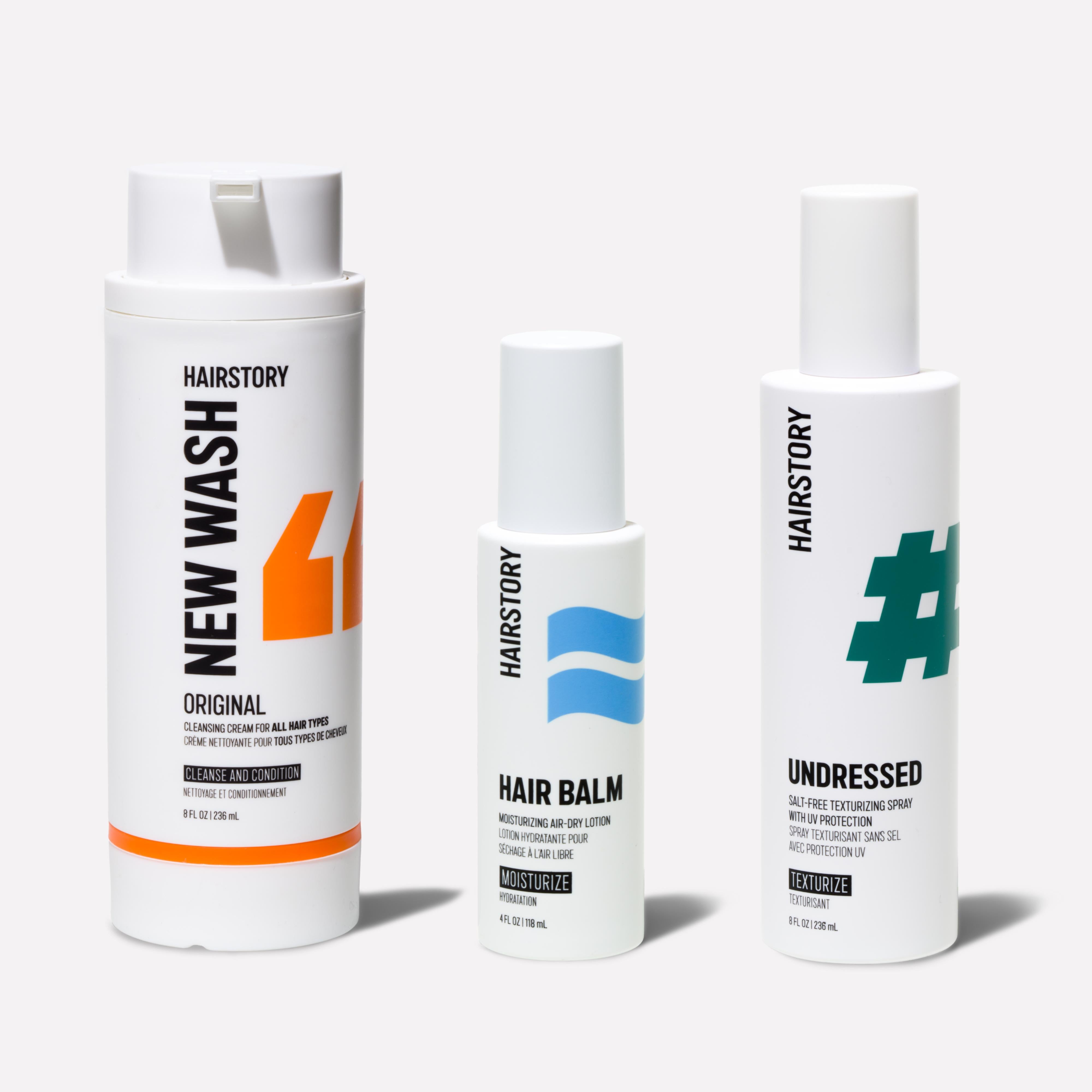
How often you wash your hair depends on your hair type, but washing too frequently or with harsh detergents can cause dryness and brittleness. As we age, skin secretes less of its natural moisture (sebum), so switching to the gentlest possible cleanser is wise. New Wash contains no detergent whatsoever and is an ideal choice for aging hair.

2. Maintain Moisture

Leave-in conditioners such as Hair Balm are a more effective delivery method than rinse-out conditioner. They work throughout the day, can add volume, and address frizz and wispy ends. This is especially important for longer hair, where consistent moisture helps limit breakage and split ends.

3. Go with the Gray

Color-treating is a personal choice, but it puts extra stress on already fragile strands. If you have gone silver or white, consider it a canvas for occasional temporary tints rather than a permanent chemical commitment. Consulting a professional before any color work is always a good idea.

4. Minimize Heat Styling

Daily use of blow dryers, wands, and irons depletes moisture and compromises vulnerable strands that can no longer bounce back from damage as readily as they once did. If you do need to heat style, apply a heat protectant first to create a barrier and help offset any damage.

5. Eat a Complete Diet

Hair follicles are primarily made of protein, and insufficient intake is directly linked to hair loss. The thyroid system also slows with age, which can reduce iron storage efficiency — a mild iron deficiency can masquerade as fatigue. Beyond protein and iron, the following foods are known to support healthy hair growth:

  • Spinach and leafy greens, which supply folate, iron, and vitamins A and C
  • Eggs, which contain biotin — essential for hair protein synthesis
  • Fatty fish such as salmon, which provide omega-3 fatty acids
  • Berries and other fruits rich in vitamin C and antioxidants that support collagen production
  • Avocados, loaded with vitamin E and omega-3s

6. Reduce Stress

Elevated stress hormones can contribute to hair loss above and beyond natural aging processes. Managing stress through meditation, breathwork, or consistent sleep supports both hair health and overall wellbeing.

7. Exercise Regularly

Physical activity improves circulation, which can stimulate follicles and support hair growth. Even gentle movement makes a meaningful difference. A scalp massage after exercise can further encourage blood flow to the scalp and promote a healthy growth environment.

External Factors That Affect Hair Growth

Medications

Some medications prescribed for heart disease or high cholesterol can affect hair growth. Ask your doctor whether anything you currently take may interfere with the hair growth cycle. Women who stop taking hormone replacement therapy can also expect some hair shedding during the transition period.

Post-COVID Hair Loss

Some COVID-19 survivors notice significant hair shedding during recovery. Researchers attribute this largely to telogen effluvium, a condition in which physiological or psychological stress disrupts the hair growth cycle. It typically manifests about three months after a stressful event — such as severe illness, surgery, or significant emotional trauma. COVID-related symptoms, including high fever, elevate the stress hormone cortisol, which further affects hair integrity and length. Dr. Esther Freeman, director of the Dermatology COVID-19 Registry, has documented this pattern across thousands of cases from 38 countries. The good news: telogen effluvium generally resolves within six months, after which hair gradually returns to its normal growth cycle.

How to Support Healthy Hair Growth as Your Hair Ages

A seven-step approach to protecting aging hair through gentler cleansing, sustained moisture, reduced heat exposure, and lifestyle habits that support follicle health and slow age-related thinning.

1

Wash less frequently and switch to a gentler cleanser

Reduce how often you wash your hair and replace traditional detergent-based shampoo with a detergent-free alternative like New Wash. As we age, skin produces less sebum — the scalp's natural moisture — making it less able to recover from the stripping effect of harsh surfactants. Washing too frequently or with aggressive detergents can cause dryness and brittleness that compounds age-related fragility.

Pro Tip: New Wash contains no detergent whatsoever, making it an ideal choice for aging hair that needs gentle cleansing without barrier disruption.
2

Use a leave-in conditioner daily

Apply a leave-in conditioner like Hair Balm after washing rather than relying solely on rinse-out conditioner. Leave-in formulas work throughout the day, can add volume to finer aging strands, and address frizz and wispy ends. For longer hair in particular, consistent moisture helps limit breakage and split ends — both of which become more common as the hair's natural resilience decreases with age.

3

Minimize heat styling

Reduce daily use of blow dryers, flat irons, and curling wands. Aging hair depletes moisture more readily and can no longer bounce back from heat damage as readily as it once did — repeated high heat exposure compounds the structural vulnerability that comes with thinner, finer strands. When heat styling is necessary, always apply a heat protectant first to create a barrier and help offset damage.

Pro Tip: If going gray or white, be especially cautious with heat — melanin, which provides color, also adds substance to the strand. Without it, the hair is more susceptible to structural damage from heat.
4

Eat a protein- and nutrient-rich diet

Hair follicles are primarily made of protein, and insufficient intake is directly linked to hair loss. Prioritize protein alongside iron-rich foods like spinach and leafy greens, biotin-containing foods like eggs, omega-3 sources like fatty fish and avocados, and vitamin C-rich fruits and berries that support collagen production. As the thyroid slows with age, iron storage efficiency can decrease — a mild iron deficiency may contribute to shedding before other symptoms appear.

Pro Tip: If you're experiencing unexplained shedding, ask your doctor to check your ferritin levels and thyroid panel. Nutritional deficiencies can be corrected and their impact on hair growth reversed.
5

Manage stress consistently

Elevated stress hormones, particularly cortisol, can contribute to hair loss above and beyond natural aging processes by disrupting the hair growth cycle and triggering telogen effluvium — a condition where hairs shift prematurely into the resting phase. Managing stress through consistent sleep, meditation, or breathwork supports both hair health and overall wellbeing.

Pro Tip: Telogen effluvium triggered by stress typically manifests about three months after the stressful event and generally resolves within six months once the trigger stabilizes — so early stress management is more effective than addressing shedding after it begins.
6

Exercise regularly and massage the scalp

Physical activity improves circulation, which can stimulate follicles and support the nutrient delivery that hair growth depends on. Even gentle, consistent movement makes a meaningful difference. A scalp massage after exercise can further encourage blood flow to the scalp and promote a healthy follicle environment — and takes only a few minutes to perform with fingertip pressure.

7

Review medications with your doctor

Some medications prescribed for heart disease or high cholesterol can interfere with the hair growth cycle. If you are experiencing increased shedding and take prescription medications, ask your doctor whether any of them may be a contributing factor. Women transitioning off hormone replacement therapy should also expect some shedding during the adjustment period — this is typically temporary and resolves as hormone levels stabilize.

Frequently Asked Questions

  • Why does hair thin and slow its growth as you age?
    As hair ages, its natural life cycle shortens, new growth tends to come in finer, and many follicles stop producing new hairs altogether. Hair growth is influenced by genetics, environment, hormonal changes, and nutritional status — all of which shift with age. Hereditary traits, endocrine and thyroid disorders, reduced hormonal support, and nutritional deficiencies can all contribute to thinning. Some daily shedding — 50 to 100 hairs per day — is entirely normal throughout life.
  • Why does hair go gray, and can it be prevented?
    Hair goes gray because follicles produce less melanin over time. This typically begins at the temples and spreads gradually, and is determined largely by genetics. No supplement, vitamin, or product can prevent it — chemical color is the only temporary remedy, though it requires ongoing maintenance. Melanin not only gives hair its color but also adds substance, which is why graying often comes with finer strands and reduced overall volume.
  • At what age does hair loss typically begin in men and women?
    According to the American Hair Loss Association, approximately 25% of men may begin showing signs of baldness before age 21, 66% will experience hair loss by 35, and 85% will have significantly less hair by 50. Women can develop a similar pattern as the scalp becomes more visible with age. Menopause is a key factor for women in their 50s, when sex hormones that stimulate follicle activity diminish and testosterone becomes relatively more dominant.
  • Does plucking gray hairs cause more to grow back?
    No — it is a myth that plucking a gray hair causes more gray hairs to grow in its place. However, plucking can traumatize the follicle and compromise future healthy hair growth, so it is best avoided. The appearance of gray hair is determined by melanin production in the follicle, which is not affected by whether neighboring hairs are plucked.
  • What foods support healthy hair growth as you age?
    Because hair follicles are primarily made of protein, insufficient protein intake is directly linked to hair loss. Beyond protein, foods that support healthy hair growth include spinach and leafy greens for folate, iron, and vitamins A and C; eggs for biotin, which is essential for hair protein synthesis; fatty fish like salmon for omega-3 fatty acids; berries and vitamin C-rich fruits that support collagen production; and avocados, which are high in vitamin E and omega-3s. Mild iron deficiency — which can increase as the thyroid slows with age — is also associated with shedding.
  • What is telogen effluvium, and can COVID-19 cause hair loss?
    Telogen effluvium is a condition in which physiological or psychological stress disrupts the hair growth cycle, pushing hairs prematurely into the resting (telogen) phase. It typically manifests about three months after a triggering event — such as severe illness, surgery, or significant emotional trauma. Some COVID-19 survivors experience significant shedding during recovery, which researchers attribute largely to telogen effluvium triggered by the stress of illness and elevated cortisol from high fever. The good news is that telogen effluvium generally resolves within six months, after which hair gradually returns to its normal growth cycle.
  • What hair care routine is best for aging hair?
    Aging hair benefits from a gentler, more protective routine. Key steps include washing less frequently and switching to a detergent-free cleanser like New Wash, which contains no harsh surfactants — important because sebum production decreases with age and skin can no longer compensate for stripping. Using a leave-in conditioner like Hair Balm throughout the day maintains moisture more effectively than rinse-out conditioners. Minimizing daily heat styling, always applying a heat protectant when heat is used, reducing stress, and eating a protein- and nutrient-rich diet all support healthier hair as it ages.
  • Can medications cause hair loss?
    Yes. Some medications prescribed for heart disease or high cholesterol can interfere with the hair growth cycle. Women who stop taking hormone replacement therapy may also experience shedding during the transition period. If you are noticing increased hair loss and take prescription medications, it is worth asking your doctor whether any of them may be contributing. Sudden or unexplained hair loss always warrants a medical evaluation to rule out underlying health issues.

SO, WHAT’S YOUR STORY?

Answer a few (easy) questions to get your personalized routine.