Since you searched for this article among the 190,000,000 (yes, one hundred and ninety MILLION) articles on the subject of hair washing, you won’t be surprised that this simple act of ablution seems to be so complex.
Even if you strictly use natural hair care products to wash your hair, you still should avoid washing it too frequently. How often should you wash your hair? The simple answer: No more than 3 times a week. The more nuanced answer: It depends.
It depends on your type of hair, combined with your aesthetic.
Figuring out how to wash your hair will be easier if you understand your hair type. Hair with thicker strands can go longer without hair cleansing – if you like the way it looks. Fine, sparse hair tends to become greasy more quickly – and nobody really likes how that looks. Curlier hair tends to be dryer and can be washed less often without looking any different (because oils produced by the scalp can't easily migrate down coiled strands). Straight hair, especially fine, may need shampooing more often to look clean. But nobody – and we mean nobody – should be subjecting their heads to detergent-based shampoo every day, no matter how it looks. Understanding your hair type and how often you should wash it is vital so that you avoid drying it out of its natural moisture.
It depends on your lifestyle – and your climate.
Are you a gym bunny or pool otter? Do you live in a tropical zone? People who exercise and perspire a lot or live in humid places shower and shampoo more often, even when technically they may not need to; rinsing with water alone is usually enough to dissolve the salts in sweat and refresh hair. But if you swim in chlorinated water, please wear a cap, okay?
It depends on what your hair and scalp are used to.
Our bodies are adaptable and respond to training: The more you wash your hair, the more the scalp responds by producing the natural oils that shampoo dissolves, and that are essential to your well-being (more on that subject here). The less you wash your hair, the less urgently the scalp responds to restore oils. Training your sebaceous glands to new washing habits is possible, and though it may take time the long-term results are worth the while. Once you take the time to do this, your hair care routine will be changed for the better. Additionally, if you’re exploring ways on how to make your hair grow faster, taking care of your scalp is just one of many important steps.
It depends on what you use to wash.
Detergents, while designed to wash away the dirt you accumulate, the skin you shed, and the oils you produce can also cause dry, brittle, and damaged hair. Shampoos designed for greasy hair have more detergent than shampoos for “normal” or dry hair. Some people – usually curly, coarse or chemically-processed – use only conditioner and water because of the damage detergent can cause. The concern, however, is that scalps don’t get the cleansing they need, the build-up can cause follicles to become impacted, and fungal and bacterial infections may develop that lead to dandruff.
Visit our page that answers what does conditioner do, and learn more about why conditioner shouldn’t be used in place of cleansing hair.
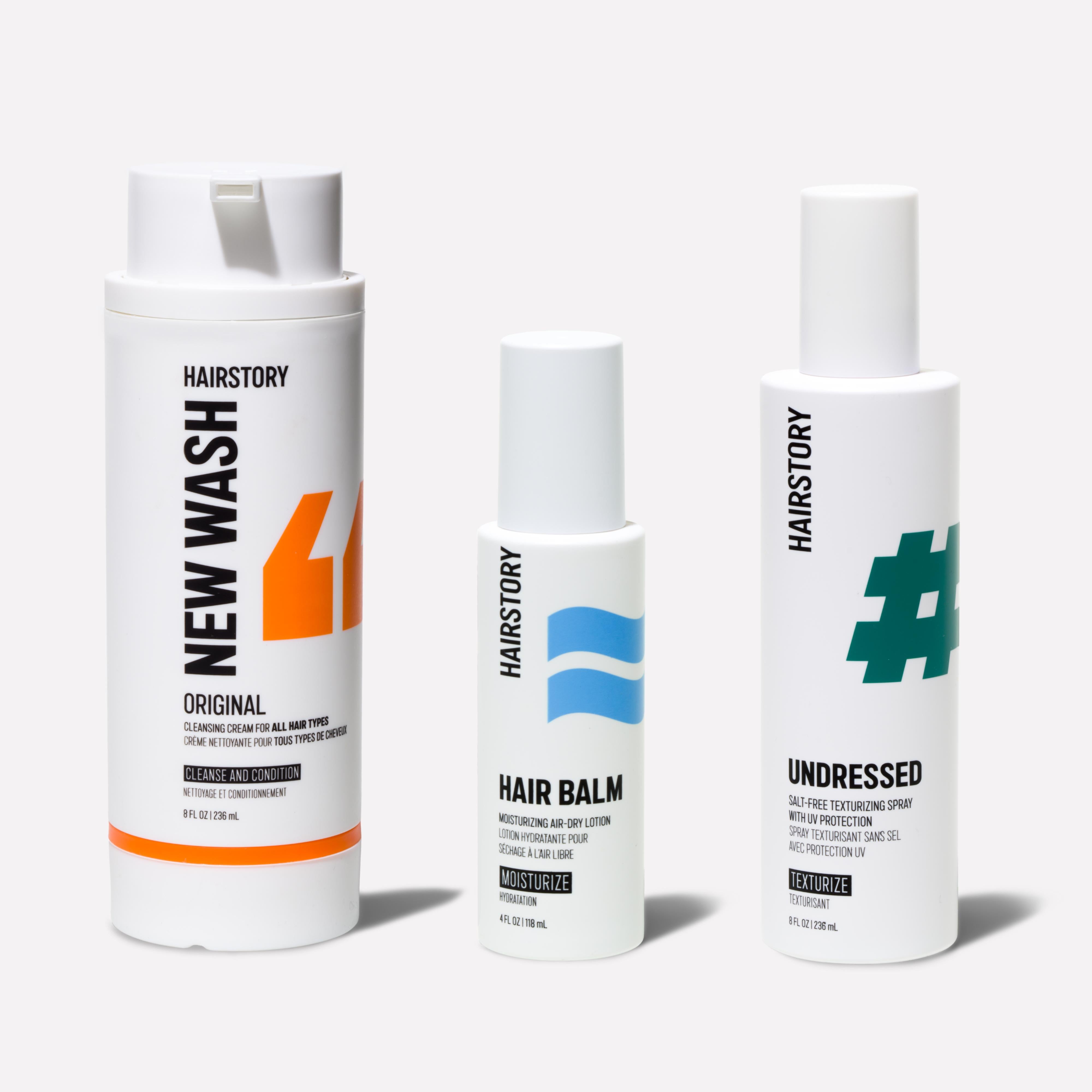
Washing hair without shampoo is possible and promotes your hair's natural process. Hairstory has built an entire business upon a shampoo alternative, called appropriately New Wash. Chances are that you use an oil-based method to cleanse your face and remove makeup, and this is a very similar concept. The benefit is that it respects the natural process of the sebaceous glands and allows them to function optimally, not in the perpetual emergency mode required after assault by detergent.
Dry shampoo is also a popular option, and while it is not meant to replace washing with water, it can allow you to wash less frequently, although you’ll have to hit the shower eventually to keep the scalp clear. It is also useful when shampooing isn’t practical, like when you set the alarm for PM instead of AM and you’re late before your feet hit the bedroom floor. Of course, the bonus effect is the texture and fullness it adds, and the extra grip that helps updos stay up (clean hair can be too slippery to manage). Try Hairstory Powder for its microfine granules, ingenious applicator, and sublime fragrance.
It depends on styling and coloring.
If your hair is processed by chemicals or damaged by styling, wash it less frequently. If you use styling products heavily, wash them out regularly. For color-treated hair, rinse with water and condition as often as you like, but go easy on shampoo. (Remember New Wash? It’s a colorist’s best friend).
It depends on you.
Your stylist will likely recommend the best way for you to cleanse and condition your hair (but we’ll bet they warn you about frequent detergent exposure). Your dermatologist may also weigh in. But the truth is that experimenting with washing less often will do you no harm, and will likely do some good. At the end of the day, your hair will tell you what works.