Most of you have to chill, and some of you have a right to be concerned.
I'm one of those people who lost their hair young. I know the pain. I understand your hair is your identity. That identity shifts and fluctuates with age, and your hair announces that change to the world.
And, you can't scroll through social media without an 18-year-old freaking out on the internet over perceived hair loss — or what's most often a cowlick, or thinning at the front or back of their hair.
I hope you, or your parents, or your friends, or someone, reads this and sends it to you in the family group chat. You're young, and you're most likely fine. So let's set priorities here. I've got some exciting news for most of you.
First. The Cowlick.
Most of you aren't experiencing hair loss. For everyone else, keep reading — you're gonna want to know this.
A cowlick is a section of hair that grows in a different direction from everything around it. Just because you're showing scalp doesn't mean you're experiencing hair loss. The hair typically clumps together or sometimes forms a strong whirl pattern and reveals more scalp than hair that lies down.
It looks different in photos. In certain lighting, it can look like a bald spot. But it's not. There's no scientific evidence connecting cowlicks to hair loss. It develops before you're born. It's based on genetics, and it's completely normal.
You have some options. You can grow your hair longer so gravity pulls it down and blends in with the cowlick. You can cut it short so it's not so obvious. A little wax and a comb will let you shape it into your style. A blow dryer on low heat can redirect it. None of this is necessary. But if it helps you feel better, why the hell not? I've styled it in the chair many times.
The Most Important Misconception to Clear Up
Most people think hair loss means more hair falling out. That's not what's happening.
Think of it like a highlighter that's slowly running dry. You're still drawing. The mark is still there. But each stroke is a little lighter, a little thinner than the one before. That's what your follicles are doing. That's the actual process. The follicles are still there. They're just producing hair that gets thinner, shorter, and less pigmented with every cycle. It's slow. It's gradual. It doesn't happen in a college semester.
Here's the hair growth cycle in plain terms. The anagen phase is when your hair is actively growing, about one centimeter per month, for two to six years. Then the catagen phase: a short pause for two to three weeks, so the follicle can take a breath. Then the telogen phase, the rest period, when the old hair sheds and the cycle starts over. Rinse and repeat.
This is why the American Academy of Dermatology says losing 50 to 100 hairs a day is completely normal. That's not your hair falling out. That's your hair doing its job.
Okay, So What Is Happening To Me?
If real hair loss is happening, and it's not a cowlick and it's not normal daily shedding, the most likely cause in young men is a hormone called dihydrotestosterone. DHT. I love it when scientists kindly find a way to shorten these words for us mere mortals.
Think of it like this: DHT is like a bully that wanders around your scalp and picks on specific follicles, slowly convincing them to produce worse and worse hair until eventually they stop. Nobody fully understands why certain follicles are sensitive to it, and others aren't.
But here is the tell: the follicles on the back and sides of your head ignore DHT completely. That's exactly why hormone and gene-driven hair loss (androgenetic alopecia) follows the pattern it does, front to crown, while the sides stay full. That's not random. That's the biology. The NIH talks about this in detail. Whether your follicles respond to DHT is mostly genetic.
Other Things That Can Cause Shedding That Aren't Permanent
There are a few other causes worth knowing because they get mistaken for the permanent kind of shedding all the time.
Stress. When your body goes through something intense, a large chunk of follicles hits pause all at once. Then, two to four months later, they all shed together. That's when you start to panic. But by then, the stressful thing is long over, so you have no idea why it's happening. The cause and the fallout are months apart. That's what makes it feel so alarming. The follicles aren't damaged. Once your system gets stable, growth resumes.
So let's not create more stress. Altogether, boys, breathe with me now.
Low iron. This one is boring and fixable. Get a blood test. If your iron is low, work with a doctor to bring it up. That's it. Check before you buy anything.
Biotin. I have to be up front. Biotin deficiency is so rare that it barely exists. You're most likely not ever deficient. And if you aren't deficient, taking more of it does nothing for your hair. Nothing. The supplement industry has done a great job convincing young men to throw money at a problem they don't have.
Tight hairstyles. For my boys in buns, chronically pulling your hair back puts tension on the follicle. And sometimes, scarring. The American Academy of Dermatology backs me up here. It's preventable. Loosen it up.
Scalp conditions. Dandruff, seborrheic dermatitis, anything that keeps your scalp irritated and inflamed. It doesn't directly cause permanent hair loss, but it's not helping either. A healthy scalp is the foundation. If you aren't addressing what's happening at the root, nothing else you do matters that much. A healthy scalp matters more than most people realize — and we've written about that, including in our piece on what aging hair actually needs.
Still Freaking Out? Here's the Actual Path Forward.
See a dermatologist. Not a forum. A dermatologist. If you're actually losing your hair and the dermatologist confirms it, there are options.
Finasteride and dutasteride are basically DHT blockers. They tell the bully to go home. You need a prescription, and they won't undo what's already gone, but they can stop things from getting worse. Minoxidil is the other one. It wakes the follicles back up and gets blood moving to them. It works best when you catch it early, meaning before you've spent six months going down a rabbit hole and waiting to see what happens. Don't wait to see what happens.
Our co-founder, Mauricio Bellora, has written about the nitty-gritty science behind all of this, including what actually works and what doesn't. His Substack is worth your time.
Don't make a decision based on a Reddit thread. But knowing these options exist is worthwhile before you spend money on things that won't help.
Now. The Hair and The Scalp.
Let's talk about creating a healthy environment on your scalp. It's key to keeping your hair happy and healthy.
Everyone is obsessed with clarifying shampoos and detoxifying their scalp, but the formulas make me nervous. They create more damage than what's really needed. I've recommended my clients this time and time again, and it's one of my tried and true favorites: Pre-Wash.
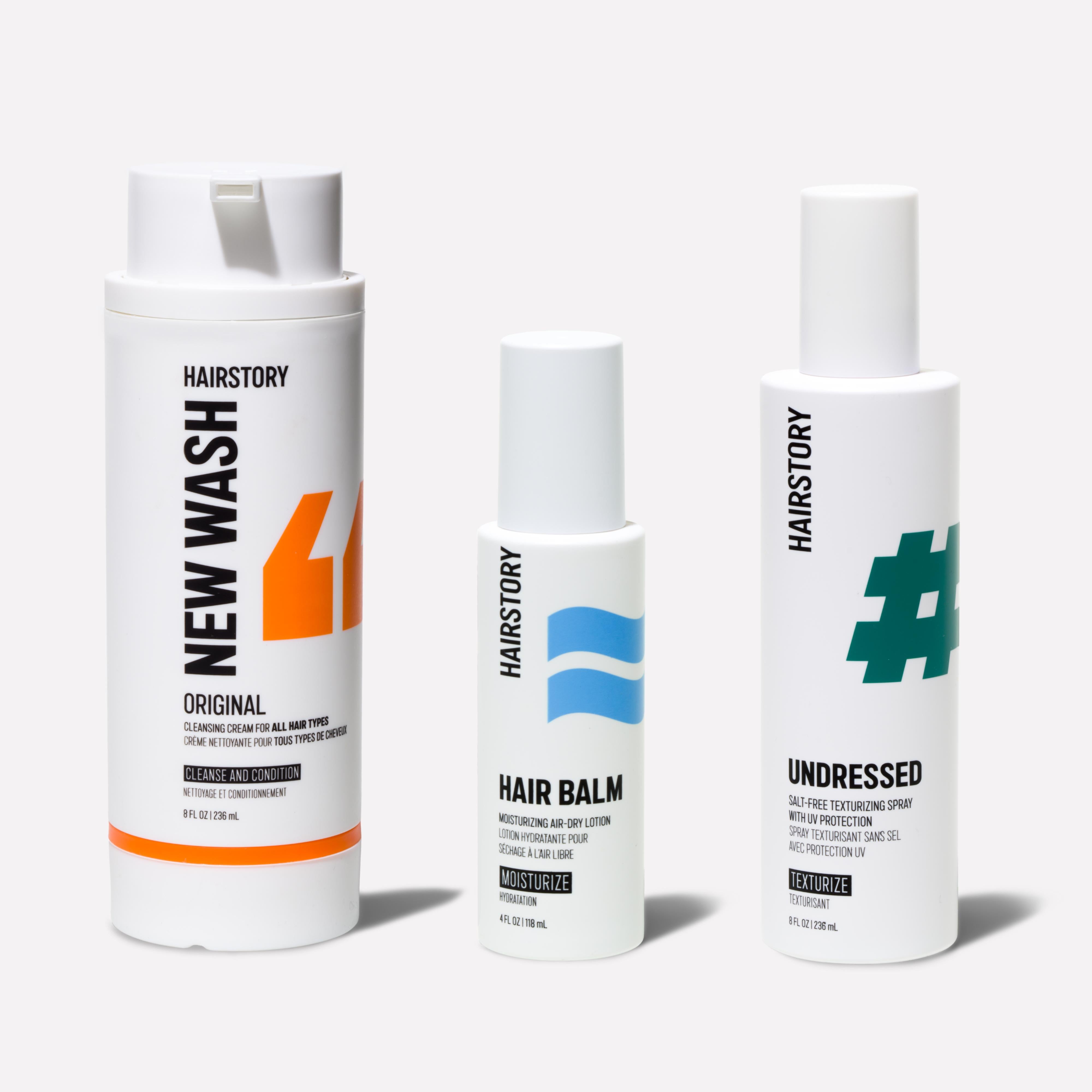
It's got prebiotics, which are like food for your microbiome. So you're feeding your scalp instead of stripping it while cleaning. Pre-Wash is so important to me because it's still 100% detergent-free. It still cleans without stripping. And we're talking powerful enough to clear up buildup from silicones.
Once you have an optimal scalp with Pre-Wash, let's make sure your hair is the best version of itself. The next step is going to be New Wash, and I kid you not, this next step will literally change your life.
For my fine hair friends, expect hair that has more integrity within each strand. For my thick hair friends that constantly feel like their hair is dry and thirsty, and everything in the middle, New Wash is going to be your best friend.
New Wash has three formulas, so you can pick whichever is going to be right for you. Remember, it's designed to be detergent-free, which conditions the hair and cleans the scalp without robbing it of the good oils. It's a return to how great your hair can actually be.
And for all of y'all that are skeptical, I think you should be. I was myself. But I dare you to do something different, because I know the rewards outweigh the worries.
Sincerely,

The information in this article is for educational purposes only and is not intended as medical advice. Always consult a board-certified dermatologist or qualified healthcare provider if you have concerns about your hair or scalp health.