Hair Hydration vs. Moisture: Why Your Hair Needs Both
Most people use "hydrated" and "moisturized" as if they mean the same thing. They don't. And that confusion is responsible for a lot of frustrated people with dry, brittle, or frizzy hair who can't figure out what they're doing wrong.
The honest answer is usually this: they're solving half the problem. Getting both right is what actually changes your hair.
The Difference Is Structural
To understand hydration versus moisture, you have to understand what hair actually is at the strand level.
Every strand is built in three layers. The medulla runs through the center, a narrow channel something like the graphite core in a pencil. Around it sits the cortex, a dense arrangement of long, thin cells that determine your hair's color, texture, and thickness. And on the outside, the cuticle — the thinnest layer, serving as the protective surface of the entire strand.
Hydration applies to the inner layers. It's about water absorption and retention inside the medulla and cortex. Moisture, by contrast, is about the cuticle. It's about regulating water by sealing it in with oils so it doesn't evaporate out of the strand.
Once that water escapes, hair becomes dry, brittle, and vulnerable to damage.
The analogy to skin is almost exact. Dehydrated skin becomes irritated and rough; well-hydrated skin has a noticeable glow. But hydrating skin is only step one. Moisturizing seals the water in. Same mechanism. Same sequence. Same logic.
Hydration: Starting From the Inside
How to Know If Your Hair Is Dehydrated
Hair type is often a reliable signal here. Straighter hair generally retains water more easily. Curlier hair tends to need more. Very porous hair — hair that dries quickly and breaks easily — is typically dehydrated.
The simplest test is to drop a loose strand into a glass of water. High-porosity hair will sink almost immediately. Lower-porosity hair will float.
According to research published in the International Journal of Trichology, the structural integrity of the hair fiber is directly related to its water content, and even moderate dehydration can significantly increase susceptibility to mechanical damage.
How to Hydrate Your Hair
Hair type matters a great deal here. Fine, straight hair and thick, curly hair have very different needs.
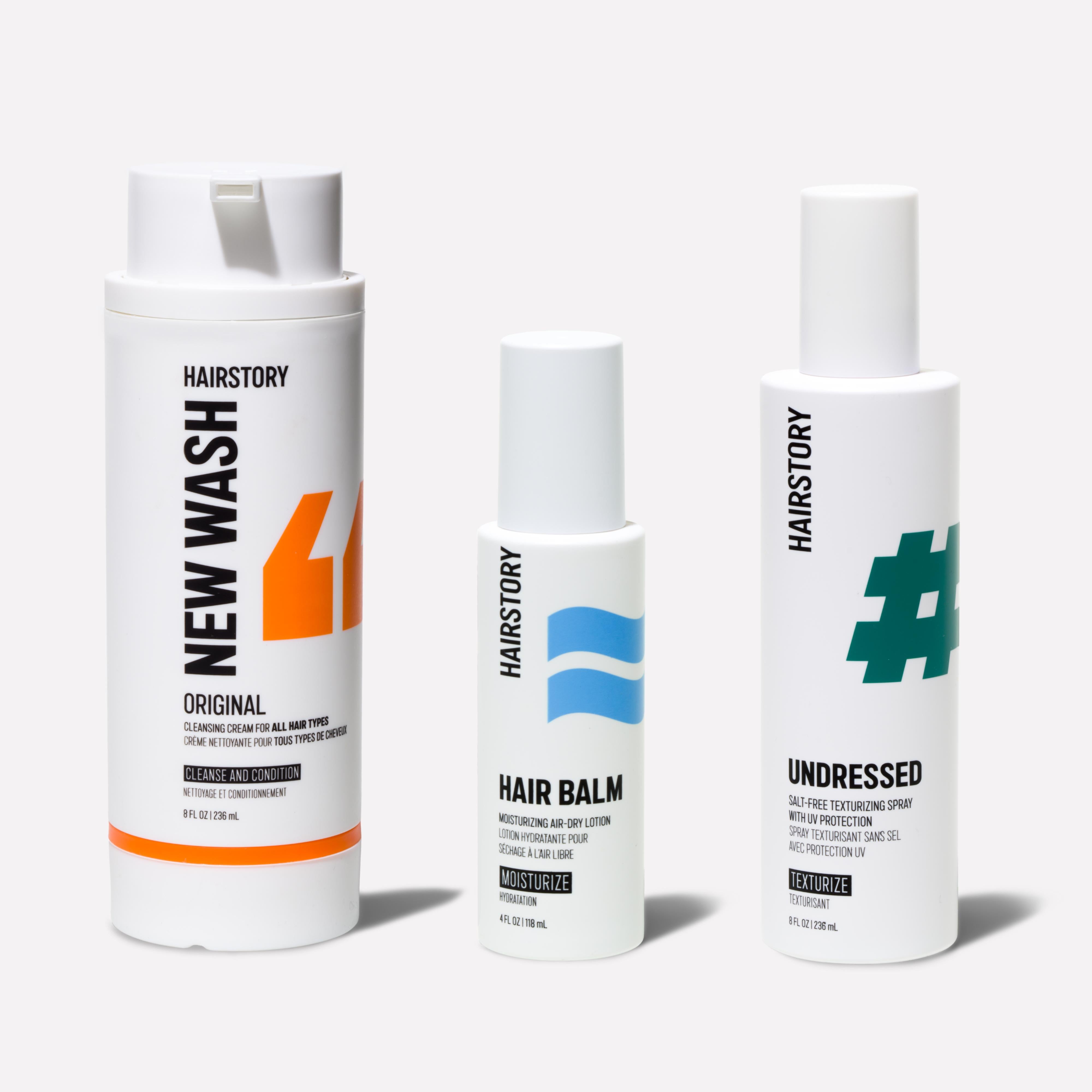
If you have fine, oily hair, the temptation is to shampoo often. Resist it. Stripping natural oils too frequently dries the hair out and triggers the scalp to overproduce oil to compensate — which becomes a cycle that's hard to break. A detergent-free cleanser like New Wash Deep Clean is lightweight enough for daily use on fine hair without disrupting that balance.
If you have thick or curly hair, frequent washing usually isn't necessary — but product buildup can be a real issue. Cutting out detergent shampoo altogether and switching to something like New Wash Rich cleans effectively without stripping the oils your hair needs to stay balanced and hydrated. New Wash Rich also has conditioning properties built into the formula, though adding a mask periodically can push things further.
What you put into your body matters as much as what you put on your hair. A well-hydrated body produces well-hydrated hair. The link between water intake and hair health is well-established — the hair shaft is roughly 15% water by weight, and falling below that threshold affects fiber behavior measurably.
Interestingly, research from Dr. Howard Murad at the University of California suggests that eating water-rich foods may be even more effective than drinking water alone. Water absorbed through food is released more slowly into the body, extending its beneficial effects. Foods above 85% water content — cucumbers, melons, strawberries, spinach, celery — are genuinely useful inputs, not just wellness talking points.
One thing to be deliberate about: heat is a dehydrator. Hot showers, blow drying, and heat styling all accelerate moisture evaporation from the strand. These don't have to be eliminated entirely, but their cumulative effect adds up.
Moisture: Sealing What You've Built
How to Know If Your Hair Needs Moisture
Dehydration and lack of moisture can look similar from the outside — both leave hair dry and fragile. But hair that needs moisture specifically will also look dull, develop split ends more readily, and tangle easily. Coarser, curlier hair tends toward dryness and needs more frequent moisture attention. The same is true for chemically processed hair or hair that's regularly exposed to heat.
How to Moisturize Hair
The steps are similar to those for hydration, and they overlap for good reason:
Don't cleanse with detergents. Traditional shampoo detergents strip away the sebum film your scalp produces to protect and seal your hair. Once that film is gone, moisture follows quickly. Switching to a detergent-free cleanser is one of the most direct things you can do for long-term moisture retention.
Condition consistently, and cycle in masks. In drier, colder seasons especially, a conditioning mask added to rotation pays dividends.
Try the LOC Method. Particularly effective for curly hair: wet the hair, apply oil, then seal with a cream. The sequence matters. The idea is to build layers that lock water progressively deeper into the strand.
Be deliberate with heat. If you're going to heat style, apply a thermal protectant first. Use a diffuser on a lower setting when blow drying. The goal isn't to avoid heat entirely but to limit the damage each exposure causes.
Products That Help with Moisture Retention
Styling products are primarily about moisture retention, not hydration. Hair Balm is one of the more effective options for this — a leave-in moisturizing lotion that seals water into the strand and works particularly well for managing frizz, which is often just a symptom of dry hair losing moisture to the environment.
The Bottom Line
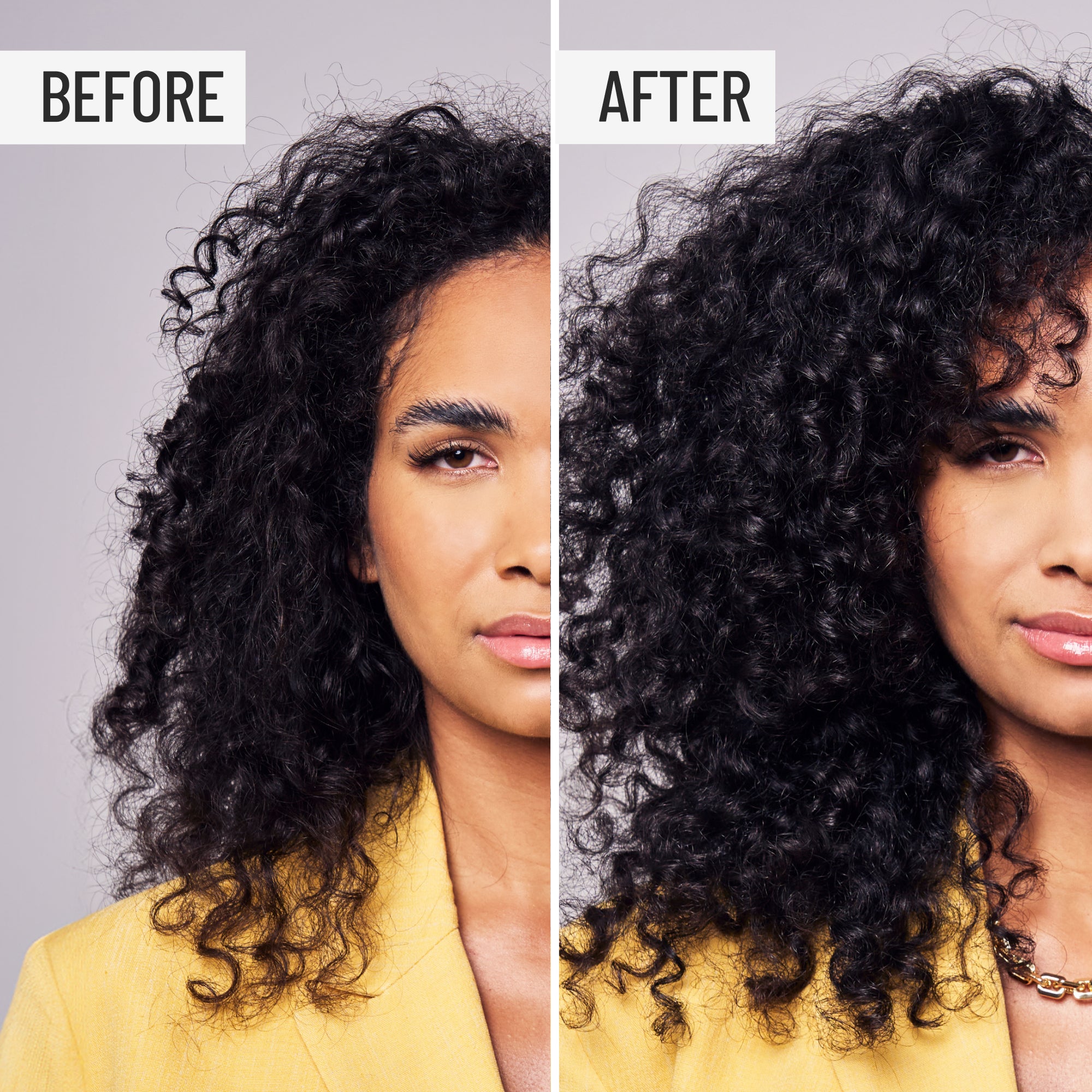
Hydration and moisture are two different mechanisms. Hydration is water getting into the strand. Moisture is keeping it there. Most hair problems that feel impossible to solve are actually two problems stacked on top of each other — and treating only one of them explains why results are inconsistent.
Get both right, and the improvement tends to be significant enough that you'll wonder why it took this long to see it.
The information in this article is for educational purposes only and is not intended as medical advice. Always consult a board-certified dermatologist or qualified healthcare provider if you have concerns about your hair or scalp health.