Are styling products that claim to protect your hair from heat really necessary or worth the trouble? The resounding answer is yes, and yes, especially if your blow-dryer is one of your prized possessions.
If you use irons to curl or straighten, or when you put on premium human hair extensions, then there’s no doubt about your need for heat protectant spray. Here is how heat protection works in your favor.
DOES HEAT STYLING DAMAGE HAIR?
Straighteners and curling irons heat your hair to somewhere between 95 and 170° C. When your hair gets heated above 130°C (266°F), you’ve entered the hair damage zone, and letting the hot metal rest on hair for several seconds can burn it right off. Here’s what else can happen:
- Hair color pigments you use may start to change when using heat styling tools without protectant spray, such as blonde going brassy (e.g. bleached hair goes brassy).
- The keratin proteins that give your hair strength and elasticity begin to break down.
- The outer surface of the hair, the cuticle, cracks and frays, and loses its protective ability.
- Moisture evaporates from the interior layers of the hair shaft – and if you heat wet hair, steam will blast through the hair structure and cause breakage and split ends as it escapes.
Heat protectant spray is designed to prevent these kinds of heat-related damage by building a protective barrier between your styling tools and your hair to help maintain your healthy hair.
HOW DO HEAT PROTECTANTS WORK?
A few heat-protecting ingredients have been studied independently to reveal their efficacy, specifically PVP/DMAPA acrylates copolymer, quaternium-70, and hydrolyzed wheat protein. In general, these ingredients form a thin film on the hair’s surface, providing a thermal protectant that helps to slow down heat conduction and distribute the heat more evenly. This means that hair will heat up gradually rather than suddenly to lessen the shock, resulting in less hair damage.
Using a thermal protectant means that hair will heat up gradually rather than suddenly to lessen the shock, resulting in less hair damage.
Silicones are commonly used to assist in transferring heat slowly when coating hair fibers, and also act as a seal on the hair cuticle to reduce moisture loss caused by heat styling tools, and help protect from heat damage.
WHAT ARE THE BENEFITS OF HEAT PROTECTANTS FOR HAIR?
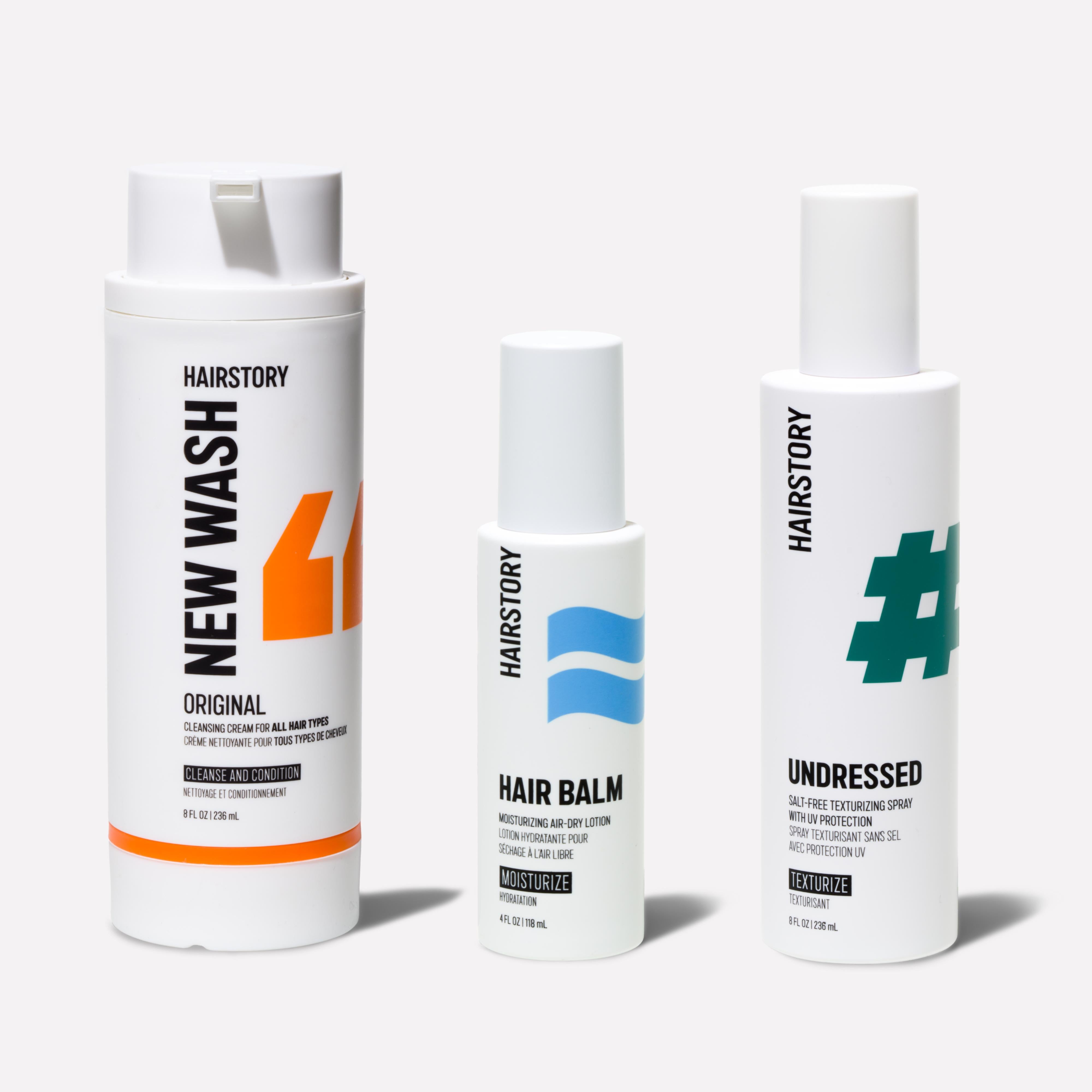
A heat protectant for hair also reduces water evaporation by sealing in what is already there. It forms a seal to prevent moisture from the atmosphere, which causes hair to frizz and styling to collapse. In essence, the hair product will help you to maintain the overall condition of your hair. Looking to aid in the longevity of your hair even further? Check out our hair protector, a lightweight spray that helps minimize damaged hair.
You might want to mix in a leave-in conditioner to your routine that will give your hair the appearance of a silky smooth finish. If you’re wondering, “what is a leave-in conditioner” and how to find the right one, check out Hair Balm, our moisture-inducing formula that will help your dry hair without frizz.
Keep in mind that heat protectants only reduce the amount of damage caused by heat styling by about 50% at most.
Keep in mind that heat protectants only reduce the amount of damage caused by heat styling – even the best results show about 50% heat protection at most – and do not offer broad protection from other threats such as pollutants in the air. Protection from the sun’s UV rays involves another class of ingredients altogether, though they work in a similar way.
HOW TO USE HEAT PROTECTANT SPRAYS
While essential, heat protectants are not a free pass to plug in and iron away worry-free. Whether you’re using a spray or a cream, it’s important to distribute your product evenly on damp hair if you are using a blow dryer – not sopping wet hair – from roots to ends. Only then should you put heat to hair, and when you do, take proper precautions to make heat styling as kind to your hair as possible.
Heat tools are cool – until you get burned. If you are using a hair straightener or other irons, wait until the hair is dry to apply a heat protector and begin styling.
Style like a pro.
Choose professional-grade appliances with safety features and high-quality materials. Session stylist Brian Casey says, “All you need is a Twin Turbo. It will last you forever.” He also urges you not to balk at a high price tag for high-quality irons; “They’re worth the investment,” he says. Safety first!
Stylist Jennifer Covington-Bowers loves the Bio Ionic straightener: “It’s designed to moisturize while straightening and gets hair super smooth – great for a silk press.” She also loves the famously expensive Dyson dryer and its attachments: “The comb helps hair dry faster,” she says.
Combine with other styling products.
Combining a heat protectant with other styling products can help get you that carpet-ready look you are searching for. A simple trick is to touch up your roots with a natural dry shampoo before going in with your heat protectant and styling tool. There are many ways to use dry shampoo, but using it before styling will help give you added volume that is perfect for any occasion.
Another one of our favorite tips is to add a sea salt spray or a texturizing spray to your hair to give you those beachy waves. You may be wondering, “What does a sea salt spray do and does the salt damage my hair?” Sea salt sprays add body and texture to your hair by supporting the natural curl. Some of them can dry out your hair or make it crunchy to touch which is why we made Undressed without any salt!
One heat setting does not fit all.
Find tools with adjustable temperature settings. Keep heat settings under 400°F. Fine or damaged hair requires the lowest setting. The thicker and therefore stronger your hair is, the higher the temperature can be. Knowing your hair type will help you gauge what level of heat you can put on your hair.
Know your limit.
Try not to style with heat more than twice a week, especially if your hair is very fine, fragile, or damaged. By avoiding excessive days of heat on your hair, the result is healthy hair you’ll love!
Wear (heat) protection.
Use a thermal protecting lotion on damp hair that offers some hold and includes ingredients such as copolymers, quaternium-70, and hydrolyzed wheat or soy protein. The product we recommend to anyone before they reach for the blow-dryer is called Dressed Up, our hair protector, which relies on Sodium Methoxy PEG-16 Maleate/Styrene Sulfonate Copolymer with an assist from Amodimethicone for heat protection. It not only offers some protection but gives your style soft, natural hold and leaves hair touchable, never crispy or sticky (and it helps filter those UV rays too).
Work quickly.
Limit contact and minimize exposure by keeping your curling iron or hair straightener moving frequently. It’s better to use a cooler tool for longer (a few seconds per section) than a hotter one to save time. If you hear sizzling or smell burning when you touch a tool to your hair, it’s far too hot!
Pull the plug.
Stop at the first signs of chronic dryness, split ends or significant damage to your hair shaft.
THE BOTTOM LINE
Heat protectants help you reduce heat damage by evening out and slowing how hair heats up. They’re only half the solution, however, and can’t insulate hair completely, so practice safe styling and remember that there are ways to look cool (or hot) without heat!