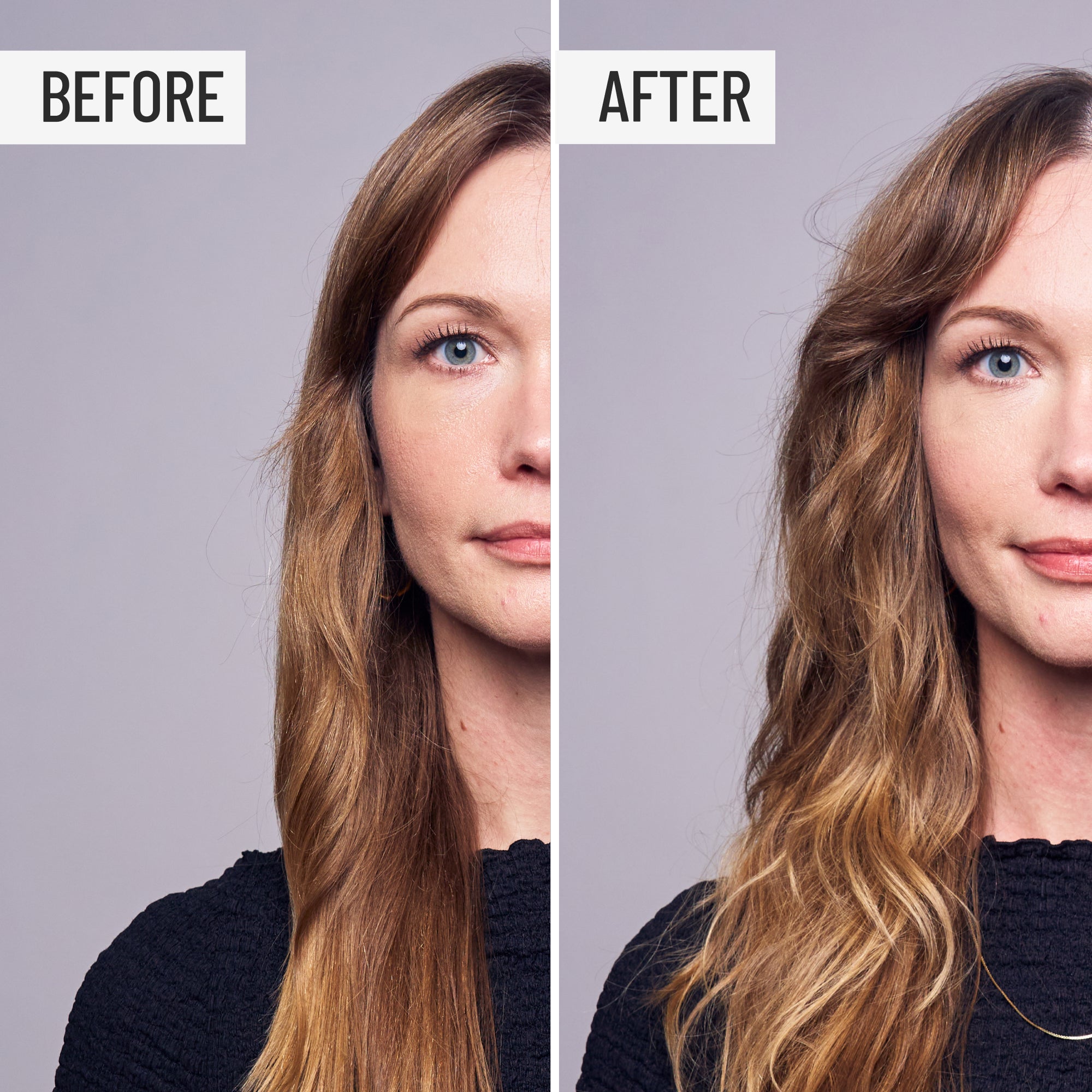
What Heat Does to the Hair Shaft
Hair's ability to be shaped by heat comes from hydrogen bonds within the cortex, which are temporarily broken by the combination of heat and moisture, then reformed in the new shape as the hair cools. This is the mechanism behind curling: the iron heats the shaft, the bonds shift, and if the hair cools in the curved position, the bonds reform in that shape.
The cuticle, the outermost layer of the hair shaft, is the part that pays the price for this process when it is not protected. Cuticle scales, which lie flat when the hair is healthy and smooth, lift and separate under high heat. Repeated lifting and exposure degrades the cuticle's structure progressively, creating the rough surface texture that produces frizz, reduces shine, and eventually leads to the split ends and breakage associated with chronic heat damage.
The two variables that determine how much cuticle damage accumulates are temperature and time. Using the lowest effective temperature for a given amount of time, and spending the minimum time with the iron clamped on any section, minimizes the damage. Thermal protection is the tool that makes lower temperatures effective by creating a barrier between the heat source and the cuticle.
Primer: The Non-Negotiable First Step
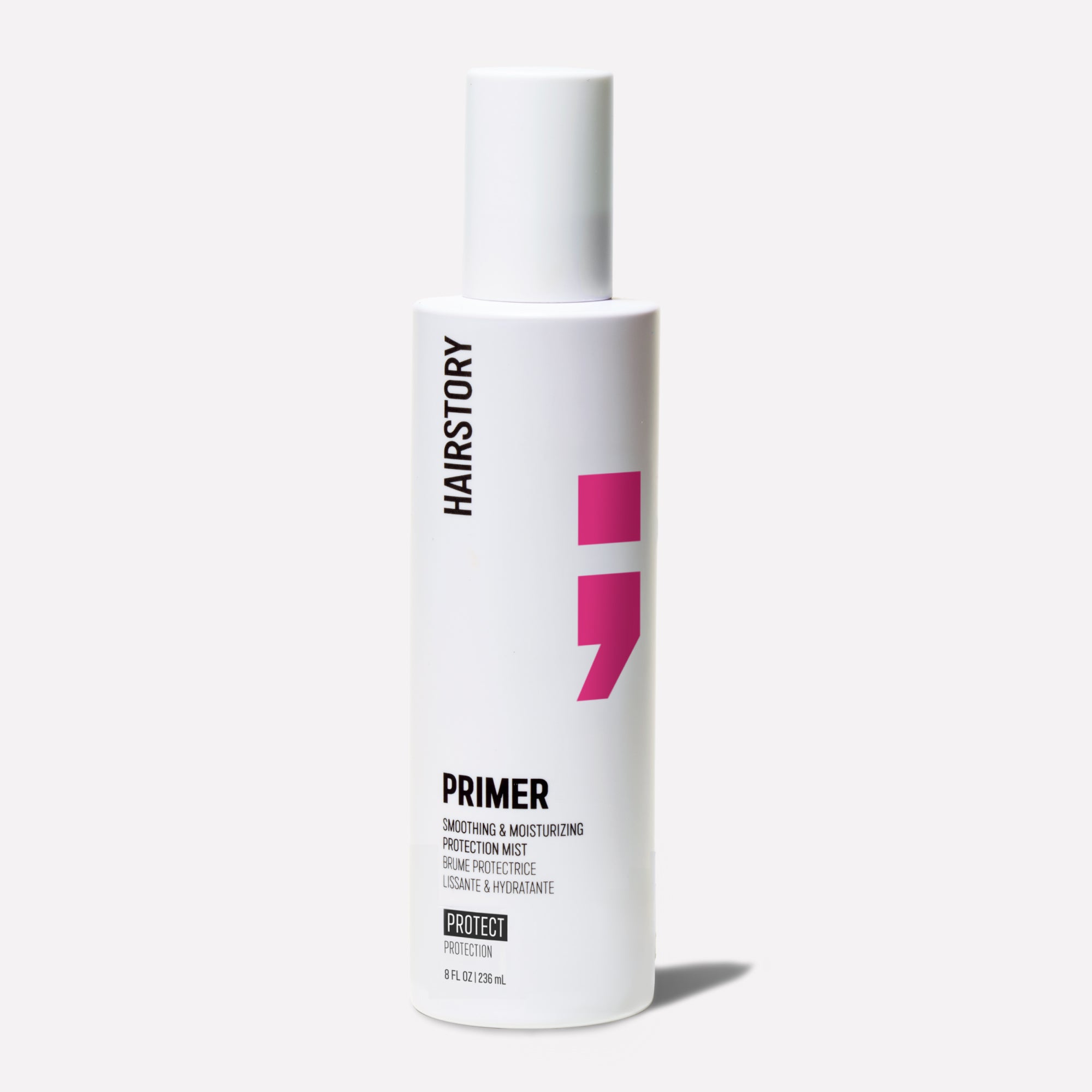
Primer applied to all damp sections of hair before any heat curling session is the foundational step in a healthy heat styling routine. It works by forming a light protective coating on the hair shaft that distributes heat more evenly across the section, reduces the direct exposure of the cuticle to the iron, and lowers the effective temperature needed to reshape the hair's hydrogen bonds.
The practical result is that the same curling result can be achieved at a lower iron temperature and with shorter dwell time when Primer is applied than without it. Less heat for less time means significantly less cuticle damage per session, which compounds over weeks and months of regular heat styling into a measurable difference in hair condition and the quality of the curl itself.
Primer is applied to damp hair before any drying, worked through all sections that will be heat-styled, and allowed to dry into the hair before the curling iron is used. It does not need to be rinsed out and does not interfere with the curl's formation. For hair that is both blowdried and then heat-curled, Primer applied before the blowdry provides protection during both heat applications.
How Hair Condition Affects Curl Quality and Hold
The condition of the hair before it goes into the curling iron determines the quality of the curl that comes out. Hair that is clean, moisturized, and free of heavy silicone buildup behaves predictably under heat: it takes the curl shape evenly, cools consistently, and holds the shape for hours. Hair that is coated with silicone from accumulated conditioners and styling products does not.
Silicone creates a barrier on the hair shaft that disrupts how heat penetrates and how the hair cools. Curls formed on silicone-coated hair are often inconsistent, fall faster than expected, and produce a flat rather than dimensional finish. The silicone layer also absorbs some of the heat that should be reshaping the cortex, which causes people to turn the iron temperature up or hold sections longer to compensate, both of which increase damage without improving the result.
Washing with New Wash, which does not contain silicone, ensures that the hair going into the curling iron is genuinely conditioned rather than coated. The cuticle is smooth, the shaft is responsive to heat, and the curl forms and holds the way it should.
New Wash: Clean Hair That Curls
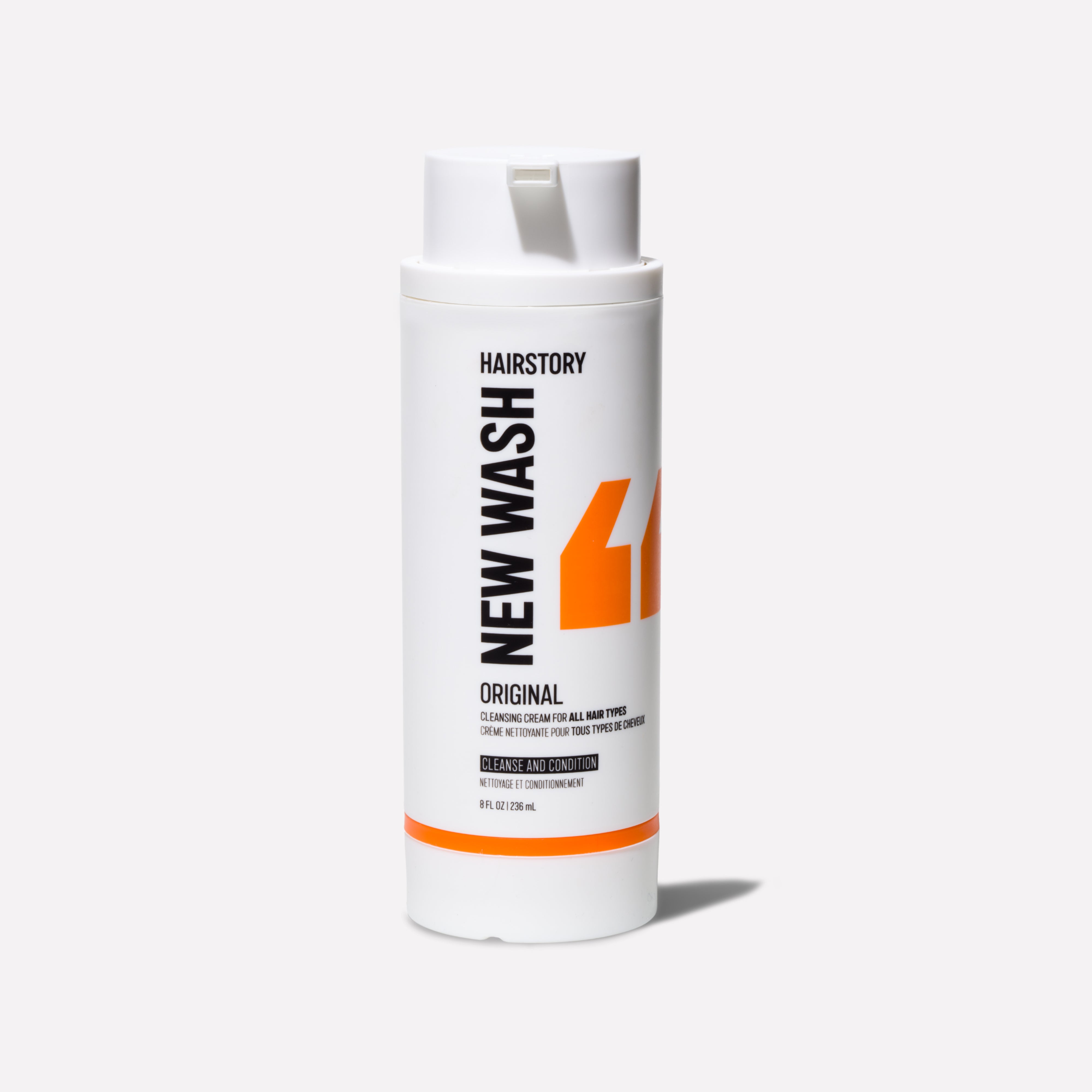
New Wash (Original) is the baseline formula for most hair types being heat-curled. It cleanses without the sulfate stripping that leaves hair dry and more vulnerable to heat damage, and conditions through the cleanse itself without depositing silicone that would interfere with curl formation.
New Wash (Rich) is the better choice for hair that is color-treated, previously heat-damaged, or naturally dry, where the additional emollient conditioning during the wash provides the moisture that makes a difference in how the hair handles heat. Well-moisturized hair is more elastic and more resilient than dry hair, which means it shapes more easily and is less likely to sustain structural damage during the curling process.
New Wash (Deep Clean) used every two to three weeks removes any mineral deposits or accumulated product that a regular wash formula may not fully clear. For frequent heat-curlers, keeping the hair free of mineral and product accumulation is not just a conditioning concern. It directly affects how well the hair curls and how long the style holds.
Curl Longevity and the Product Buildup Problem
One of the most common frustrations with heat-curled styles is curls that fall out too quickly. The cause is usually one of three things: insufficient heat, hair that is not fully dry when it goes into the iron, or product buildup that prevents the curl from setting.
The product buildup cause is the one that most people do not identify because it is a gradual accumulation rather than a single event. Hair that has been using silicone-based products for months or years develops a coating that becomes increasingly thick over time. When heat is applied to this hair, the coating acts as insulation, preventing the heat from fully penetrating the section and allowing the hydrogen bonds to reshape. The curl forms on the surface but not throughout the shaft, and it releases quickly because the interior of the hair never fully set.
Clearing this buildup with New Wash Deep Clean, and maintaining a sulfate-free, silicone-free routine that does not re-establish it, produces an immediate improvement in curl hold for many people.
Hair Oil as a Curling Finisher
Applying a light finishing oil to dry, curled hair serves two purposes: it seals the cuticle that the heat has partially lifted during the curling process, and it adds the shine that a well-formed curl should have but often lacks when the cuticle is rough from heat or dryness.
Hair Oil applied very sparingly, a small amount rubbed between the palms and pressed gently over the surface of finished curls without disturbing their shape, provides the shine and smoothness that distinguishes a finished curl style from one that looks slightly frizzy or dull. The key is minimal product: enough to coat the surface of the curls without weighing them down or causing them to loosen.
Hair Oil on finished curls also provides a light barrier against humidity that helps the style hold longer in environments where atmospheric moisture would otherwise cause the curls to swell and lose definition.
Making Curls Last Between Washes
A heat-curled style that can extend across two to three days is lower-maintenance than one that requires daily re-curling, and lower maintenance means less cumulative heat exposure over time. The factors that extend curl life are the same factors that produce a better curl in the first place: clean hair without buildup, proper Primer protection during styling, and Hair Oil to seal the cuticle and protect against humidity after styling.
On day two or day three, Hair Oil applied sparingly through the lengths refreshes the shine and controls any frizz that has developed at the surface without disturbing the curl structure. The hair can be refreshed without heat, extending the style and giving the hair another day of recovery before the next wash and styling session.
A Routine for Regular Heat Curlers
Wash with New Wash Original or Rich, allowing sufficient time for the hair to be fully dry before curling. Apply Primer to all damp sections before drying and heat styling. Use the lowest iron temperature that produces the desired curl. Finish dry curls with a small amount of Hair Oil for shine and humidity protection. Every two to three weeks, substitute New Wash Deep Clean to clear any mineral or product accumulation. Refresh second- and third-day curls with Hair Oil as needed.
The routine that protects hair during heat curling is the same routine that makes each curl better and longer-lasting. Protection and quality are not separate goals here. They are the same goal.