What Hair Masks Are Designed to Do
A hair mask is a concentrated conditioning treatment designed to deliver intensive moisture, protein, or both to the hair cortex in a single application. Used once a week or more frequently for significantly damaged hair, masks are intended to restore moisture balance, improve elasticity, reduce breakage, and address the dryness and brittleness that accumulate over time.
The distinguishing feature of a hair mask compared to a standard conditioner is concentration and contact time. Masks are left on for anywhere from five minutes to overnight, giving their active ingredients more time to penetrate the cuticle and reach the cortex where lasting improvement occurs. The assumption is that regular conditioning is insufficient and that periodic intensive treatment is needed to correct what regular care cannot maintain.
This assumption is correct for most conventional haircare routines. It is far less true for a sulfate-free, silicone-free routine built around daily or per-wash conditioning that does not create the deficit the mask is designed to correct.
Why Hair Masks Often Underperform
The single most common reason hair masks fail to deliver their promised results is the same reason regular conditioners fail: they are being applied on top of a silicone coating that prevents their active ingredients from reaching the cortex.
The conditioners, styling products, and previous mask treatments in a conventional routine deposit silicone polymers onto the hair shaft with each use. By the time a mask is applied, the strand is already coated in accumulated silicone that forms a barrier between the mask's ingredients and the hair they are meant to treat. The mask sits on top of the barrier, provides temporary surface softness, and is rinsed away without having meaningfully penetrated the strand.
This is why hair that has been through a sulfate clarifying wash, which temporarily removes silicone buildup, often responds so dramatically to a mask applied immediately afterward: the barrier is gone and the ingredients can actually reach the cortex. But this improvement is temporary because both the silicone-depositing products and the stripping products that remove them remain in the routine.
New Wash (Rich) as a Per-Wash Treatment
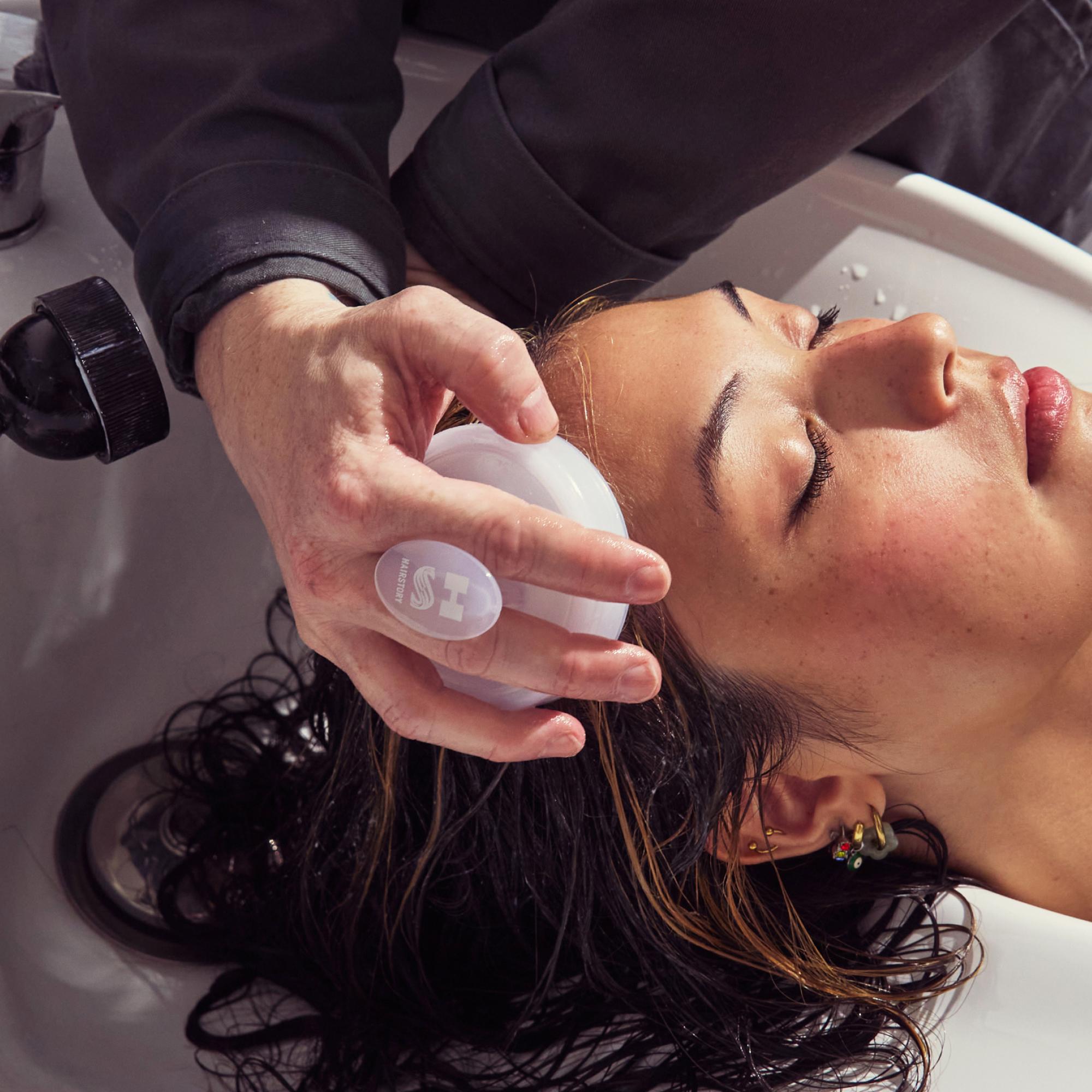
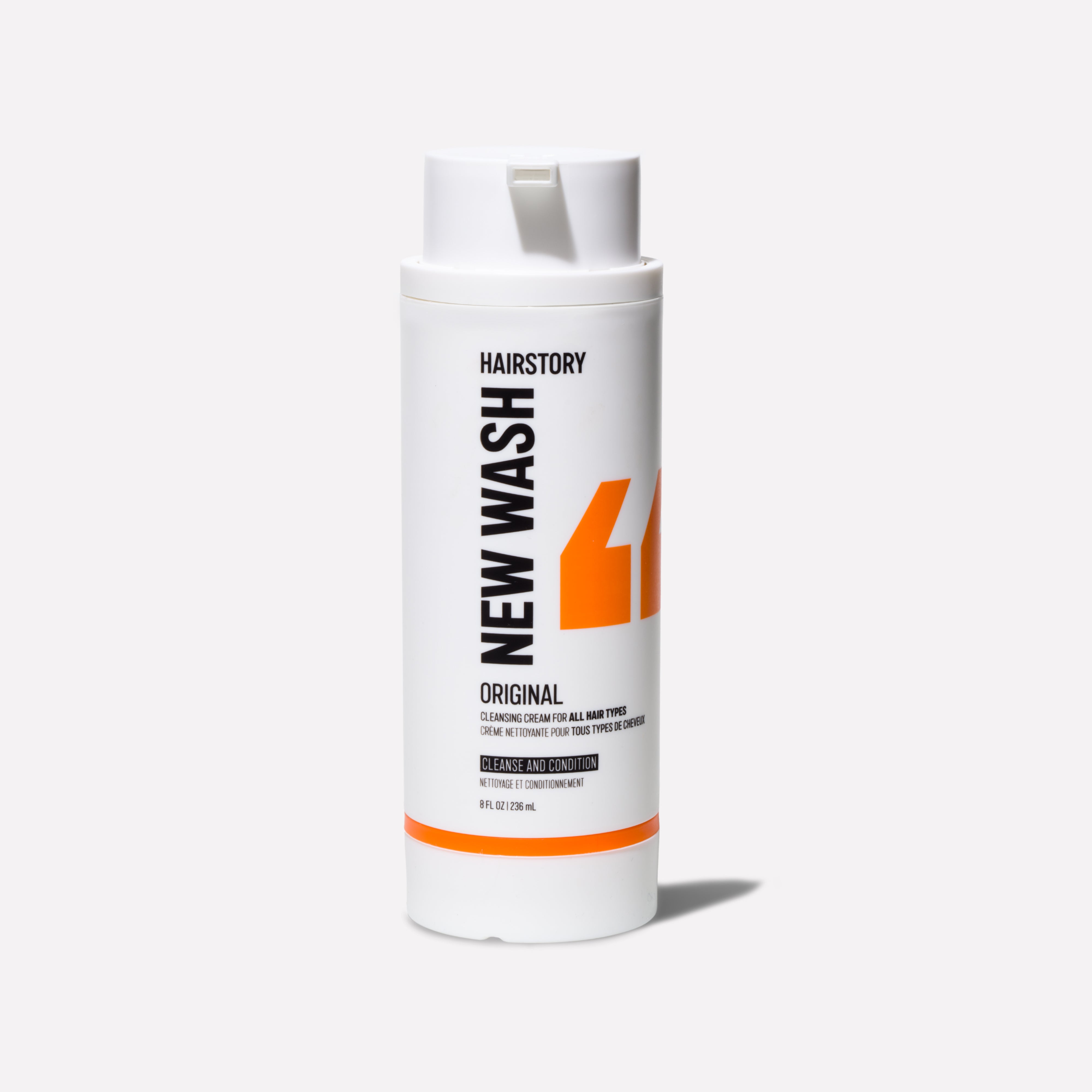
The most practical hair mask alternative is a cleansing conditioner concentrated enough to condition deeply in the time it takes to wash. New Wash (Rich) was formulated to do exactly this. Its higher concentration of conditioning emollients compared to New Wash Original means that the two to three minutes it remains on the hair during the wash is doing meaningful conditioning work, not just light surface treatment.
Because New Wash Rich is silicone-free, the conditioning emollients it delivers are not being applied on top of a coating barrier. They are applied to the strand directly, on wet hair during the wash, at the moment when the warm water has the cuticle most open and receptive. Over consistent use, the result is hair that is cumulatively more moisturized from the wash itself rather than hair that requires a separate intensive treatment to compensate for what the wash removed.
For hair that currently relies on weekly masks to maintain moisture balance, transitioning to New Wash Rich as the regular cleansing formula often reduces or eliminates the need for those masks because the cleanse is no longer creating the deficit the mask was correcting.
Hair Balm: Continuous Treatment Rather Than Weekly Correction
The model of the hair mask assumes that hair care operates in a cycle of damage and repair: strip, then restore, strip again, then restore again. The alternative model is continuous nourishment that prevents the deficit from accumulating in the first place.
Hair Balm, applied to damp hair after every New Wash wash, delivers leave-in conditioning that accumulates beneficially over time. Unlike a weekly mask that delivers a large amount of conditioning that the hair partially absorbs and partially loses before the next treatment, Hair Balm provides consistent, moderate conditioning with each application that compounds over weeks. Hair that receives leave-in conditioning after every wash has a continuously higher moisture baseline than hair that receives intensive treatment once a week and no treatment in the days between.
Because Hair Balm is silicone-free, it does not contribute to the barrier that prevents conditioning absorption. Each application builds on the last rather than layering coating on top of coating. Over several weeks of consistent use, the cumulative improvement in moisture, softness, and manageability is typically more significant than what weekly masking achieves, because it is genuine conditioning rather than temporary surface treatment.
Extended Dwell Time: Getting More from Every Wash
For hair that still benefits from a more intensive conditioning moment without a dedicated mask product, extending the New Wash Rich dwell time is the simplest approach. Applied to thoroughly saturated hair, covered with a shower cap, and left for ten to twenty minutes under the warmth of a hot shower or warm towel, New Wash Rich functions as a deep conditioning treatment in addition to a cleanser. The heat encourages the cuticle to open further and allows the emollient conditioning agents more time to penetrate.
This approach delivers the benefits of a conditioning mask without an additional product, without silicone, and without the barrier issues that make conventional masks less effective over time.
Hair Oil: Between-Wash Moisture Insurance
The gap between washes is where hair mask users most often feel the need for their treatment. Hair becomes progressively drier through the days between washing, moisture depletes, and by the next wash day the hair is in a state that only intensive treatment seems to address.
Hair Oil, applied in small amounts to dry lengths on non-wash days, maintains the moisture seal that Hair Balm established on wash day. A few drops warmed between the palms and pressed through the lower half of dry hair slows the rate of moisture loss, adds surface smoothness, and maintains the cuticle-sealed state that prevents the progressive dryness that makes masks feel necessary. Used consistently between washes, Hair Oil is the ongoing maintenance that keeps hair closer to its wash-day condition rather than letting it drift toward a state that requires correction.
When a Mask Is Still the Right Choice
There are circumstances where a dedicated hair mask remains appropriate: significantly damaged hair that is recovering from bleaching or chemical processing, hair that has been exposed to significant environmental damage such as sun, salt water, or chlorine over an extended period, or hair undergoing a transition from conventional products where existing damage is still being repaired.
In these cases, using a mask formulated without silicones, applied to clean hair after a New Wash Deep Clean wash that has cleared the absorption barrier, and used in combination with the regular New Wash Rich and Hair Balm routine produces the best results. The mask's intensive conditioning is able to reach the cortex without barrier interference, and the regular routine prevents the damage from accumulating at the rate it would with conventional haircare.
New Wash (Deep Clean) as a Periodic Reset
New Wash (Deep Clean) supports any conditioning strategy, mask or otherwise, by periodically clearing the surface accumulation that reduces product penetration. Used every two to four weeks in place of the regular formula, it ensures that Hair Balm and any additional conditioning treatments are being applied to a clean, receptive surface rather than through accumulated residue.
A Routine That Reduces the Need for Masks
Wash with New Wash Rich, allowing a two to three minute dwell time, or longer with a shower cap for a more intensive conditioning moment. Apply Hair Balm to soaking wet hair immediately after rinsing as a leave-in. Between washes, apply Hair Oil to dry lengths to maintain moisture and prevent the drying that makes masks feel necessary. Use New Wash Deep Clean periodically to clear buildup and maintain product absorption.
Hair that is genuinely moisturized through its regular routine, rather than stripped and periodically restored, does not develop the accumulated deficit that makes intensive weekly treatments feel essential. The mask alternative is a routine that does not create the problem the mask was solving.