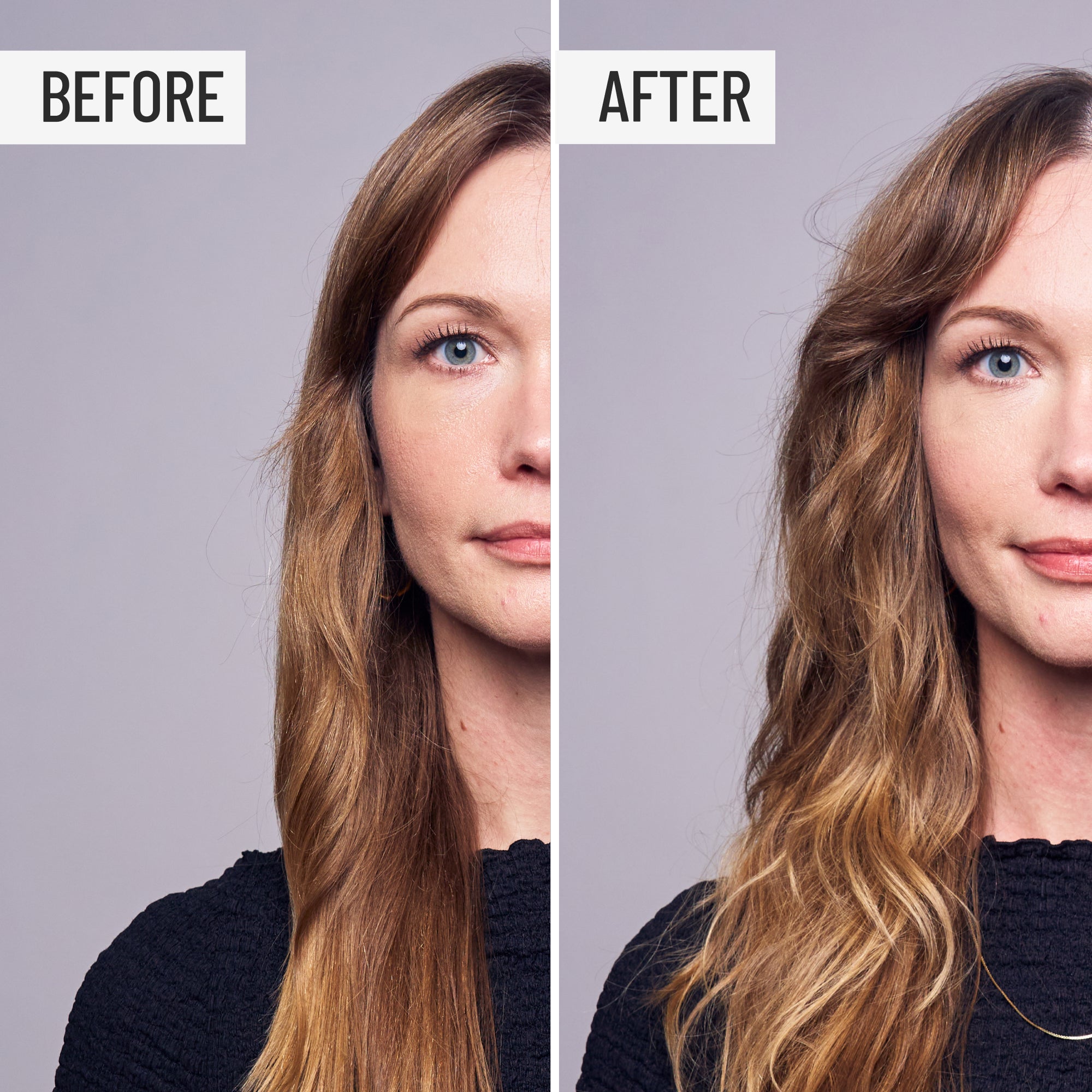
What Frizz Actually Is
Hair frizz occurs when individual strands absorb moisture from the surrounding atmosphere unevenly, causing the hair shaft to swell irregularly and the cuticle to lift away from the strand rather than lying flat. The result is the halo of lifted, separated strands that constitutes frizz, most visible in humid conditions because humidity provides the atmospheric moisture the hair is responding to.
The key word is responding. Frizz is not random. It is the hair's attempt to reach moisture equilibrium with its environment. When the hair shaft is adequately moisturized, it is not chasing atmospheric moisture because it does not need to. When it is dry, it is perpetually seeking the moisture it lacks. Humid conditions accelerate this process, which is why humidity is so strongly associated with frizz, but the frizz itself is a consequence of moisture deficit, not simply of humidity.
A smooth, intact cuticle also plays a significant role. Hair with a flat, closed cuticle reflects light evenly and resists uneven moisture absorption from the atmosphere. Hair with a raised, damaged, or irregular cuticle absorbs moisture unevenly, creating the irregular swelling that causes frizz. This is why heat-damaged, chemically processed, and high-porosity hair frizzes more readily than healthy hair even in the same conditions: the cuticle cannot maintain the flat barrier that prevents uneven moisture uptake.
The Anti-Frizz Product Paradox
Most anti-frizz products work by coating the hair shaft with silicone polymers that create a smooth surface and block the cuticle's ability to absorb atmospheric moisture. The mechanism is effective in the short term. Hair feels smooth, looks smooth, and resists frizz for a day or a few days.
The problem is structural and cumulative. Silicones coat the cuticle in a way that also blocks the absorption of genuine conditioning treatments. Hair that cannot absorb moisture treatments becomes progressively drier underneath the silicone coating. As the hair beneath becomes drier, the moisture deficit that drives frizz worsens. When the silicone coating eventually degrades or is partially removed by washing, the drier hair beneath is more prone to frizz than it was before the anti-frizz routine began.
Heavy sulfate cleansing to remove silicone buildup strips the hair further, deepening the moisture deficit, and the anti-frizz product is applied again to compensate. The cycle produces hair that is increasingly dependent on an increasingly ineffective treatment.
Addressing Frizz at the Source: New Wash
The first step in genuine frizz control is removing the source of moisture depletion. Sulfate shampoos strip the natural lipid coating from the hair shaft with every wash. This lipid layer, produced by the sebaceous glands and distributed along the strand, is one of the hair's primary defenses against moisture loss and cuticle disruption. Without it, the cuticle remains raised, the strand loses moisture rapidly, and frizz is the consistent result.
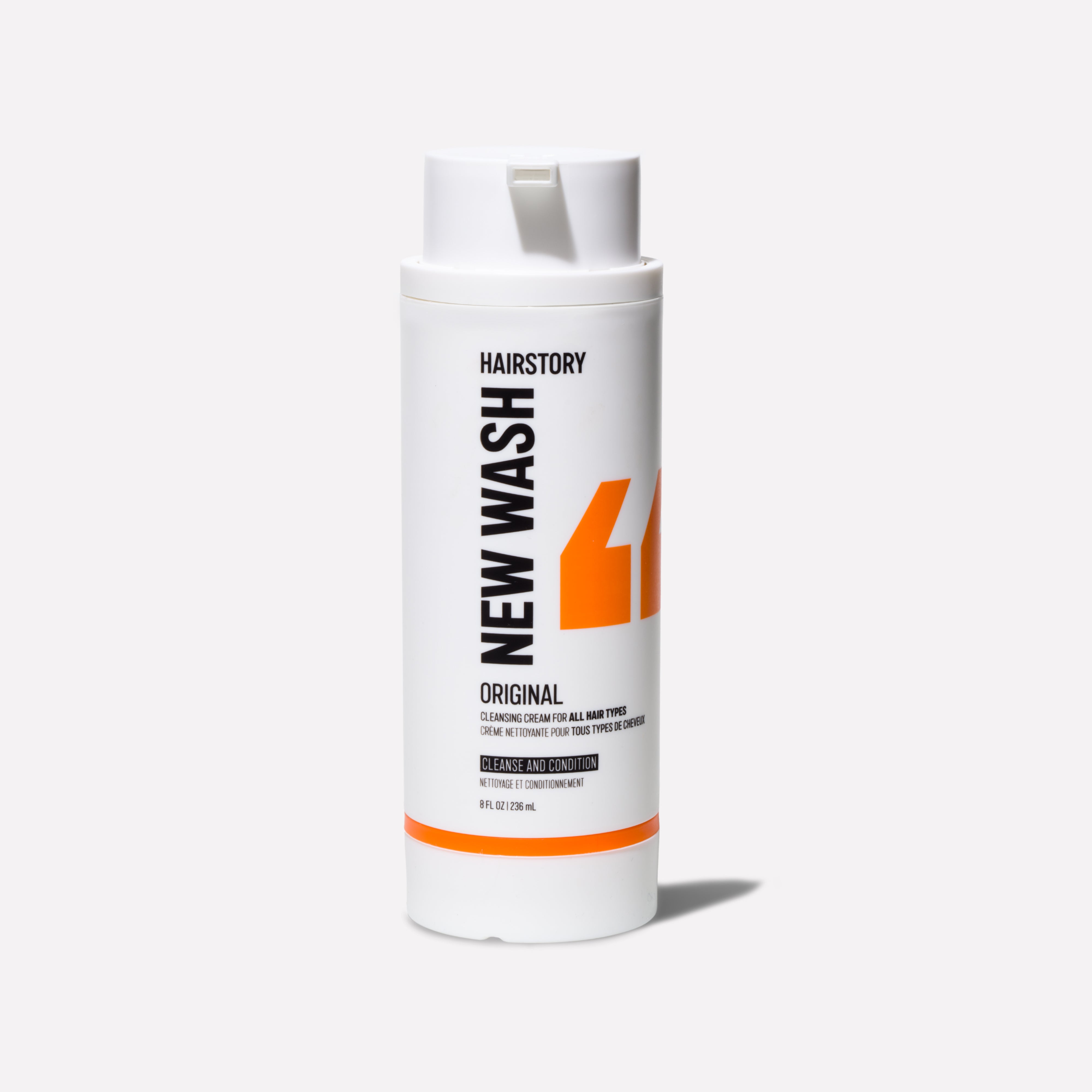
New Wash (Rich) is the recommended starting formula for frizz-prone hair. By cleansing without sulfates and conditioning simultaneously with emollient-based ingredients rather than silicones, it begins to restore the moisture balance and lipid content that keep the cuticle smooth and the strand moisturized. The frizz reduction from switching to New Wash typically becomes noticeable within two to four washes as existing silicone buildup clears and the hair begins receiving genuine moisture rather than coating.
For frizz-prone hair that is less dry or on the fine side, New Wash (Original) provides effective cleansing and balanced moisture without the fuller emollient profile that would add weight to finer textures. New Wash (Deep Clean) used every two to four weeks clears the silicone buildup from previous anti-frizz products, allowing subsequent conditioning to reach the strand directly rather than sitting on top of an accumulated coating.
Hair Balm: Moisture That Stays
The most effective frizz treatment is a genuinely moisturized strand, and the most effective window for delivering that moisture is immediately after washing, while the hair is soaking wet and the cuticle is still somewhat open and receptive.
Hair Balm, applied generously to dripping wet hair after rinsing New Wash, seals moisture into the strand while the cuticle begins to close. By the time the hair is dry, the moisture delivered during the wash and extended by Hair Balm has been incorporated into the cortex rather than sitting on the surface. This fundamentally reduces the moisture deficit that drives frizz throughout the day.
Hair Balm is silicone-free, which means it delivers this moisture without the coating that would block future conditioning treatments or require aggressive cleansing to remove. Each application improves the hair's moisture content genuinely rather than masking a deficit beneath a synthetic film.
Scrunching Hair Balm into wet curly and wavy hair rather than smoothing it through helps encourage the natural pattern and reduces the friction that causes frizz during the dry-down. For straight hair, applying from mid-lengths to ends and combing through before air drying or blow drying distributes the moisture evenly.
Cool Water Rinsing
One of the simplest and most effective frizz-control techniques costs nothing. Rinsing hair with cool water after New Wash closes the cuticle more completely than rinsing with warm or hot water. A flatter, more closed cuticle at the start of the dry-down means less opportunity for atmospheric moisture to enter unevenly during drying, less surface irregularity for frizz to develop along, and more reflectivity in the finished style. Applied consistently, cool water rinsing meaningfully reduces frizz, particularly in humid conditions.
Sealing the Cuticle: Hair Oil
After Hair Balm is applied to wet hair, a small amount of Hair Oil layered on top provides a light surface seal that slows moisture escape and provides a barrier against humidity-driven frizz throughout the day. Unlike silicone serums, Hair Oil uses plant-derived oils that are compatible with the hair's natural lipid chemistry and do not accumulate in a way that requires stronger cleansing to remove.
On dry hair, Hair Oil pressed between the palms and smoothed lightly over the surface addresses flyaways and surface frizz without disturbing the style or adding product weight. For hair that frizzles specifically in response to humidity, applying Hair Oil as a finishing step provides meaningful protection against atmospheric moisture uptake.
Primer and Blow-Dry Technique
Blow drying is both a potential source of frizz through heat-induced cuticle disruption and an effective tool for frizz reduction through tension and directed airflow that physically smooths the cuticle. The key is doing it with protection.
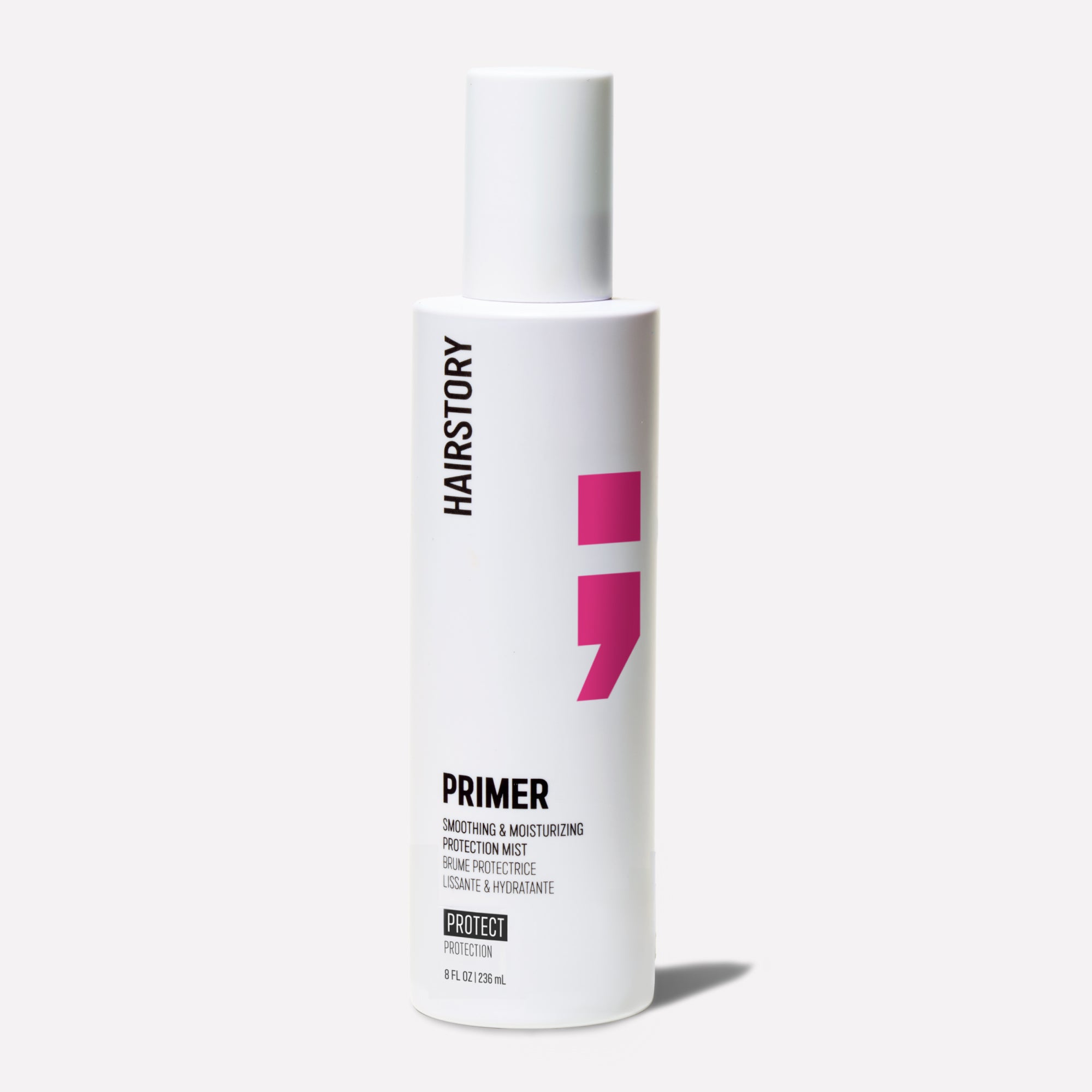
Primer, applied to damp hair before blow drying, protects the cuticle during heat styling while adding the smoothness that helps the blow-dry produce a flat, frizz-resistant finish. Directing airflow downward from root to end rather than against the cuticle, and finishing each section with cool air to set the cuticle in the closed position, produces the maximum frizz-reduction benefit from the blow-dry step.
Undressed for Texture Without Frizz
For hair that needs texture and volume without the frizz that often accompanies them, Undressed applied to dry hair adds body and separation through a lightweight formula that does not disrupt the moisture-sealed cuticle that Hair Balm and Hair Oil established. It provides the movement and finish of a textured style without the polymer-based ingredients that contribute to the buildup cycle.
A Frizz Control Routine with Hairstory
Wash with New Wash Rich or Original, allowing two to three minutes before rinsing with cool water. Apply Hair Balm immediately to soaking wet hair from mid-length to ends, scrunching for curly and wavy hair or smoothing through for straight hair. Layer a small amount of Hair Oil over Hair Balm on wet hair. Apply Primer before blow drying and direct airflow downward, finishing with cool air. Finish dry hair with a touch of Hair Oil for surface smoothness and humidity resistance.
Frizz control is not about what is applied on top of dry hair to suppress the problem. It is about hair that is sufficiently moisturized and structurally sound enough that it does not have a problem to suppress.