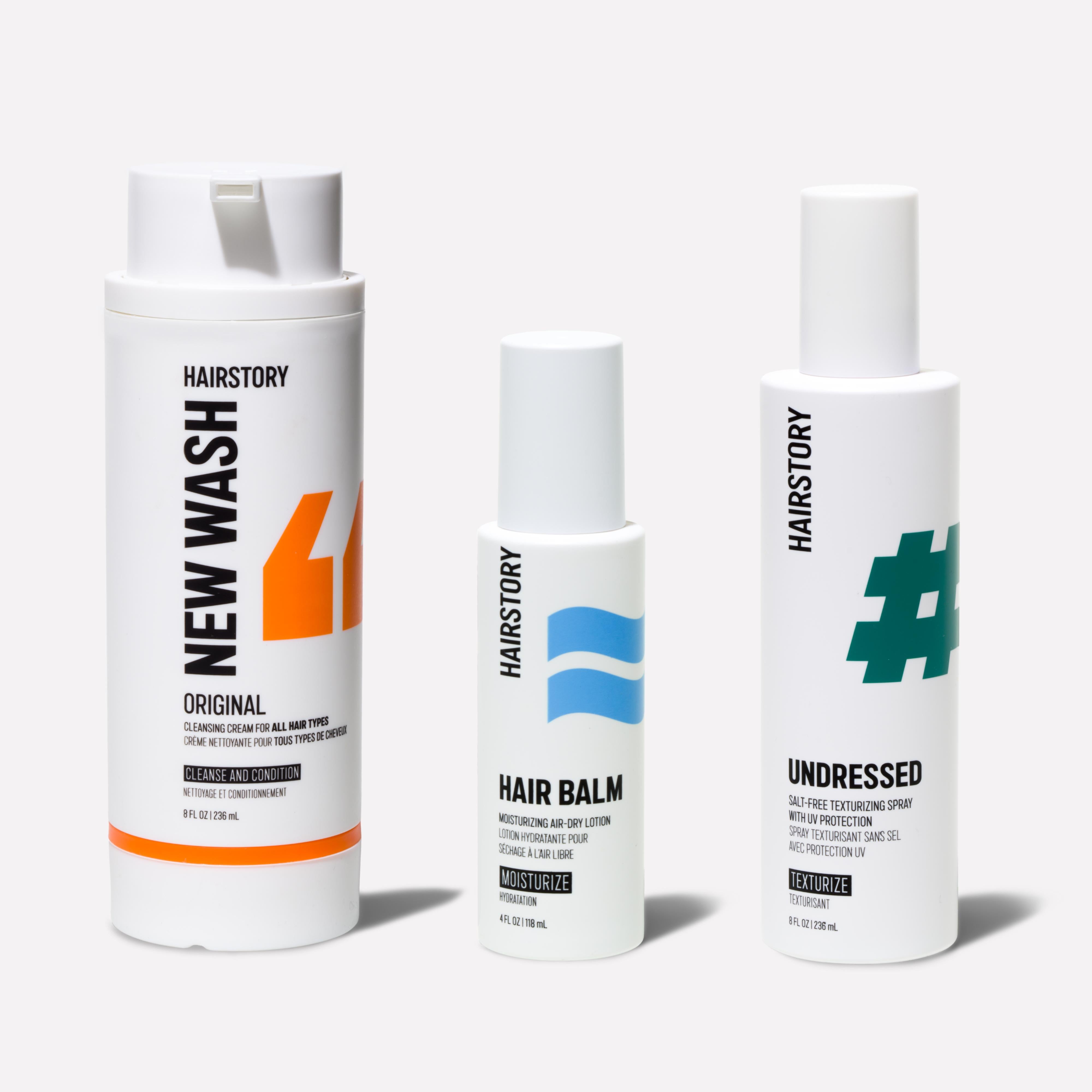
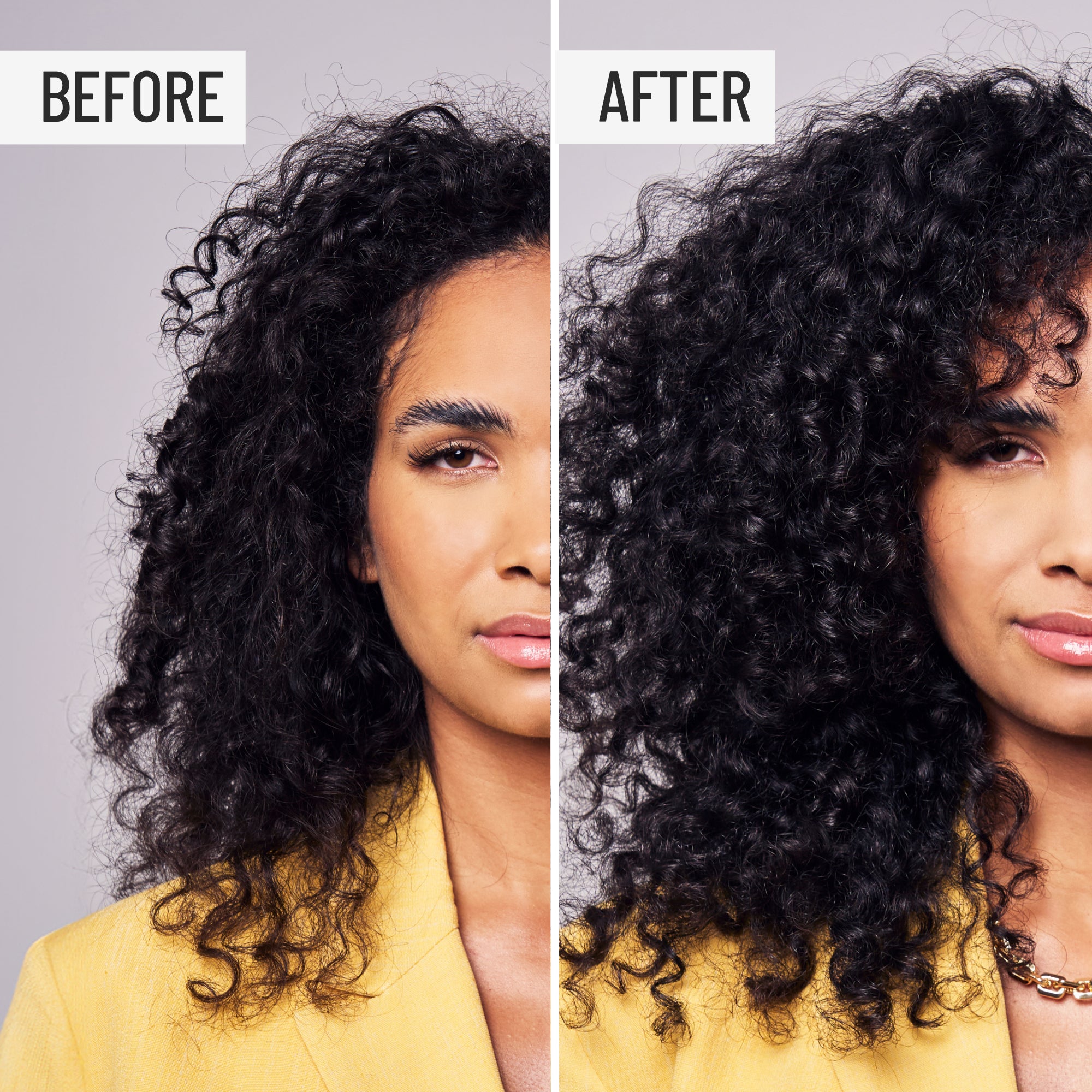
The switch from traditional shampoo and conditioner to New Wash can be frustrating. Maybe your hair is weighed down after the first wash or it’s oily at the roots and dry at the ends. Then, maybe one day, your hair just sits effortlessly. While there’s no rulebook during this transition, our customer service team has turned many doubters into advocates of the brand.
New Wash is a detergent-free cleanser that replaces shampoo and conditioner in one step. Instead of lathering, it emulsifies with water to lift oil, dirt and buildup.
Why do some people struggle when they switch to New Wash?
Our customer service manager, Aline Decat, has been with Hairstory from the very beginning and knows just where the switch goes wrong.
When customers submit a return, they have to answer several specific questions about their routine, hair type and purchased New Wash formula. Aline said the most common problem among customers is choosing the wrong formula.
How do you choose the right New Wash formula?
One thing to consider, she said, is customers misjudging their hair type. To help customers choose the right formula, we suggest our two-minute hair quiz, but sometimes more support is needed. Customers may answer their hair is oily, Aline said, when it’s actually just reacting to aggressive detergents in shampoo.
It’s easy to confuse the effect with the culprit. You might think you need more moisture when you have dandruff, but dandruff is linked to several factors, including sebum and Malassezia, a yeast that naturally lives on the scalp.
Malassezia feeds on sebum, so instead of adding moisture, focus on regular, gentle cleansing.
Aline said she often recommends using Pre-Wash to help rinse out buildup and residue and washing with New Wash. Since our formula doesn’t strip your scalp, your scalp won’t overcorrect with oil.
“Most [customers] trust our experience, but a few think we misunderstood what they say because they see dryness, and immediately think the issue is lack of moisture,” Aline said.
Many of the customers ready to give up on New Wash, Aline said, end up loving their new formula after submitting an exchange. The CX team closely monitors reviews that name frustrations with New Wash and reaches out. Oftentimes when those customers fill out the return form, the culprit is the wrong New Wash formula. The team is currently working on a way to track how many exchanges stick, she said.
An example of finding the right New Wash formula is helping customers determine if they have hard water. If they do, Aline said customers are often satisfied after adjusting their formula to New Wash Deep Clean. While it’s not a hard water fix, it provides a deeper cleanse to help lift buildup.
How long does it take to adjust to New Wash?
It’s not just the formula sometimes, either. It’s the routine. Aline always responds to pushback on the adjustment period. She often tells customers who want to see instant results that they don’t get a tan from spending two days in the sun. The same way your skin needs time to build a tan, your scalp needs time to rebalance.
How do you use New Wash correctly?
The first lesson for many customers is that haircare means scalp care. Another educational barrier is the belief that more foam means a better clean. In reality, if it foams, it strips. Our cleansing cream doesn’t lather. It emulsifies with a splash of water. Without lather, it’s sometimes easy to under-rinse.
The flip side to not rinsing enough, Aline said, is not using enough product. Start with using the same amount you’d use for shampoo and conditioner combined.
It can be difficult to visualize how far a bottle of New Wash goes. New Wash can help get your scalp’s oil production in a sweet spot so you can stretch longer in between wash days. Once you feel your scalp is adjusted, you don’t need to coat your hair from roots to ends. You can just pump enough to cover your scalp, since that’s what you’re cleaning. The longer you go between wash days, the further each bottle goes.
Aline’s Starter Pack Advice
- Reach out to us to choose the right formula.
- Be patient with the adjustment, don’t quit.
- Use enough product, emulsify and rinse thoroughly.
The Bottom Line
Getting New Wash right comes down to the right formula, enough product, a thorough rinse and patience during the adjustment period. Your scalp may need a few weeks to rebalance its oil production. Once your scalp adjusts, a little goes a long way. If your hair feels heavy, rinse longer. If it still feels oily after a few weeks, try New Wash Deep Clean.
Keep Reading
- How Often Should You Wash Your Hair?
- What Eight Hair Types Think of New Wash
- The Strip-and-Restore Trap
- How Is New Wash Different From Sulfate-Free Shampoos?
The information in this article is for educational purposes only and is not intended as medical advice. Always consult a board-certified dermatologist or qualified healthcare provider if you have concerns about your hair or scalp health.