Whether you're growing out from a short 'do or you generally struggle with slow hair growth, growing out hair takes time, patience and imagination. But a little patience and some perfecting of your hair care routine (aka ditching the shampoo) can help your hair grow faster and ease your frustrations. It’s an exciting journey. So get ready, get set… grow!
Wes Sharpton, lead haircutter at Hairstory in New York City has guided many clients from short to long with confidence and ease (though he loves the reverse process just the tiniest bit more).
Enjoy the journey.
Although there are some ways to speed up your hair growth, any product claiming to "grow hair fast" should raise some eyebrows. The process of growing out your hair can be aided by a lot of different things including diet, use of heat, regular trims, hair type and types of products used - but you shouldn't expect to grow a pixie cut to shoulder length in a month. Hair growth requires some patience. So enjoy the various phases of growing hair out and use the “in-between” phases as a time to learn how to take great care of your hair and try out new hairstyles.
Hair grows at an average rate of a half-inch a month. That means that you could be on a journey that lasts two years. So: “Instead of visualizing the end game (length), think about the looks you can create along the way to make the process more manageable – and enjoyable,” advises Sharpton. You might transition through pixie to pompadour to bob to lob and eventually long hair (you might even make stops at shag or mullet; the possibilities are many). Look at it as traveling along the fashion timeline from a ’60s crop to a modern mane.
Cut as you grow.
To keep hair looking good every day during months of growth, haircuts are not your enemy. In fact, they’re necessary to keep it looking both healthy and intentional. There’s no need to suffer split ends and breakage; quite the opposite: left untrimmed, they can travel upward and make precious growth precarious.
“It’s all about the placement of the cut,” says Sharpton. For instance, you may avoid taking length off the top layer at first, but trimming the back and sides can keep it looking clean and groomed. Once the top gets a bit longer you can start to even things out.
Watch your back.
Though hair in the back doesn’t technically grow faster, “it appears to simply because the back has a shorter distance to travel,” explains Sharpton. While the sides and top lengthen, keep the hair along the nape shorter so it matches up with the rest – unless a mullet is one of the stages you want to explore (it has a comically bad rap, but it can also be quite chic). Defer to your stylist to help with hairstyles that best fit your hair type during this growing phase.
Style with texture in mind.
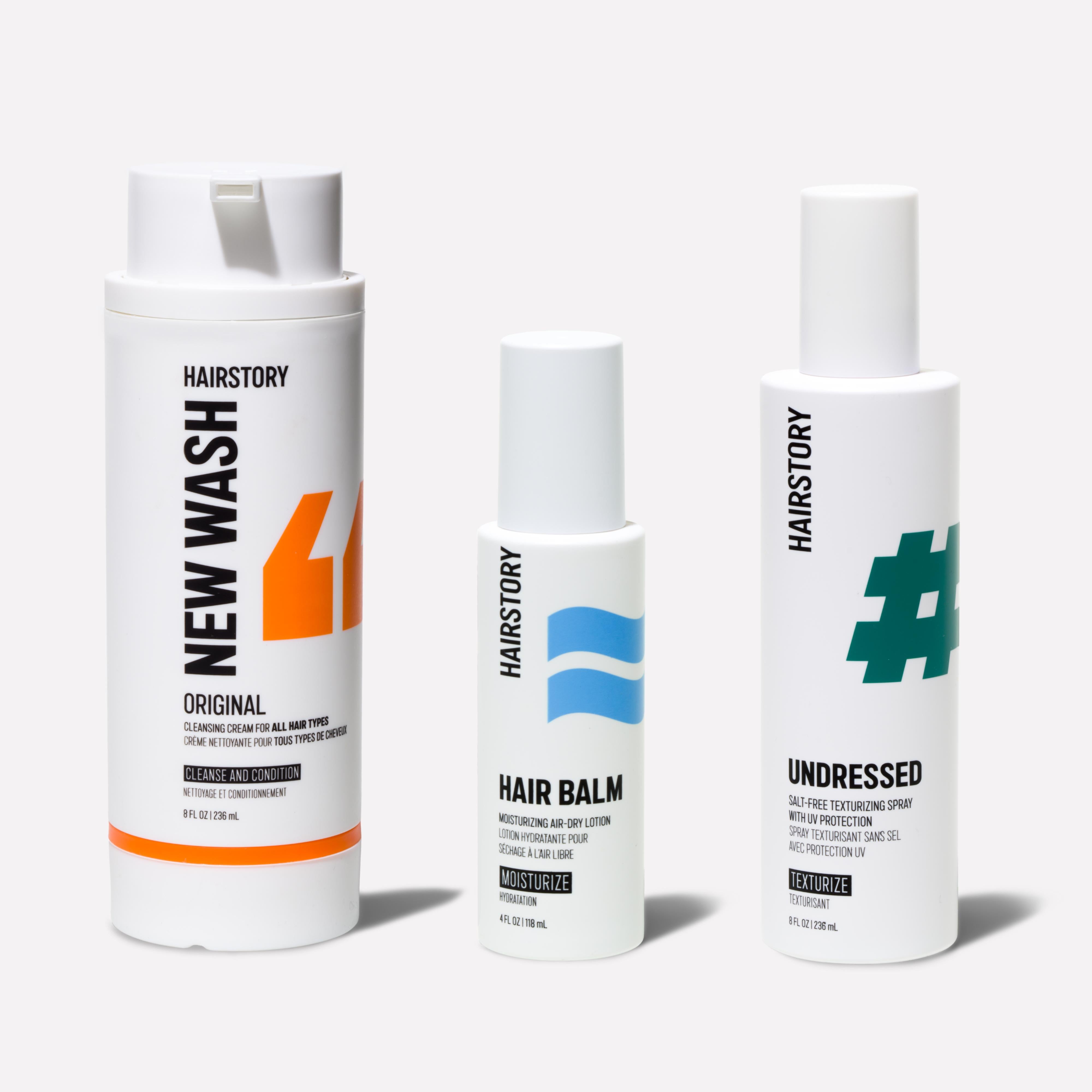
One of the trickiest parts of growing your hair can be those awkward stages in between. The space between a pixie and a bob can be difficult. “When things aren’t quite matching up and longer bits on top don’t yet meet the sides, it’s not always fun… unless you play with texture,” says Sharpton. This is the time to play with styling products and techniques: Hairstory Undressed is in the category of texture sprays, but it’s salt-free so it doesn’t sap hair of moisture; it’ll give some lift and body, and bring out natural wave if you have it, and help create it if you don’t (braid or twist your hair and let it dry or blast it with a blow-dryer). Or use a curling iron to disguise any disparities in length. Or try a slicked-back style with Hair Balm (work it into damp hair and comb it through to set in place) or a hair pomade for stronger yet flexible hold.
Simmer Down on the Heat.
Be mindful of heat usage on your hair. The key to hair growth is keeping hair healthy, which means limiting the use of heat tools (like your beloved hair dryer) as much as you can to avoid breakage from excessive dryness. When you do use heat, opt for a heat protectant like our heat styling spray.
Healthy Roots = Healthy Growth
You may be seeing ads for pills and supplements that claim to make hair grow faster and healthier. The jury is still out on their effectiveness, but make sure you’re eating well (a wide range of nuts, seeds, fruits, vegetables, lean protein, and healthy fats will best support healthy hair) and treating your scalp with care. Avoid washing your hair with detergent-filled shampoo that ultimately strips hair of its natural oil protectants. Treat your strands with love and opt for a sulfate-free formula (we recommend you wash your hair with New Wash). Read more about how to get healthy hair!
Anything that builds up (products, pollutants) can compromise the health of follicles, potentially reducing the diameter of each hair as it grows, or inhibiting growth altogether. A thorough scalp massage on a regular basis is a simple and sensual act of self-care that also promotes robust growth – we recommend a Shower Brush to help release dead skin and stimulate blood flow to bring more nutrients. “Not only does it feel really good and is good for you, maybe you won’t feel so stressed out about how long this #&%*ing journey is taking.”
While you're perfecting your brush routine, don't forget about brushing your hair with a regular brush to remove tangles. But don't brush too often or aggressively as this can lead to breakage (and slow the process of growing hair out). In general, the trick to growing your hair is getting your hair as healthy as possible by fueling your body (and scalp) with nutrients and treating your hair gently.
Curb the urge to chop.
Finally, when you’ve “had enough” of the waiting game and just want to “chop it all off,” (we’ve all been there): Pause... and play! “Growing out a cut can feel like you’re not in control, but when you find the styling opportunities at each stage, it puts you back in the driver’s seat,” says Sharpton.
There’s a party on your shoulders waiting for your hair to arrive. Meanwhile, cultivate patience; in this case, it’s the best virtue.