At some point during childhood, you probably rubbed a balloon against your head to make your strands stand on end. As a kid, that static hair was silly and entertaining—but as an adult, not so much. Now we just look silly trying to tame a nimbus after putting on a sweater or stepping out into cold, dry air.
What can you do when your hair takes flight? What causes this hair-raising effect and how do you get static out of hair?
WHAT CAUSES STATIC IN HAIR?
If you’re reading this article, you’re wondering, “Why is my hair so static prone?” In basic terms, you experience static hair when it becomes charged with electricity.
Here’s the more in-depth, technical answer: Factors like friction or a change in humidity can cause your strands to gain electrons and build up an electric charge. If you remember anything from science class, you might recall that two positive charges repel each other. So when your hair becomes charged, the individual strands lift up and away from each other.
Generally, hair is more prone to static electricity when the air is dry. Because moisture is a natural conductor, any positive charge in your hair generally goes away when the air is humid. When the air is dry, there’s nowhere for it to go—so your hair takes the brunt of it.
Understanding the difference between hair hydration and moisture is crucial, as both play a role in managing static electricity in your hair.
Friction—when your head rubs against a hat, scarf or jacket collar—can also create static. Synthetic fabrics, such as nylon and polyester, are among the worst causes of static in hair.
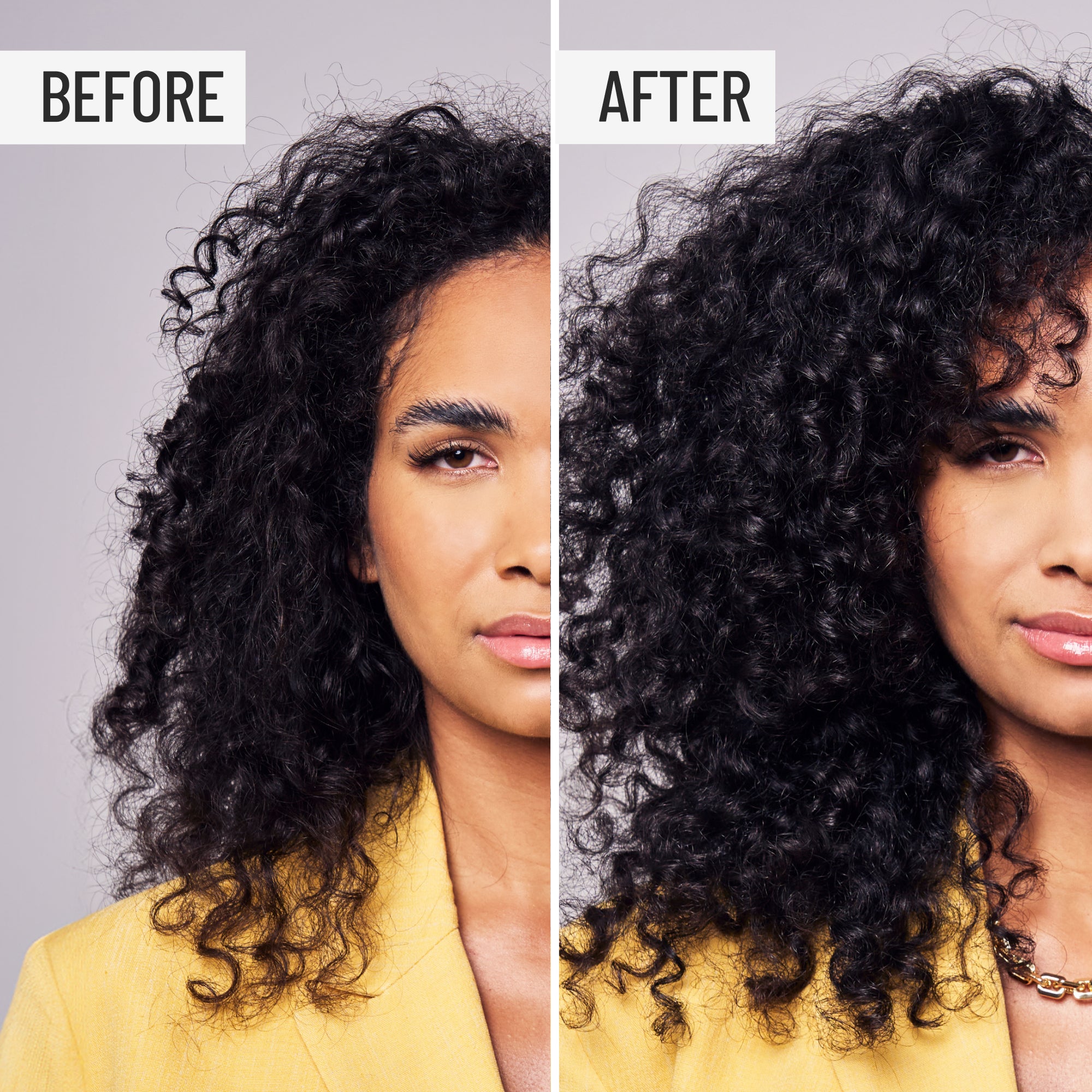
Staticky Hair Static Free Hair

WHAT’S THE DIFFERENCE BETWEEN STATIC AND FRIZZ?
Static and frizz can both result in flyaways, but they stem from different causes. While your hair becomes static when there’s not enough moisture in the air, frizz happens when there’s too much moisture in the air. Hair soaks up that moisture—especially if the cuticle is raised—causing strands to swell and lift, forming an irregular texture.
So if you’re wondering why your hair is so frizzy, it’s probably a result of humid air.
HOW TO STOP STATIC HAIR
When static strikes, here are a few quick fixes you can use to smooth down those flyaways. Learn how to get static out of hair with the tips below.
Run an anti-static sheet over your hair
A common DIY tip is to stop by your laundry room on your way out the door and grab a dryer sheet. Gently run the sheet over your head to neutralize the charge in your hair and calm down flyaways.
That said, many dryer sheets contain harsh chemicals, and anti-static sheets made specifically for hair are available.
Smooth with hairspray, conditioner or lotion
If you’re worried about static hair, carry a small container of leave-in conditioner in your bag.
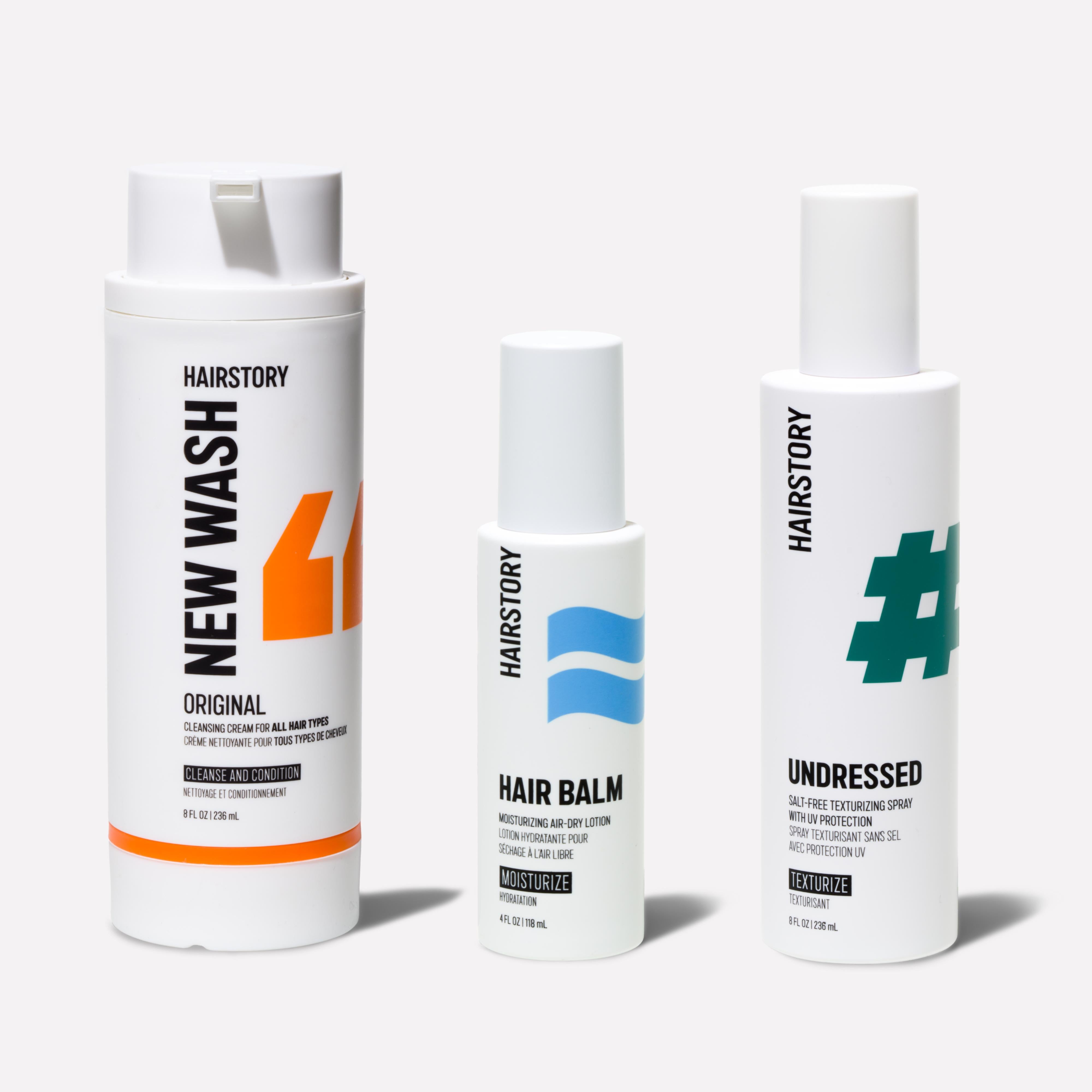
Place a small dab of product like Hairstory Hair Balm in the palms of your hands, rub them together and glide them over your head to smooth away the static.
Use metal or wood combs and brushes
If you need to detangle your hair, opt for a metal or wood brush or comb. Because plastic is non-conductive, using a plastic brush or comb will only make the static worse. Wood or metal tools can actually remove the negative charge from your hair.
HOW TO PREVENT STATIC HAIR IN THE FIRST PLACE
It’s good to have a couple of techniques for how to stop static hair in the moment, but it’s even better to prepare ahead of dry weather to proactively prevent static hair.
Here are a few tips for how to make hair less static before it becomes a problem.
Keep your hair moisturized
Dry hair attracts more positive electric charge, making it susceptible to static electricity. So to keep static out of your strands, keep them moisturized.
First, take a look at the products you use on a regular basis. For example, traditional shampoos often contain harsh detergents that strip your hair of its natural oils and moisture. Then, you need a second product to add that moisture back in—that’s what conditioner does.
To maintain optimal moisture levels, try using a detergent-free shampoo alternative, which cleanses without stripping hair of its natural protective barrier. While you won’t need a separate conditioner, you can occasionally use a leave-in conditioner for an added boost of moisture.
Go easy on the hot tools
Frequent use of hot tools—blow-dryers, curling irons and hot rollers, for example—can sap your hair of its natural moisture, leaving it dry and prone to static electricity. Instead, try embracing the air-dry method. For best results, add a small amount of a styling product, like Hair Balm, to lock in moisture and protect against static and frizziness.
Of course, you may not be willing to quit heat styling cold turkey. So when you do plug in, make sure to smooth on a styling lotion, like Dressed Up, that acts as a heat protectant and provides a buffer between your hot tools and your hair.
Opt for an ionic hair-dryer
Ionic dryers emit ions to break down water molecules rather than evaporating them (which is how traditional dryers work) and can be a gentler alternative for drying your hair. Those ions also neutralize any positive charge in your hair, minimizing static electricity.
Bonus: Using an ionic dryer can reduce drying time and prevent frizz, too.
Stay away from products with drying ingredients
Check the labels of your haircare products, as many contain ingredients that are notoriously drying—like sulfates and some types of alcohol. Other products, like silicones, aren’t necessarily drying, but they can build up in your hair and lead to a dry and dull appearance. To stay flyaway-free, it’s best to choose sulfate- and silicone-free products.
When the air gets dry and the sweaters, scarves and hats begin to appear, don’t settle for a perpetually electrified look. With a solid haircare routine—and maybe a little Hair Balm in your handbag—you can keep your looks smooth and flyaway-free year-round.