What Hard Water Is
Water hardness refers to the concentration of dissolved minerals in the water supply, primarily calcium and magnesium, which enter groundwater naturally as it moves through rock and soil. The degree of hardness varies significantly by geographic location and is measured in parts per million or grains per gallon. Soft water contains relatively few dissolved minerals. Hard water contains enough that its effects on hair and skin are consistent and measurable.
When hard water contacts the hair shaft, mineral ions bond to the negatively charged proteins in the cuticle and cortex. Over repeated washes, these mineral deposits accumulate, forming an invisible film along the strand that roughens the cuticle, creates a barrier to moisture penetration, reduces the effectiveness of conditioning treatments, and produces the characteristic dullness and stiffness of hard water hair.
Iron and copper, present in smaller quantities in many water supplies and in elevated concentrations where older plumbing exists, are particularly damaging. Iron deposits on the hair shaft create a warm, brassy discoloration on blonde, grey, and light-colored hair that is distinct from chemical brassiness and resistant to toning treatments because it sits on the surface of the strand rather than within the pigment structure.
What Municipal Water Adds
In addition to naturally occurring minerals, municipal water systems treat drinking water with chemical disinfectants, most commonly chlorine or chloramines, that reach the hair and scalp with every shower.
Chlorine is a strong oxidizing agent and a known bleaching compound. In swimming pool concentrations, its effects on hair are well-documented: it strips color, dries the strand, and damages the cuticle. At tap water concentrations, the effects are less dramatic per exposure but cumulative over the hundreds of washes that occur in a year. Hair washed regularly in chlorinated municipal water experiences gradual color fading in color-treated hair, progressive cuticle disruption, and an accelerated dryness cycle. The scalp, exposed to chlorine with every wash, can develop sensitivity, irritation, and dryness as the skin barrier is repeatedly disrupted.
Chloramines, used in some municipal water systems as a more stable alternative to chlorine, are harder to remove than free chlorine and have similar hair and scalp effects. Unlike chlorine, which dissipates relatively quickly when water is left standing, chloramines persist and require specific filtration to eliminate.
The combination of mineral hardness and chemical disinfectants in municipal water creates a challenging baseline condition that many people do not account for when evaluating why their hair is drier, duller, or less manageable than expected.
How Mineral and Chemical Buildup Affects the Routine
One of the least-recognized effects of hard water and mineral buildup on hair is its impact on product performance. Conditioning treatments, leave-ins, and hair oils are applied to hair that is already coated in a layer of mineral deposits and chemical residue. These products cannot penetrate through the mineral film to reach the cortex where lasting moisture is held. They sit on top of the deposit layer, providing temporary surface softness before washing off with the next shampoo.
This is why people in hard water areas often report that their hair seems to need more and more product to achieve the same results, or that products they previously relied on have stopped working. The products have not changed. The barrier between the products and the hair has grown thicker.
Hard water also reduces the effectiveness of cleansing products by reacting with surfactants to form insoluble soap scum rather than allowing them to lather and rinse cleanly. This is why hair washed in hard water often feels difficult to fully rinse, and why shampoo requires more product in hard water conditions than in soft water to achieve the same cleansing result.
New Wash (Deep Clean) as a Mineral-Clearing Treatment
New Wash (Deep Clean) is the most important product in a hard water hair routine because it addresses the accumulation that everything else in the routine depends on removing. Used every one to two weeks rather than the monthly frequency appropriate in soft water conditions, it removes accumulated mineral deposits, chemical residue, and product buildup from the hair shaft and scalp more thoroughly than regular formulas.
The chelating and concentrated cleansing action of New Wash Deep Clean dissolves and lifts mineral deposits that lighter cleansers leave behind, restoring the clean surface that allows conditioning treatments to penetrate the strand rather than sitting on top of a mineral barrier. The difference in how hair responds to conditioning and styling immediately after a Deep Clean wash compared to a regular wash is particularly noticeable in hard water conditions: hair is visibly more responsive, softer, and more manageable because the barrier has been removed.
An apple cider vinegar rinse applied before New Wash Deep Clean, for those dealing with significant mineral buildup, provides an acidic pre-treatment that helps dissolve calcium and magnesium deposits before the cleansing action of Deep Clean removes them. This combination is particularly effective for hard water hair with visible dullness, stiffness, or mineral-related discoloration.
New Wash (Original) and (Rich) for Regular Washing
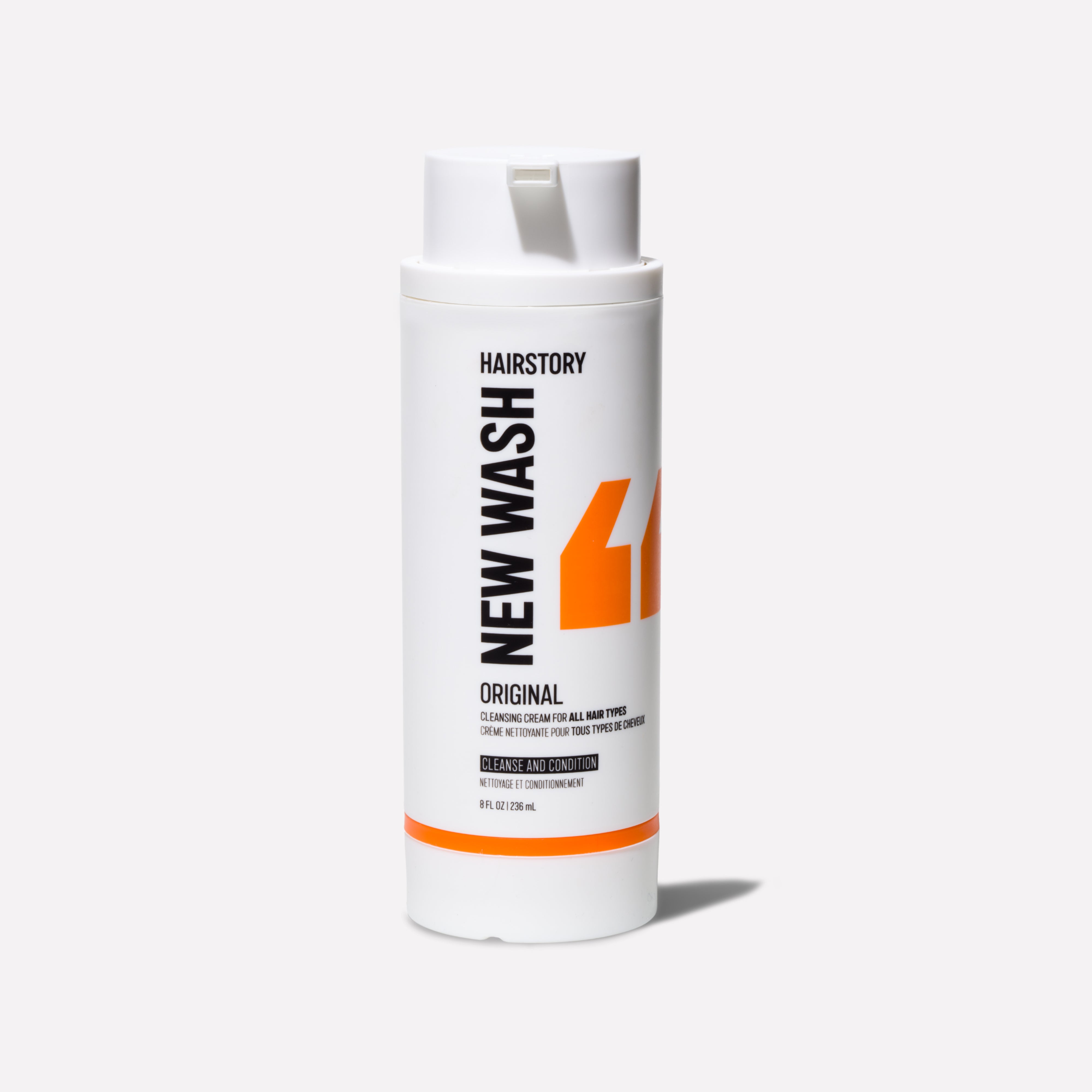
Between Deep Clean sessions, New Wash (Original) and New Wash (Rich) provide the sulfate-free cleansing and conditioning that maintains hair health without contributing additional chemical or polymer residue to the mineral buildup already present from water quality. Because both are silicone-free, they add nothing to the surface coating that mineral deposits have already established, keeping each regular wash as clean and light as possible.
New Wash Original is appropriate for most hair types washing regularly in hard or municipal water. New Wash Rich is recommended for hair that is drier, coarser, or more porous and needs more intensive conditioning to maintain moisture balance in conditions where the water itself is working against retention.
Protecting Hair at the Rinse
Water temperature during rinsing affects how much mineral content is deposited on the strand. Hot water keeps the cuticle open and allows more mineral ions to bond to the hair shaft during the rinse. Cool water rinsing closes the cuticle and reduces the window for mineral deposition. For people in hard water areas, rinsing with the coolest comfortable water temperature is one of the most accessible and consistent interventions available for reducing per-wash mineral accumulation.
Moisture and Protection After Washing
Hair in hard water conditions often shows the moisture depletion that comes from a combination of mineral coating blocking conditioning absorption and chlorine disrupting the scalp moisture barrier. Hair Balm applied to damp hair immediately after rinsing provides leave-in conditioning that works to penetrate the strand while it is in the most receptive state, before mineral deposits from the rinse water have had time to fully set. Applied consistently, it helps maintain the moisture balance that hard water conditions work against.
Hair Oil, applied to dry lengths after styling, provides a light surface seal that slows the rate at which mineral exposure between washes accumulates on the strand. It also restores the shine and surface smoothness that mineral buildup dulls, making it a particularly useful finishing step for hard water hair.
Primer protects against heat during styling and is especially relevant for hard water hair, where the cuticle is already more disrupted and vulnerable to additional heat damage than hair in soft water conditions.
Shower Filtration
For people in particularly hard or heavily chlorinated water areas, a shower filter that removes chlorine and reduces mineral content is the most comprehensive solution because it addresses the problem at the source rather than treating the effects after each wash. Shower filters that use activated carbon effectively remove free chlorine and many organic compounds. Filters with KDF media address chloramines as well. These are not haircare products, but for people experiencing significant hard water or chlorination effects, they represent the single highest-impact intervention available, making every wash cleaner from the moment the water contacts the hair.
A Hard Water Hair Routine with Hairstory
Use New Wash Deep Clean every one to two weeks to remove accumulated mineral deposits and chemical residue, optionally preceded by an apple cider vinegar rinse for significant buildup. Use New Wash Original or Rich for regular washes between Deep Clean sessions. Rinse with cool water. Apply Hair Balm to damp hair immediately after rinsing as a leave-in. Apply Primer before heat styling. Finish with Hair Oil on dry lengths for shine and surface protection.
The water quality in most homes is outside the routine's control. How the hair responds to it is not.