Most cleansers are built around a feeling, not a function. The lather, the foam, the squeaky-clean finish — these are signals we've been taught to associate with cleanliness. But foam is a byproduct of detergents, and detergents strip the beneficial oils that keep the skin microbiome balanced. Hairstory has argued against foam since 2017. Sans Savon makes the same argument for the rest of your body.
From New Wash to Sans Savon
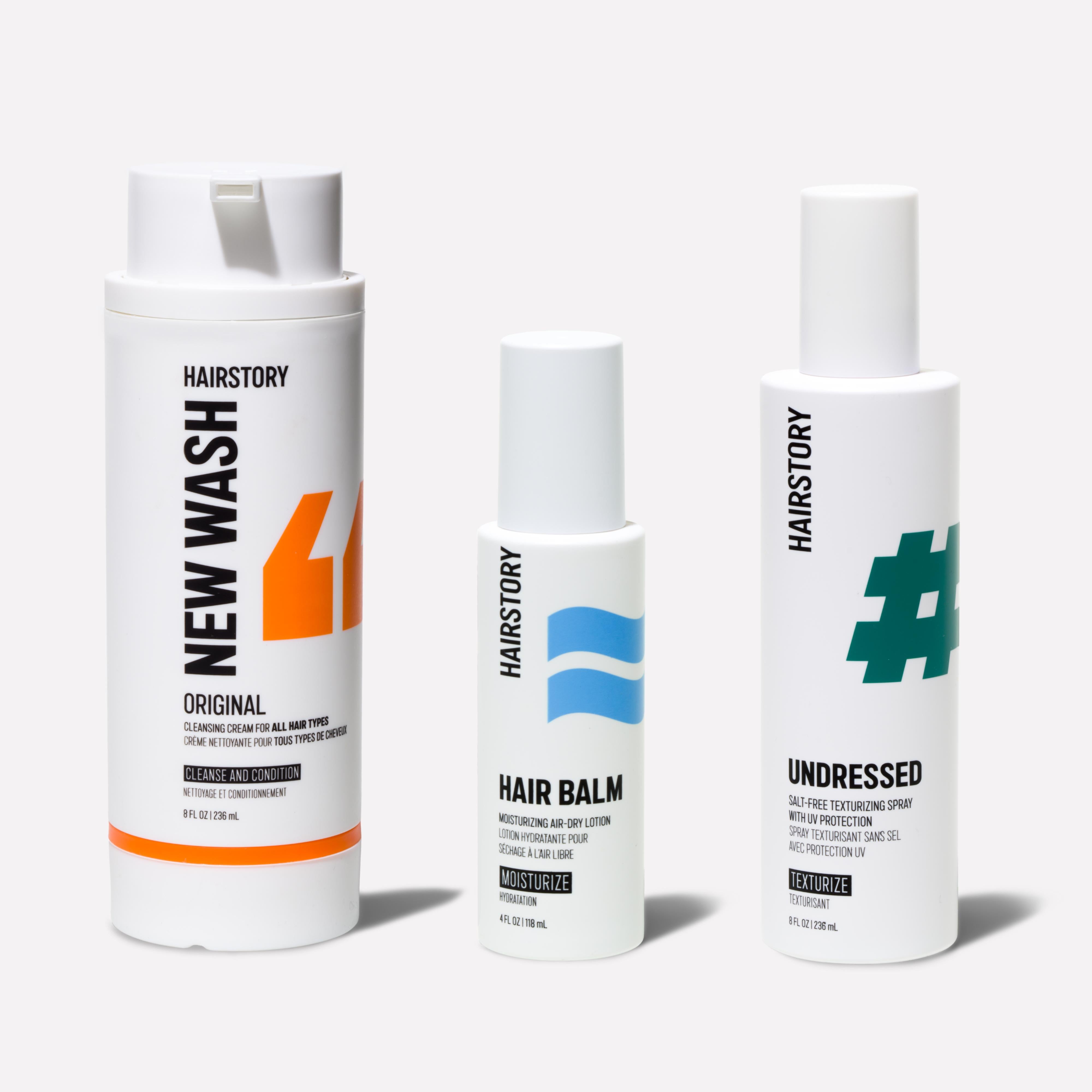
Our cofounder Eli Halliwell launched Hairstory and its hero product, New Wash, in 2017 — our signature detergent-free cleansing cream that replaces shampoo and conditioner in one simple step. Alongside it came Pre-Wash, which uses purifying prebiotic micellar technology to gently break down product buildup, oil and dirt while balancing your scalp's microbiome.
He didn't stop there. Almost ten years later, he launched Sans Savon, a soap-free hand and body wash line for people who are already obsessed with detergent-free cleansing.
We'll Never Stop Talking About Detergent-Free Cleansing
The haircare and skincare industry convinced us to put detergents, aka synthetic surfactants, on our bodies from head to toe. They're engineered to be aggressive. But they're too aggressive — they strip our protective scalp and skin barriers.
71% of adults report having sensitive skin, and heretics like Hairstory believe that sensitivity has a lot to do with detergents in soap. If it foams, it strips. When skin is stripped of its natural oils, it loses moisture, overproduces oil to compensate, and becomes vulnerable to bacteria. It's a problem you don't need, especially for your skin — your body's first line of defense.
That first line of defense interacts with bacteria constantly. While bacteria constantly evolves, our skin must evolve with it, and the way we cleanse does too. Without soap.
How Sans Savon Cleans Without Soap
Similar to Hairstory's cleansing cream, Sans Savon ingredients are completely biodegradable and made from upcycled natural oils and waxes. The formulas are clinically tested, and their antimicrobial is derived from vegetable-based fatty oils and esters. They're moisturizing, soap-free, naturally scented with essential oils, and full of prebiotics to feed the good bacteria.
The antimicrobial doses vary across the line:
- Body Wash, scented with notes of Blue Spruce and Peppermint
- The Body Bar, with notes of Geranium and Cedar
- Hand Wash, with notes of Labrador Tea and Citrus
These products target sensitive, dry or over-washed hands and skin, delivering a balanced outcome: killing 99.9% of the bad bacteria that cause body odor while leaving the good bacteria intact.
The Story Behind the Bottle
At the heart of both brands is a pulse for people. Just like Hairstory's mission to empower hairdressers' businesses, Sans Savon has commissioned local photographers to capture Charlevoix's flora and fauna for the brand's visuals.
The bottle tells the same story. Its anatomy and aesthetic are inspired by what Eli calls the "invisible features" of the Charlevoix region in Québec, Canada — the mountains, the estuary, the beluga whales, and the sparkplug lighthouse. All of it shaped the bottle itself, which is made from 100% post-consumer recycled plastic. Read more on his Substack newsletter, Soapless, here.
Most people don't think twice about detergents, and that's exactly why this matters. The hardest part isn't the formula — it's making people deprioritize detergents. The industry doesn't talk about it, and that's why we're here. Clean without detergents. Don't strip your skin or scalp of the good stuff. That's not a trend. It's an investment in yourself.
Take a chance at earning a year's worth of Hairstory and Sans Savon products by entering our giveaway here. The giveaway closes Sunday, 7/26 at 11:59PM EST. The winner must be located in the US or Canada and will be contacted via Instagram DM on Monday, 7/27.
Keep reading:
- Sodium Lauryl Sulfate Is a Stripper. And Not the Fun Kind.
- Have You Met Your Actual Hair?
- Co-Washing Is Not an Alternative to Shampoo
- Why Shampoo Is Worse for Color-Treated Hair
The information in this article is for educational purposes only and is not intended as medical advice. Always consult a board-certified dermatologist or qualified healthcare provider if you have concerns about your hair or scalp health.