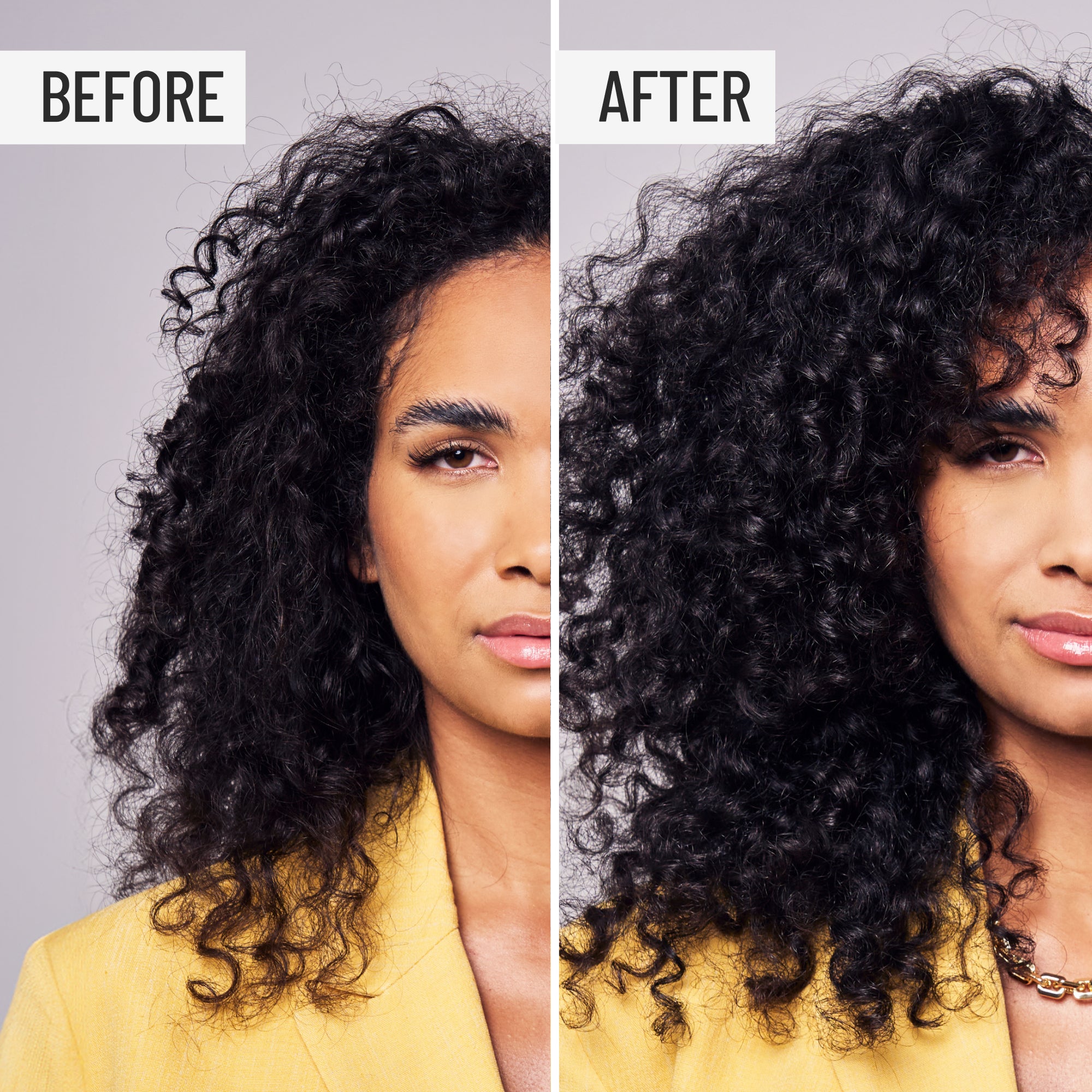
Your life is going to change with pregnancy. Your body will change as well, and that might mean your hair. You may be one of those lucky few whose hair becomes superhuman while pregnant; you also may be one of the many whose hair decides not to hang around and abandons the mothership.
Expecting mothers want to know what to expect, and here is what we know postpartum hair loss and how your hair care routine can help you recover as you enter this new phase of your life.
WHAT HAPPENS TO HAIR DURING PREGNANCY?
Hair can change in a number of ways while carrying a baby and during the months afterward. It might become thicker, lusher, and shinier thanks to peak levels of estrogen, which slows the rate of hair shedding. Hair may also become thinner, sparser, or shed faster than usual during pregnancy or in the months immediately after giving birth. Both extremes are normal. The way postpartum life affects your hair follicle will differ from person to person.
Your hair could go from lank to bouncy (yay), bouncy to lank (boo), straight to curly, curly to straight (the grass is always greener). Clearly, you’d prefer to be one of the fortunate few whose hair gets a baby bonus, but how do you know how your hair will fare as your pregnancy progresses? And what role does your hair care routine play in how your hair regrows?
The answer may depend on how easy your pregnancy is on your body in general. Hormones are only one factor in the condition of your hair, and how stressful carrying a child is on your body combined with a variety of medical conditions that often arise are also important.
Hormones are in dramatic flux during pregnancy. One of the first to elevate is human chorionic gonadotropin (hCG) that your pregnancy test measures as confirmation. Several others also begin to spike, including estrogens, progesterone to stimulate the uterus, oxytocin to prepare the body for childbirth, and prolactin to stimulate lactation.
The volume of blood pumping through your veins also rises while you are pregnant – as much as 50 percent above normal by the time your child is born. Additional nutrients reaching the hair follicles through the blood could account for a boost in your hair growth rate.
HOW DOES PREGNANCY AFFECT HAIR?
While pregnant, high levels of estrogens combined with increased blood circulation slow the normal process of shedding hair reaching the end of its lifespan. This doesn’t mean that more hair grows than usual, but less of it is being shed, resulting in a thicker, fuller feel for many.
By the second trimester, new hair growth may indeed be thicker all over the body, which means you can expect admiring your lusher lashes, while also plucking rogue facial hairs. Healthy hair growth may be due to a new mother’s newly-acquired habit of taking prenatal vitamins and dietary improvements as the body’s basic requirements are satisfied and the less essential systems benefit.
A small number of women, however, may experience what is called telogen effluvium, or the thinning or shedding of hair as a result of physical or emotional stress or shock. A difficult or anxiety-filled first trimester can result in up to 30 percent of hair on the head to enter the telogen or “resting” phase of their life cycle prematurely – and fall out.
This means that instead of shedding the average 100 hairs a day, you may lose three times that. It may take up to four months for thinning from stress to begin, but it shouldn’t last longer than about six months.
Changes in hair texture – straight to curly, vice-versa – happen because the shape of the hair follicle or the “womb” each new hair incubates in can actually change as a result of pregnancy and influence the shape of the strands that grow; circular strands grow straighter; the flatter they are the more tightly they curl.
Some moms-to-be find a change in moisture levels. Fluctuations in sex hormones can enlarge the sebaceous glands inside the follicle that secrete sebum, and cause oilier hair. Look for detergent-free cleansers that won’t strip your hair of sebum and signal your glands to compensate by producing even more. Consider New Wash that acts much like the oil-based cleanser you probably use for your face, and conditions while it cleanses. A separate conditioner may add more moisture than you need and perpetuate the greasiness.
On the other hand, hair may become dry and coarse, and a changing body just simply means less stimulated sebaceous glands. The solution in this case is to ease up on shampoo, which can be drying (see New Wash) and to have plenty of leave-in conditioner on hand – Hair Balm will do nicely – to moisturize your hair all day, and not just in the shower. Another possible problem is an allergic reaction to shampoo. Allergic reactions can change while pregnant.
Changes experienced while pregnant don’t mean that mothers can expect the same changes to occur during subsequent pregnancies. Hormonal activity is unpredictable, and so are the changes your body might undergo a second time around.
HOW DO HEALTH ISSUES DURING PREGNANCY AFFECT HAIR?
Telogen effluvium may also occur during pregnancy due to an underlying imbalance in hormones or nutrients:
- Thyroid disorder: Hyperthyroidism – when too much thyroid hormone is produced – affects 2 to 3 percent of pregnant women who also may experience hair loss as well as muscle cramps, constipation, or exhaustion. Approximately 1 in 20 women may experience thyroid issues (postpartum thyroiditis) after a baby is born.
- Iron deficiency causes too few red blood cells to deliver sufficient oxygen to bodily tissues, and hair thinning is usually accompanied by fatigue, an irregular heartbeat, shortness of breath after exertion, or headaches. Iron deficiency is likely if pregnancies quickly follow one another, multiple babies are carried, or severe morning sickness occurs.
Hair loss due to these conditions is not usually permanent, but hair may not return to its former healthy state until hormonal imbalances or nutritional deficiencies are corrected.
WHAT HAPPENS TO HAIR POSTPARTUM?
Immediately following birth, some hormone levels drop precipitously, including estrogens and progesterone, and may normalize within 24 hours; prolactin, a hormone that isn’t conducive to hair growth will remain high until breastfeeding has ended. Blood volume will also gradually return to normal levels during the first few weeks after birth.
If you make it through pregnancy with hair intact or better, don’t count your strands before they grow. After a baby arrives and a mother’s hormone levels normalize, her hair does too, but it may fall out much more noticeably. If this is your concern, rest assured that you’re not losing more hair than you would have over a normal nine-month period, your scalp is just making up for the lost time. This usually peaks somewhere around 4 months after delivery and can continue for up to a year.
Most changes to hair thickness and growth during and after pregnancy are temporary and will revert to the original once your hormones do. But it can take time.
HOW CAN HAIR LOSS BE PREVENTED DURING PREGNANCY?
The best measures for healthy hair during pregnancy re no different than the TLC we recommend at all times:
- Eat extra-well, and include dark leafy greens for iron and vitamin C, sweet potatoes and carrots for beta carotene, eggs for vitamin D, and fish for omega-3s and magnesium, and whichever supplements your doctor recommends for your body.
- Skip high-tension styles such as tight braids, buns, and ponytails that stress the roots.
- Wash hair gently, condition thoroughly, and use a wide-toothed comb or a shower brush to pull the conditioner through or to detangle afterward.
- Give hair and scalp a break from heat styling.
- Avoid chemical treatments such as permanents during pregnancy if possible.
- Be wary of chemicals in hair dye that may be absorbed through the scalp. Opt for color techniques such as balayage or hair painting that emphasize mid-lengths and ends, or explore vegetable dyes and adding color (lowlights) rather than bleaching (highlights).
Your hair is only one of the changes you can expect, and since most are temporary, enjoy the new experience if your hair gets fuller, and don’t panic if it gets thinner. You have far more important concerns during pregnancy, and like some aspects of your body, your hair will probably bounce back.