Heat Damage Symptoms: How to Tell If It's Too Late (and What to Do)

Heat Damage Symptoms: How to Tell If It's Too Late (and What to Do)

Heat damage often starts small — a little more frizz, a little less bounce. Here's how to spot the early signs, understand what's reversible and protect your strands going forward.

Published on March 16, 2026 — 8 min read

Share this article

Home / The Archive / Heat Damage Symptoms: How to Tell If It's Too Late (and What to Do)

Heat Damage Symptoms: How to Tell If It's Too Late

Some of us know that sizzling flat iron sound all too well.

Heat damage happens when high temperatures start to weaken your hair's keratin and mess with the cuticle. Keratin begins to break down around 311–320°F (155–160°C), and many flat irons easily hit 392°F (200°C) or higher.

Once the proteins are damaged, the changes can be permanent. But heat damage doesn't always show up dramatically at first. It often starts small—slightly rougher texture, more frizz, less bounce.

The good news? Catching heat damage early makes a big difference. Here's what to watch for.

What Does Heat Damaged Hair Look Like?

Heat damage alters the physical structure of the strand, affecting how it looks and how it feels. Common signs include:

  • Increased frizz, even in low humidity
  • Loss of curl pattern or uneven texture
  • Rough or straw-like feel
  • Dullness and reduced shine
  • Split ends appearing more frequently

If your curls suddenly won't spring back or your straight hair feels permanently puffy, heat may be the culprit.

How Much Heat Causes Damage?

Damage depends on both temperature and frequency.

As mentioned above, keratin softens at approximately 311–320°F (155–160°C). Sustained exposure above 356°F (180°C) increases the risk of permanent structural change. Hot tools commonly reach 392–450°F (200–232°C).

Even at lower temperatures, repeated passes can compound stress on your strands. Hair swells when exposed to moisture, then contracts when dry. Adding high heat during this cycle increases internal tension within the cortex.

One styling session won't necessarily ruin your hair. Chronic high heat without protection is where cumulative damage builds.

Is Heat Damage Reversible?

True structural heat damage is not reversible. Hair is biologically dead once it exits the follicle. When keratin proteins denature or when the cuticle layer cracks, the fiber cannot regenerate itself mid-strand.

However, early-stage heat stress can sometimes be managed before severe structural breakdown occurs.

There's a difference between:

  • Temporary dehydration
  • Surface roughness
  • Permanent protein degradation

If the issue is primarily dryness, adjusting your routine may restore elasticity. If the cortex has been compromised, trimming may be necessary.

If you're noticing white dots along the shaft or splitting that travels upward, review our guide on how to fix split ends. Splits often follow untreated heat stress.

Heat Damage vs. Dryness: How to Tell the Difference

What's the difference between heat damage and plain old dry hair? This is where confusion often happens, so let's break it down:

Symptoms of dry hair:

  • Feels rough but improves with conditioning
  • Retains its natural pattern
  • Regains elasticity when hydrated

Symptoms of heat damaged hair:

  • Loses curl definition permanently
  • Feels brittle even after conditioning
  • Breaks easily when stretched
  • Frizzes despite heavy moisture

A simple elasticity test can help. Gently stretch a wet strand. Healthy hair can stretch up to 30% of its length before returning to shape. Severely heat-damaged hair may snap quickly or fail to bounce back.

If your hair dries unusually fast and reacts strongly to humidity, you may also be dealing with increased porosity. Our guide to high vs. low porosity hair explains how structural permeability shifts after heat exposure.

Why Does Heat Make Hair More Frizzy?

Heat styling lifts and cracks the hair's cuticle, the protective outer layer of each strand. When the cuticle is lifted, moisture can move in and out unpredictably, leaving hair uneven and more prone to frizz.

Humidity only makes this worse—it makes hair fibers swell in diameter, and if the cuticle is compromised, that swelling becomes uneven, causing strands to stick out in every direction.

Frizz isn't just about "not enough moisture." Often, it's a sign that the hair's structure has been destabilized. That's why even well-conditioned hair can frizz after heat.

Understanding the mechanics—how the cuticle lifts, how fibers swell, and how strands misalign—helps you tackle frizz at its source rather than just masking it.

If frizz is your main concern, check out our guide on stopping frizz at the root for a deeper dive into the science behind smooth, resilient hair.

How to Prevent Heat Damage Going Forward

When it comes to heat damage, prevention is far easier than correction. Here are four ways to do it:

1. Lower the Temperature

Stay below 320°F (160°C) whenever possible. Many hair types do not require extreme heat to achieve shape.

2. Use Heat Protectant Consistently

Heat protectants form a thin barrier that helps distribute heat more evenly across the strand. They reduce rapid dehydration and surface cracking.

3. Limit Repeated Passes

And if you must retrace your steps, multiple slow passes at lower heat are often safer than one aggressive pass at maximum temperature. The key is not lingering too long on any one section, keeping the iron moving steadily.

4. Strengthen the Cuticle Between Styling

Hair that begins in a healthier state tolerates heat better.

Repeated aggressive cleansing can leave the cuticle slightly lifted before you even pick up a styling tool. When the strand is already compromised, it reaches its damage threshold faster.

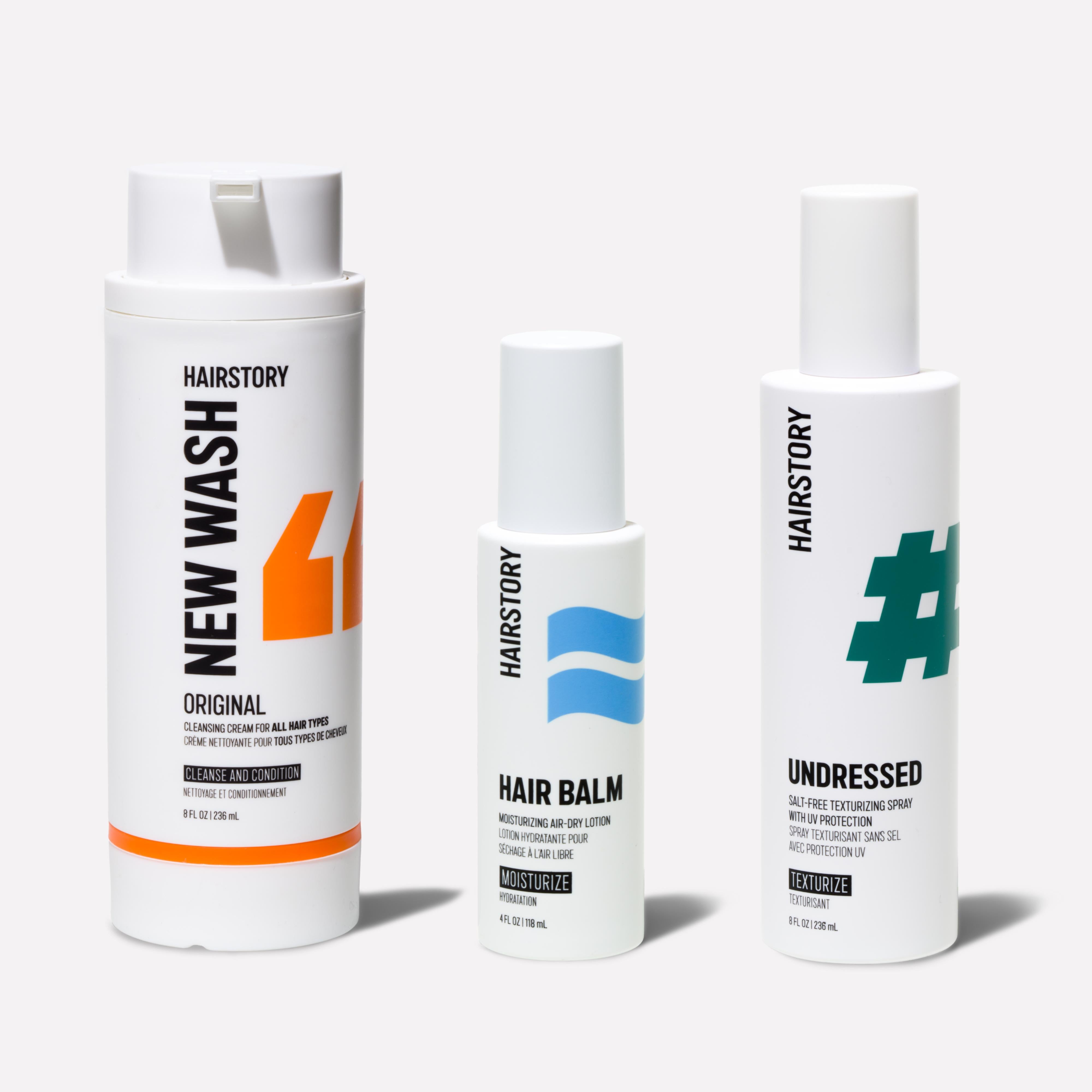
A detergent-free cleanser like New Wash supports scalp and strand health without repeatedly forcing dramatic swelling cycles. Preserving cuticle alignment between styling sessions reduces cumulative stress.

Think of it as lowering the baseline vulnerability.

When Is It "Too Late"?

If you notice:

  • Permanent texture change
  • Persistent brittleness
  • Breakage throughout the length
  • Splits traveling upward
  • Uneven curl pattern that doesn't recover

…then you're likely dealing with structural heat damage.

At that point, trimming is often the most effective reset. While conditioning treatments can improve the feel and sometimes appearance, they cannot reverse protein breakdown.

The goal isn't perfection. It's preserving as much healthy fiber as possible moving forward.

The Bigger Picture: Heat Is a Tool, Not the Enemy

Heat styling isn't inherently bad. Uncontrolled, repeated high heat is.

Hair fibers are resilient but not indestructible. Every exposure contributes to cumulative stress. The combination of high temperature, friction and prior cuticle disruption compounds risk.

The real shift is this: styling should not outpace structural care.

Lower the temperature. Reduce frequency. Cleanse in a way that preserves cuticle integrity. Protect the strand before you style it.

Heat damage doesn't happen all at once. And prevention doesn't require fear. It requires awareness and TLC.

Read More


The information in this article is for educational purposes only and is not intended as medical advice. Always consult a board-certified dermatologist or qualified healthcare provider if you have concerns about your hair or scalp health.

How to Prevent Heat Damage and Protect Your Hair During Styling

A four-step approach to reducing cumulative heat damage through smarter temperature habits, consistent heat protection, technique adjustments, and cuticle-preserving hair care between styling sessions.

1

Lower your heat tool temperature

Set your flat iron or blow dryer to below 320°F (160°C) whenever possible. Keratin proteins begin to break down at approximately 311–320°F, and many hot tools easily exceed 392°F at their default settings. Many hair types do not require extreme heat to achieve their desired shape — starting lower and adjusting only if needed protects the cuticle from unnecessary stress.

Pro Tip: If your hair seems to need very high heat to hold a style, this may be a sign of existing cuticle damage rather than a reason to increase the temperature further. Focus on building strand integrity through gentler cleansing first.
2

Apply heat protectant before every styling session

Before using any heat tool, apply a heat protectant to your hair. Heat protectants form a thin barrier across the strand that helps distribute heat more evenly, reducing rapid dehydration and surface cracking of the cuticle. This step should be consistent — not reserved for days when you're using especially high heat — because cumulative damage builds across many sessions over time.

Pro Tip: Don't skip this step even when you're in a rush. A few seconds of application can meaningfully reduce the structural stress of every heat styling pass.
3

Limit repeated passes over the same section

Avoid going over the same section of hair multiple times with a hot tool. Each pass contributes additional heat stress to the cuticle and cortex, compounding internal tension — especially because hair swells when exposed to moisture and contracts when dry, and heat during this cycle increases that internal stress. If you need to restyle a section, multiple slow passes at a lower temperature are safer than one aggressive pass at maximum heat. Keep the iron moving steadily rather than pausing on any section.

4

Strengthen the cuticle between styling sessions

Hair that begins each styling session in a healthier structural state tolerates heat better. Repeated aggressive cleansing with traditional detergent-based shampoos can leave the cuticle slightly lifted before you even pick up a styling tool — meaning the strand reaches its damage threshold faster. Switching to a detergent-free cleanser like New Wash supports cuticle alignment between sessions by avoiding the harsh swelling cycles caused by conventional surfactants, effectively lowering your hair's baseline vulnerability to heat stress.

Pro Tip: Think of your cleansing routine as part of your heat protection strategy — not separate from it. Preserving cuticle integrity between washes means each styling session starts from a stronger baseline.

Frequently Asked Questions

  • What does heat damaged hair look like?
    Heat damage alters the physical structure of the hair strand, affecting both appearance and texture. Common signs include increased frizz even in low humidity, loss of curl pattern or uneven texture, a rough or straw-like feel, dullness and reduced shine, and split ends appearing more frequently. If your curls won't spring back or your straight hair feels permanently puffy despite conditioning, heat may be the cause.
  • At what temperature does heat damage hair?
    Keratin — the primary protein in hair — begins to break down at approximately 311–320°F (155–160°C). Sustained exposure above 356°F (180°C) increases the risk of permanent structural change, and many common flat irons reach 392–450°F (200–232°C). Even at lower temperatures, repeated passes without heat protection can compound cumulative stress on the strand over time.
  • Is heat damage reversible?
    True structural heat damage is not reversible. Hair is biologically inert once it exits the follicle, meaning cracked cuticle layers and denatured keratin proteins cannot regenerate mid-strand. However, early-stage heat stress — primarily surface roughness or temporary dehydration — can sometimes be managed before severe structural breakdown occurs. If the cortex has been significantly compromised, trimming is often the most effective reset.
  • How can I tell if my hair is heat damaged or just dry?
    Dry hair typically feels rough but improves with conditioning, retains its natural pattern, and regains elasticity when hydrated. Heat damaged hair, by contrast, loses curl definition permanently, feels brittle even after conditioning, breaks easily when stretched, and frizzes despite heavy moisture. A simple elasticity test helps: gently stretch a wet strand — healthy hair stretches up to 30% of its length before returning to shape, while severely heat-damaged hair may snap quickly or fail to bounce back.
  • Why does heat styling make hair more frizzy?
    Heat styling lifts and cracks the hair's cuticle — the protective outer layer of each strand. When the cuticle is compromised, moisture moves in and out unpredictably, leaving hair uneven and prone to frizz. In humidity, hair fibers swell in diameter, and if the cuticle is already lifted, that swelling becomes irregular, causing strands to stick out. This is why even well-conditioned hair can frizz after heat — the issue is structural, not just a moisture deficit.
  • Do I need heat protectant every time I use a flat iron or blow dryer?
    Yes. Heat protectants form a thin barrier that helps distribute heat more evenly across the strand, reducing rapid dehydration and surface cracking. One styling session won't necessarily cause lasting damage, but chronic high-heat styling without protection is where cumulative structural breakdown builds. Consistent use of a heat protectant is one of the most effective preventive habits for maintaining cuticle integrity over time.
  • Can my shampoo make heat damage worse?
    Yes. Repeated aggressive cleansing with traditional shampoos that rely on harsh detergents can leave the cuticle slightly lifted before you even pick up a styling tool. When the strand begins a styling session already in a compromised state, it reaches its damage threshold faster. Using a detergent-free cleanser like New Wash by Hairstory helps preserve cuticle alignment between styling sessions, effectively lowering the hair's baseline vulnerability to heat stress.
  • When should I consider trimming heat damaged hair?
    Trimming becomes the most practical option when you notice permanent texture change, persistent brittleness, breakage throughout the length, splits that are traveling upward along the shaft, or an uneven curl pattern that doesn't recover after conditioning. While treatments can improve the feel and appearance of damaged hair, they cannot reverse protein breakdown. Trimming removes the most compromised sections and allows you to preserve as much healthy fiber as possible going forward.

SO, WHAT’S YOUR STORY?

Answer a few (easy) questions to get your personalized routine.