What High Porosity Hair Actually Is
Hair porosity describes how readily the cuticle, the outermost layer of overlapping scales on the hair shaft, absorbs and retains moisture. In high porosity hair, the cuticle layer is raised, irregular, or damaged, creating gaps that allow water and product to pass through quickly in both directions. Moisture enters fast and exits just as fast.
High porosity can be genetic. Some people naturally grow hair with a more open cuticle structure, and their hair has always behaved this way. More commonly, high porosity is acquired: the result of chemical processing such as bleaching, coloring, relaxing, or perming, which physically opens and disrupts the cuticle; heat damage from repeated use of high-temperature tools without protection; mechanical damage from aggressive brushing, tight styles, or friction; or environmental factors including sun exposure and hard water mineral deposits.
In both cases, the behavior of the hair is the same: rapid moisture absorption that does not translate into lasting hydration, persistent dryness at the lengths despite adequate product use, frizz in humid conditions as the open cuticle absorbs atmospheric moisture unevenly, and a tendency toward dullness because a raised or irregular cuticle does not reflect light the way a smooth, flat cuticle does.
Why Conventional Haircare Makes High Porosity Worse
The standard response to high porosity hair, particularly when it has been caused by chemical or heat damage, is heavier conditioning. This is partially correct but almost always executed in a way that makes things worse. Silicone-based conditioners coat the high porosity strand with a synthetic film that creates the temporary sensation of smoothness and moisture. The film is not absorbed. It sits on the surface of an already compromised cuticle, adds weight without adding genuine hydration, and accumulates over time into buildup that requires aggressive cleansing to remove.
That aggressive cleansing, typically sulfate-based, strips the already compromised cuticle further, raises it more, increases porosity, and creates a more significant deficit for the next round of silicone conditioning to address. High porosity hair caught in this cycle becomes progressively more damaged with each rotation of the routine even as each product step individually appears to be addressing the problem.
The Two-Part Challenge: Absorb and Seal
Effective high porosity hair care requires solving two problems sequentially. First, moisture must be delivered to the hair in a form the strand can use. Second, that moisture must be sealed inside the strand before the open cuticle allows it to escape. Most high porosity hair routines address one of these problems without adequately addressing the other.
New Wash (Rich): The Foundation
New Wash (Rich) is the recommended starting point for high porosity hair. As Hairstory's most emollient cleansing conditioner formula, it delivers intensive moisture to the strand during the cleanse itself, at the moment when the cuticle is warmth-opened and most receptive. Because New Wash is sulfate-free, the cleanse does not further disrupt an already compromised cuticle. Because it is silicone-free, it conditions without adding a coating that would block the subsequent moisture-sealing steps.
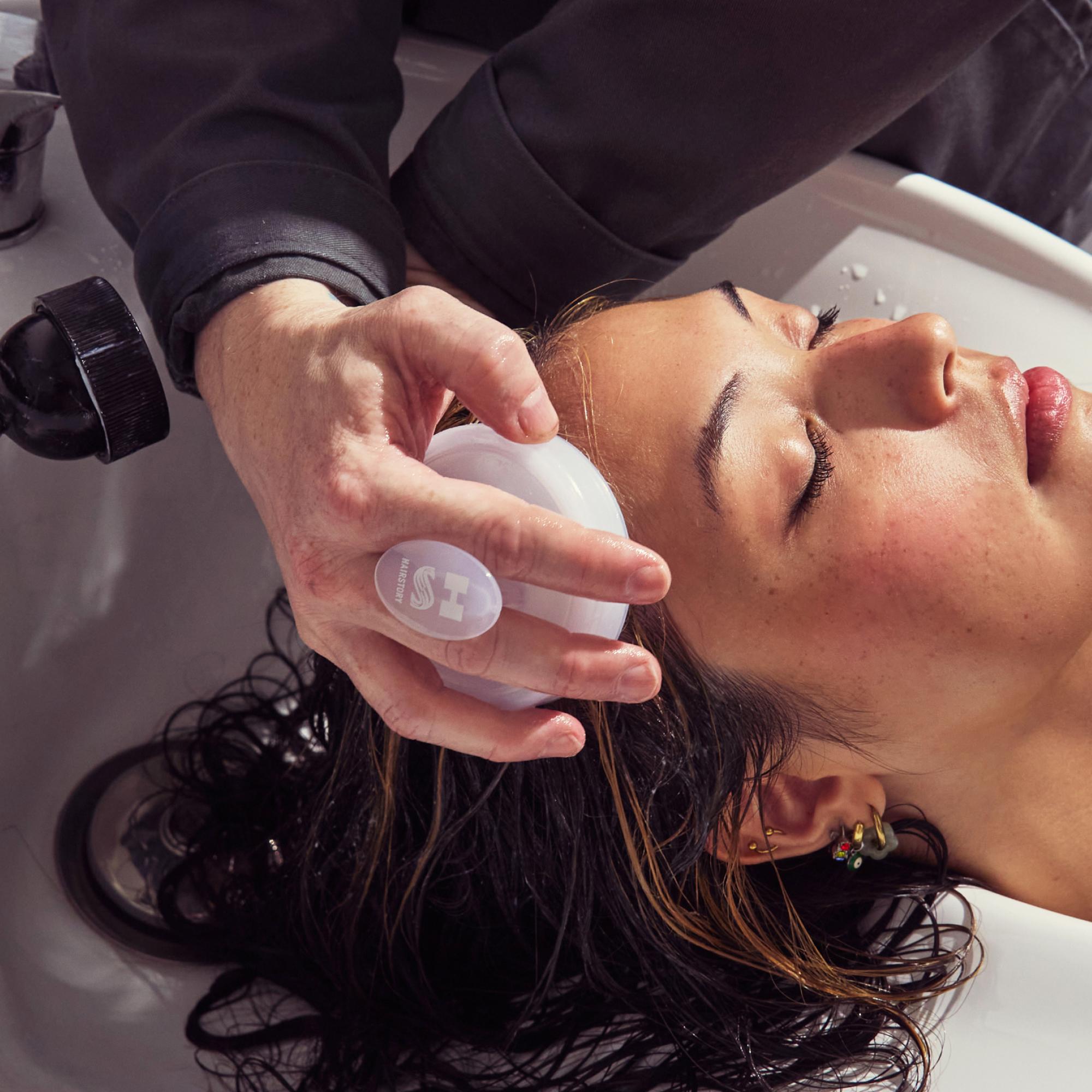
The application method is important for high porosity hair specifically. Working New Wash Rich through thoroughly saturated hair in sections and allowing a full three minutes of dwell time gives the conditioning emollients maximum opportunity to penetrate the open cuticle and reach the cortex before rinsing. For high porosity hair that has been significantly damaged, this dwell time is the most effective window for genuine moisture delivery in the entire routine.
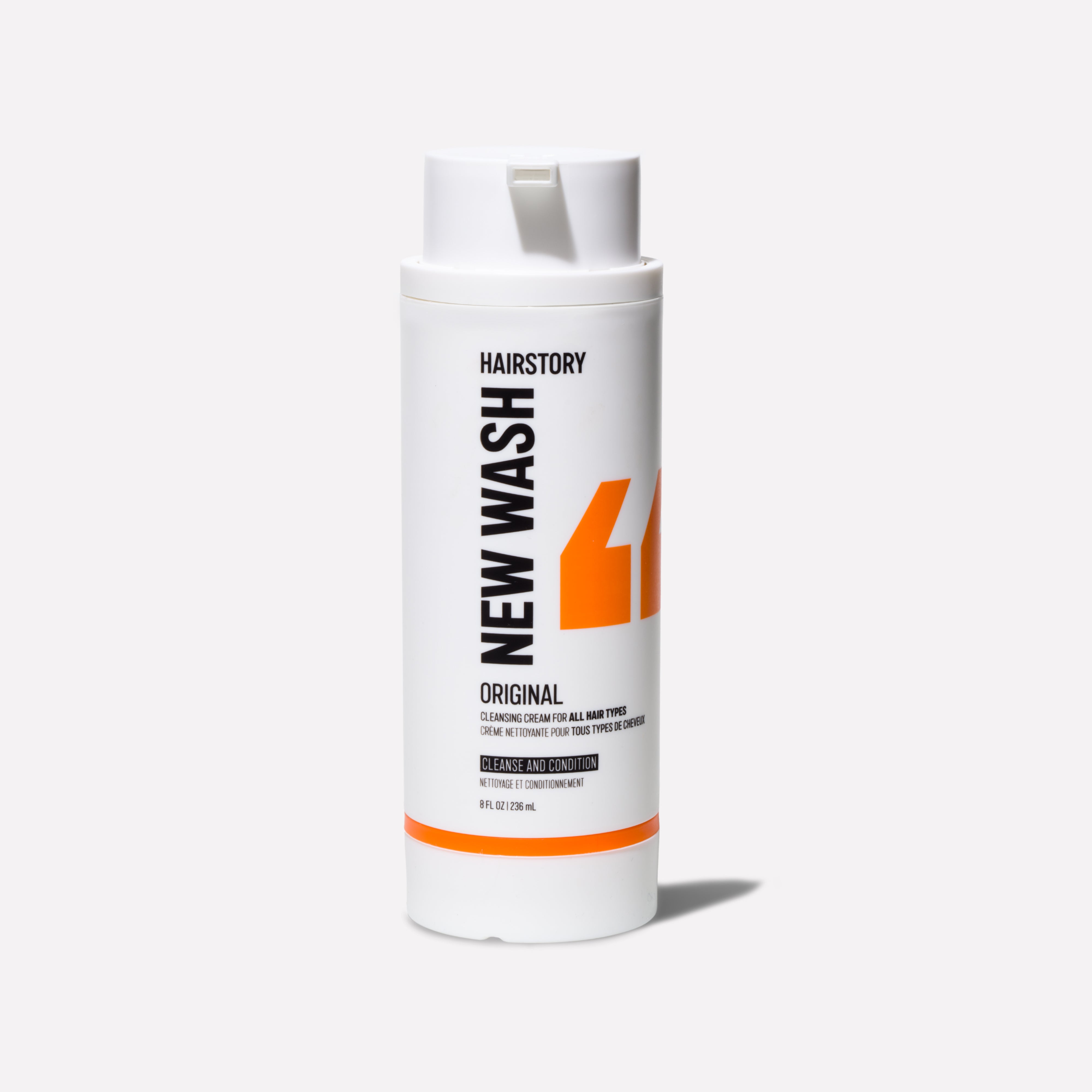
For high porosity hair that is on the finer side, New Wash (Original) provides meaningful moisture with a lighter emollient profile. New Wash (Deep Clean) serves as a periodic reset, used once a month or when significant styling product buildup has accumulated, before returning to Rich or Original for regular washes.
Cool Water Rinsing: The Simplest Sealing Step
The temperature of the rinse water after washing is one of the most underestimated tools in high porosity hair care. Warm and hot water keep the cuticle open, which is useful during the wash but counterproductive at the rinse stage. Rinsing with cool or cold water after New Wash encourages the cuticle to close around the moisture and conditioning agents that have been delivered, beginning the sealing process before the hair is even out of the shower.
For high porosity hair, the difference between rinsing with hot and cold water is measurable in how the hair feels and performs for the rest of the day.
Hair Balm: Locking in Moisture on Wet Hair
Immediately after rinsing, while the hair is still soaking wet and the cuticle is beginning to close, is the critical window for moisture layering. Hair Balm, applied generously to dripping wet hair from mid-length to ends, seals the moisture delivered by New Wash Rich into the strand as the cuticle contracts. Working it through in sections and allowing it to remain as a leave-in ensures that the conditioning benefits are not lost to evaporation as the hair dries.
For high porosity hair, Hair Balm is not optional. It is the bridge between a good wash and hair that retains what the wash delivered.
Hair Oil: Sealing the Cuticle
After Hair Balm is applied to wet hair, a small amount of Hair Oil layered on top provides an additional sealing step. Lightweight plant-derived oils sit at the surface of the hair shaft and slow the rate at which moisture escapes through the open cuticle, extending hydration significantly through the day and between washes. This layering approach, moisture delivered through New Wash Rich, sealed in by Hair Balm, and further protected by Hair Oil, is the practical application of the moisture and sealing method that high porosity hair requires.
Hair Oil should be applied in small amounts and distributed evenly rather than concentrated at specific points, which would create oiliness without providing the cuticle-sealing coverage that makes it effective.
Preventing Further Damage: Primer and Heat
For high porosity hair that already has an open, irregular cuticle, preventing additional damage from heat styling is more important than it is for any other hair type. Every unprotected heat styling session raises the cuticle further, increases porosity, and sets back whatever progress the moisture routine has been making.
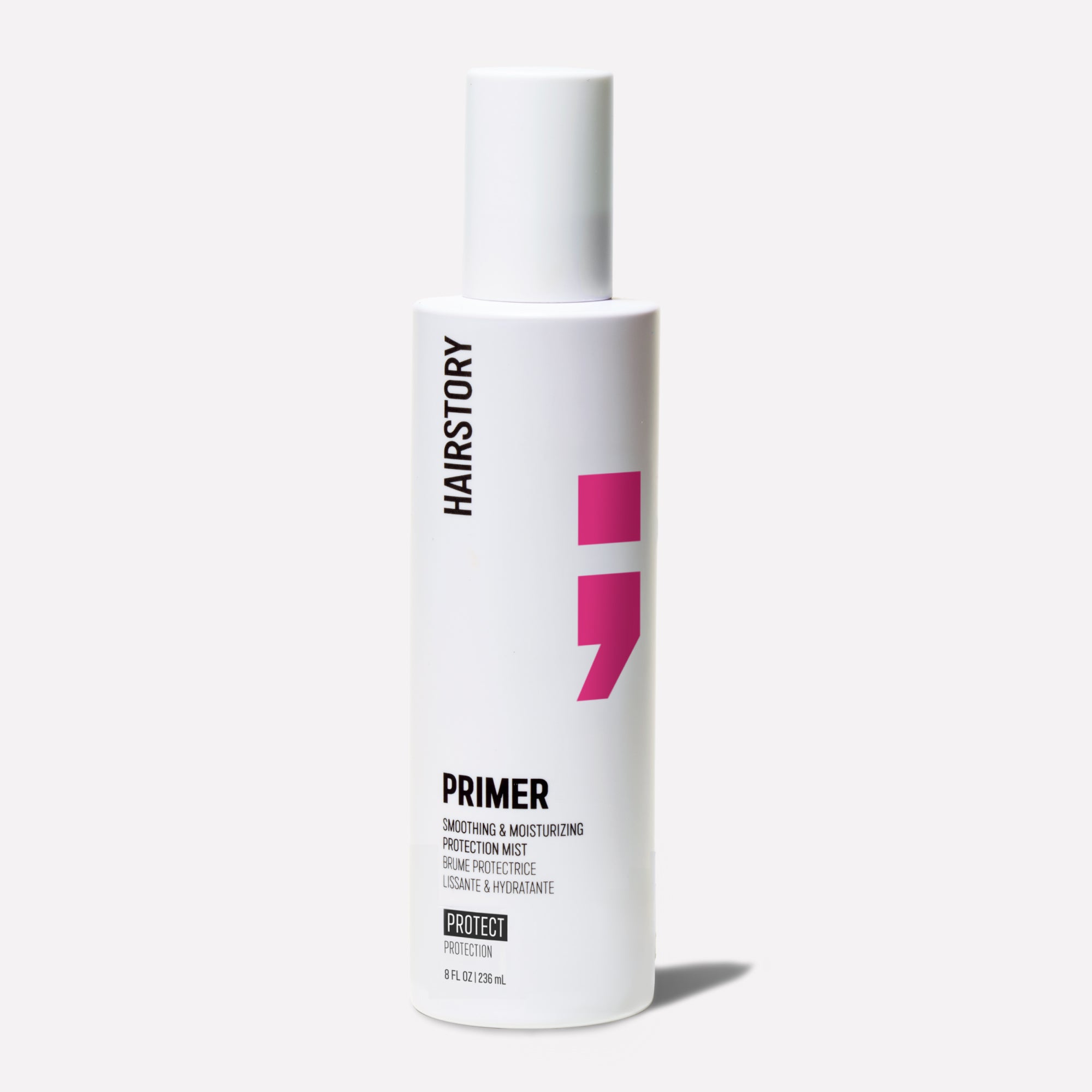
Primer, applied to damp high porosity hair before any heat tool, creates a protective layer that reduces the thermal damage at the cuticle level while also providing the smoothness and body that make blow drying more efficient at lower temperatures. Using lower heat settings and reducing the total time hair spends under heat, both of which Primer supports by speeding the process, is one of the most meaningful long-term interventions for high porosity hair that wants to stop getting worse.
A High Porosity Hair Routine with Hairstory
On wash days, saturate hair thoroughly with warm water and apply New Wash Rich in sections, allowing three minutes before rinsing with cool water. Immediately apply Hair Balm to soaking wet hair from mid-length to ends and leave in. Apply a small amount of Hair Oil over Hair Balm to seal. Apply Primer before any heat styling. Between washes, use Hair Oil daily on dry lengths to maintain moisture seal, and apply a small amount of Hair Balm to dry ends when dryness is present.
High porosity hair is not difficult to care for once the two-part challenge is understood. Deliver moisture and seal it before it leaves. Everything else follows from that.