The Cuticle and Light Reflection
The physics of hair gloss are straightforward. A smooth surface reflects light at consistent angles, producing the bright, directional reflection that reads as shine. A rough or irregular surface scatters incoming light in multiple directions, producing a diffuse, flat appearance. The cuticle of each hair strand determines which of these the hair produces.
Healthy, smooth cuticle scales lie tightly overlapping from root to tip. Chemical processing, heat styling without protection, mechanical damage from rough towel drying and brushing, and chronic exposure to sulfate-based cleansing all disrupt this structure progressively, lifting and roughening the scales in ways that accumulate over time. The result is hair that appears less reflective and more matte as the cuticle degrades, and that requires increasingly heavy surface products to simulate the gloss it can no longer produce on its own.
What Silicone Gloss Actually Is
Most shine-enhancing products in conventional haircare, including glossing serums, shine sprays, and silicone-based conditioners, produce their effect by coating the hair shaft in a reflective polymer layer. The coating smooths over the irregular cuticle surface and creates a uniform light-reflecting plane on the exterior of the hair. The result looks like gloss, at least initially.
The problem is accumulation. Silicone does not fully wash out with water and resists removal even with most shampoos. With each application, the coating builds up thicker and heavier on the shaft. Over time, this buildup paradoxically reduces the gloss it was designed to create: a heavy silicone film begins to yellow, attracts dust and environmental particles, and creates a flat, opaque surface that blocks the hair's own natural reflectivity entirely. Hair that is heavily silicone-coated often looks duller than well-conditioned hair with no coating at all, and it is far harder to restore because the buildup must be cleared before the hair's actual condition can be assessed.
New Wash (Deep Clean) and Gloss Restoration
New Wash (Deep Clean) is one of the most direct paths to improved hair gloss because it removes the silicone, mineral deposits, and product accumulation that are masking the hair's natural reflectivity. Mineral deposits from hard water, in particular, create a film on the hair shaft that dulls both color and shine by interposing a non-reflective mineral layer between the cuticle and the light.
A single Deep Clean wash often produces a visible improvement in gloss for hair that has been using silicone-based products or living in hard water, because clearing the film allows the hair's actual surface to reflect light again rather than having that reflection blocked. Used every two to three weeks as part of a regular routine, New Wash Deep Clean prevents the reaccumulation of the deposits that dull hair between washes.
The Foundation: New Wash and Genuine Cuticle Health
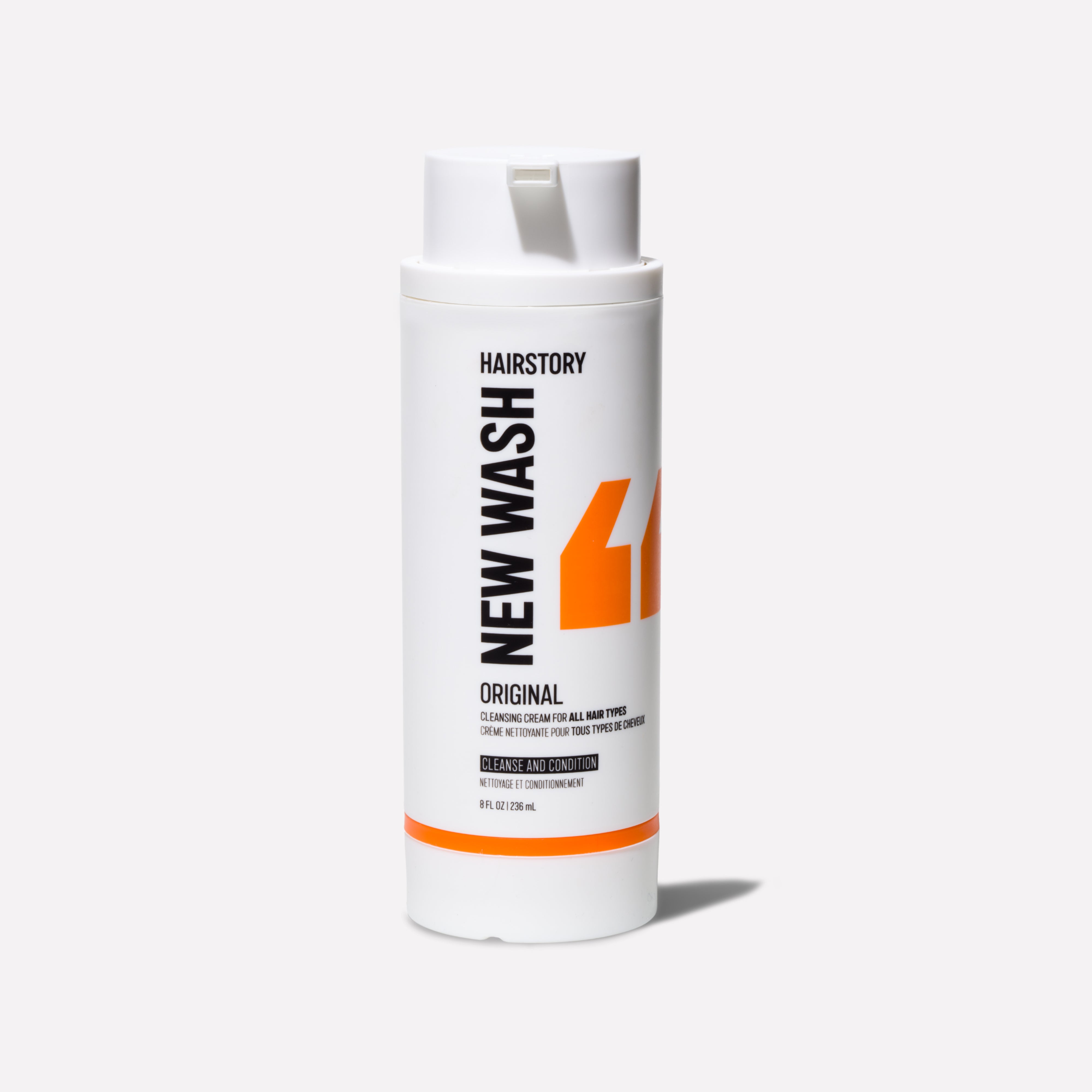
The long-term path to glossy hair is cuticle health rather than surface coating. New Wash (Original) provides balanced sulfate-free cleansing that maintains the scalp's natural oils and conditions the hair shaft without silicone, allowing the hair's natural surface texture to develop rather than being perpetually masked by coating.
For hair that is dry, processed, or has existing cuticle damage, New Wash (Rich) delivers more intensive conditioning during the cleanse itself, with conditioning agents that penetrate the cortex during the window when the cuticle is open rather than coating the outside after the cuticle has closed. Hair that is genuinely moisturized within the cortex reflects light better than hair that is coated on the outside but dry within, because the shaft refracts as well as reflects, contributing to the dimensional depth that distinguishes living gloss from surface shimmer.
Hair Oil: The Gloss Finish
Hair Oil is the most direct gloss-enhancing product in a Hairstory routine because it does what silicone does mechanically but without the accumulation problem. Applied sparingly to dry lengths, Hair Oil smooths the cuticle surface, fills in minor irregularities, and creates a light-reflective surface that produces immediate and visible gloss.
The amount applied determines whether the result looks polished or greasy: a small amount, the size of a five-cent coin or smaller for finer or shorter hair, pressed through the lower two-thirds of the hair rather than applied to the roots. The pressing application smooths the exterior without adding significant weight, and the result is the surface sheen associated with professional blowouts and well-maintained, genuinely healthy hair.
Hair Oil does not build up the way silicone products do because it washes out with New Wash during the next wash without needing special treatment. The routine remains clean and sustainable: gloss applied each day, cleared fully at each wash, and restored again without accumulation.
Salon Gloss Treatments: What They Do and How to Maintain Them
Salon gloss treatments, also called glazes, toners, or semi-permanent color glosses, deposit clear or tinted shine-enhancing pigment directly onto the hair shaft to smooth the cuticle, neutralize brassiness, and add intense reflectivity. They are different from the surface coating that silicone products provide because they work within the cuticle layer rather than on top of it, creating a genuine surface smoothness that can last several weeks.
The longevity of a salon gloss treatment depends significantly on what cleansing products are used after the appointment. Sulfate-based shampoos strip the treatment with each wash, fading the tonal result and removing the cuticle-smoothing effect progressively. Sulfate-free cleansing with New Wash Original or Rich preserves the deposit significantly longer, extending the gloss effect between salon visits.
Using New Wash Deep Clean before a salon gloss appointment provides a cleaner, more receptive surface for the treatment to deposit on, often producing a more even and longer-lasting result than applying the gloss over a hair shaft carrying mineral or product film.
The Blowout and Gloss
A professional blowout produces gloss primarily through the combination of heat, tension, and technique that smooths the cuticle mechanically as it seals in the drying position. The result is a cuticle surface that is temporarily flatter and smoother than it would be from air drying, which reflects light more cleanly and produces the visual signature of a fresh blowout.
Primer applied before blowdrying serves the gloss outcome as well as the protection one: it smooths the cuticle surface before heat is applied, allows the cuticle to seal at a lower temperature and with less damage, and produces a smoother finished surface than blowdrying without protection. The finish of a blowout done with Primer applied beforehand is consistently more reflective than one done without it, because the cuticle seals more completely.
Conditions That Undermine Gloss
Humidity absorbs into the hair shaft and causes the cuticle to swell and lift, reducing light reflection and producing the matte, frizzy appearance associated with high-humidity environments. Hair Oil applied after styling creates a barrier that slows atmospheric moisture absorption, extending the smoothness and gloss of a finished style in humidity.
Hard water minerals coat the hair shaft and create a non-reflective film that dulls color and shine progressively with each wash. New Wash Deep Clean addresses this specifically, and for people in hard water areas, regular Deep Clean use is one of the most effective available interventions for maintaining the gloss that would otherwise be obscured by mineral accumulation.
A Gloss-Focused Routine
Wash with New Wash Original or Rich, using cool water for the final rinse to encourage the cuticle to close tightly. Apply Hair Balm to soaking wet hair as a leave-in before drying. If heat styling, apply Primer to all damp sections before any heat tool. Finish with a small amount of Hair Oil through dry lengths for surface smoothness and light reflection. Every two to three weeks, substitute New Wash Deep Clean to clear the mineral and product film that accumulates between washes and dulls the result.
Genuine gloss is the outcome of a routine that maintains rather than damages the cuticle, removes buildup rather than adding to it, and finishes with products that enhance the hair's actual surface rather than masking it.