What Dandruff Actually Is
True dandruff, clinically known as seborrheic dermatitis, is caused by an overgrowth of Malassezia, a yeast that lives naturally on all human scalps in normal quantities. In some individuals, Malassezia proliferates beyond its normal population and triggers an inflammatory immune response. The scalp produces excess skin cells in reaction to this inflammation, which shed as the visible flakes associated with dandruff.
Dandruff flakes are characteristically larger than dry scalp flakes, oilier in texture, and may appear yellowish or have a waxy quality. The scalp in dandruff-affected individuals is often oily rather than dry, and the condition may be accompanied by redness, itching, or a greasy feeling at the scalp even shortly after washing. It tends to be chronic and recurring rather than resolving fully without specific treatment.
True dandruff requires antifungal treatment to address the Malassezia overgrowth driving the condition. Active ingredients such as zinc pyrithione, selenium sulfide, ketoconazole, and coal tar have demonstrated efficacy in treating seborrheic dermatitis. These are medical interventions, and their effectiveness is well-established by research. No haircare product that does not contain these or similarly targeted antifungal agents treats dandruff at its biological source.
What Is Frequently Mistaken for Dandruff
The majority of people who believe they have dandruff are experiencing one of two other conditions that share the visual presentation of scalp flaking but have entirely different causes.
Dry scalp produces small, white, fine flakes that tend to fall loosely from the hair rather than adhering to the strand. The scalp feels tight, itchy, and uncomfortable rather than oily. It is caused by moisture deficiency at the scalp skin and is driven primarily by harsh cleansing, environmental factors, and reduced sebum production. It responds well to gentler cleansing, reduced wash frequency, and scalp moisture support. It does not require antifungal treatment.
Product buildup is a third presentation that closely mimics dandruff visually. Accumulated scalp product, particularly from dry shampoos, silicone-heavy conditioners, and styling product applied at the root, forms visible flaking residue at the scalp that sheds as white or off-white particles indistinguishable from dandruff flakes to the untrained eye. Unlike true dandruff or dry scalp, product buildup resolves with a thorough clarifying wash and does not return if the products causing the accumulation are discontinued.
Distinguishing between these three conditions before selecting a treatment approach dramatically improves the likelihood of that treatment working.
How to Identify Which Condition You Have
The most reliable self-assessment involves texture, scalp feel, and response to washing. Oily scalp with larger, waxy, adherent flakes and possible redness: likely dandruff. Dry, tight, uncomfortable scalp with small, fine, loose white flakes: likely dry scalp. Flaking that appears or worsens specifically after using dry shampoo, heavy stylers, or products concentrated at the root: likely product buildup.
A clarifying wash with New Wash (Deep Clean) is useful as a diagnostic first step for anyone uncertain which condition they have. If the flaking resolves significantly after a thorough Deep Clean wash, the likely cause was product buildup rather than a scalp condition. If it persists unchanged, the cause is either dry scalp or true dandruff, and the scalp feel and flake characteristics can help distinguish between them.
New Wash for Dandruff-Prone Scalps
While New Wash does not treat dandruff, there is a meaningful relationship between the cleansing routine used and the scalp environment in which dandruff develops and is managed.
Sulfate shampoos disrupt the scalp microbiome, the community of bacteria, fungi, and other microorganisms that collectively maintain a balanced scalp environment. Repeated disruption of the microbiome through aggressive cleansing can worsen the conditions that allow Malassezia to proliferate beyond its normal population. A gentler cleansing approach that maintains the scalp's natural balance rather than repeatedly stripping and destabilizing it provides a better environment for managing dandruff long-term, even when a medicated treatment is addressing the underlying cause.
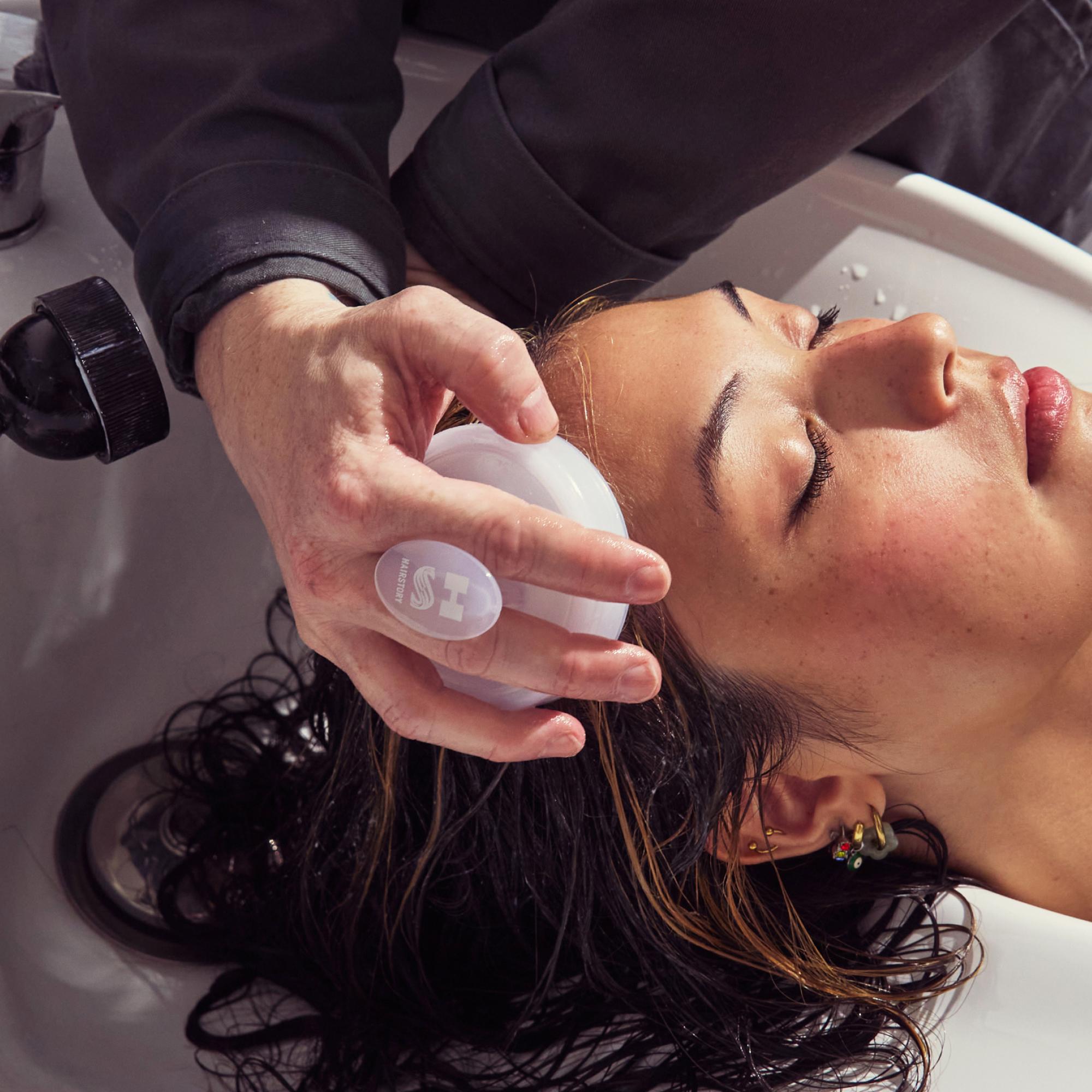
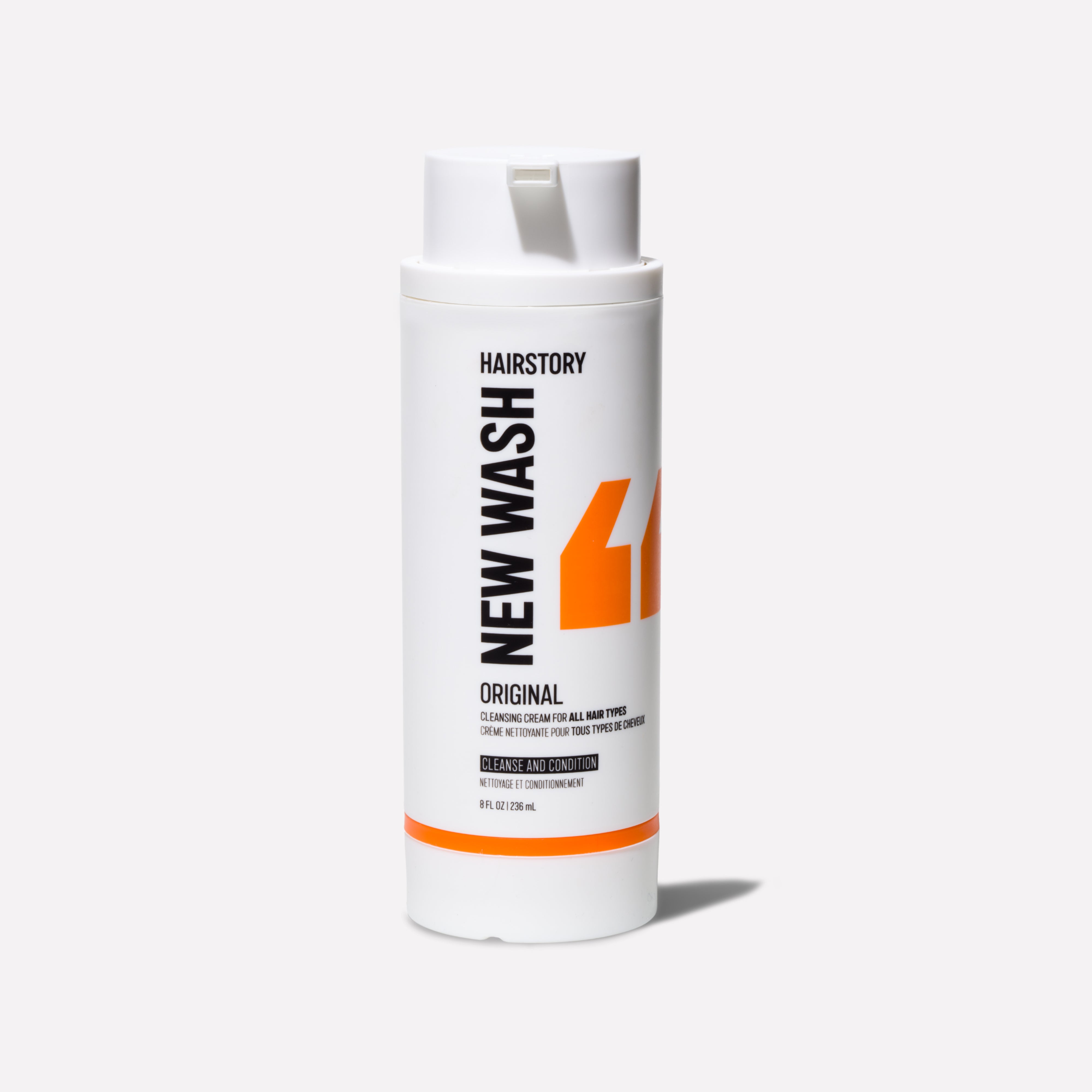
New Wash (Original), used as the regular cleansing formula for dandruff-prone scalps, cleanses without the microbiome disruption that sulfate shampoos cause. It removes excess oil, product residue, and accumulated debris from the scalp without the stripping that creates inflammatory conditions. For people using a medicated antifungal shampoo as part of their dandruff treatment, alternating with New Wash Original on non-treatment wash days maintains scalp cleanliness without doubling the chemical exposure to an already reactive scalp.
New Wash (Deep Clean) is useful for dandruff-prone scalps as a periodic clarifying step that removes accumulated product, mineral deposits, and excess sebum from the scalp surface. Used every two to three weeks, it clears the scalp of the accumulation that can exacerbate inflammation and provide an environment that encourages Malassezia proliferation, without requiring the repeated use of a concentrated medicated formula on every wash.
For scalps that present with both dandruff and dryness simultaneously, a condition that sometimes occurs when antifungal treatments dry the scalp skin, New Wash (Rich) can be used to address scalp dryness while maintaining the gentler cleansing approach, with the antifungal treatment used separately as directed.
What to Avoid on a Dandruff-Prone Scalp
Heavy styling products applied at the scalp, particularly silicone-based products and dry shampoos with starch-based formulas, create the buildup conditions that worsen dandruff by clogging follicles, trapping the sebum that Malassezia feeds on, and adding inflammatory residue to an already reactive scalp environment. Keeping products away from the scalp as much as possible, and using periodic Deep Clean washes to remove any accumulation, reduces the product-related contribution to dandruff severity.
Hair Balm should be applied from mid-length to ends only on dandruff-prone scalps, kept entirely away from the scalp skin. Hair Oil used directly on a dandruff-affected scalp can potentially feed the Malassezia that causes dandruff, as the yeast metabolizes certain fatty acids found in oils. For confirmed dandruff, scalp-specific application of Hair Oil is not recommended. Used through the lengths and ends only, it remains appropriate.
The Treatment Approach
For true dandruff, the most effective approach combines a medicated antifungal treatment used as directed with a gentle, non-stripping supporting routine that maintains scalp health without compounding disruption. The antifungal addresses the biological cause. The supporting routine reduces the environmental factors that allow the condition to worsen and improves the scalp's overall resilience and recovery.
A dermatologist consultation is the most direct path to confirmed diagnosis and appropriate treatment selection, particularly for dandruff that is persistent, severe, or accompanied by significant redness and inflammation.
A Scalp Care Routine for Dandruff-Prone Scalps with Hairstory
Wash regularly with New Wash Original, using medicated antifungal shampoo as directed by a dermatologist or product guidance on treatment days. Every two to three weeks, substitute New Wash Deep Clean to clear accumulated product and sebum buildup from the scalp. Apply Hair Balm only to mid-lengths and ends, never at the scalp. Keep styling products away from the scalp as much as possible. Avoid applying Hair Oil directly to the scalp.
Dandruff is a medical condition that responds to appropriate medical treatment. Haircare's role is to stop adding to the problem and to support the scalp environment in which that treatment has the best chance of working.