How to Stop Frizzy Hair (and Why It Happens)
If your hair looks smooth when you leave the house but frizzy the minute you step outside, that's not bad luck. It's hair science.
Frizz happens when the outer layer of the hair lifts instead of lying flat. When exposed to humidity, the strand pulls in moisture from the air, expands and then pushes out of place. That expansion is what creates the frustrating fuzzy effect.
Stopping frizz isn't about slicking it down with greasy oils, it's about restoring structural control. And once you understand this mechanism, you can start fighting it the healthy way.
What Causes Hair to Get Frizzy?
Frizz is a moisture imbalance caused by cuticle disruption.
Here's how it works: Your hair's outer layer, the cuticle, is made of overlapping cells that protect the inner cortex. When those layers lie flat, hair reflects light and holds shape. When they lift, moisture moves in and out of the strand—usually unpredictably.
Humidity is a major trigger. Studies in cosmetic science show that hair fibers can swell significantly in high humidity. As water molecules enter the cortex, hydrogen bonds shift. The strand expands. Texture becomes irregular: frizzy, fuzzy, poofy, whatever you want to call it.
But humidity doesn't create frizz on its own, it's actually exposing existing hair porosity. If your hair becomes frizzy the moment you step outside, it may be a sign of high porosity hair. (We break down the structural difference in detail in our guide to high vs. low porosity hair.)
That means frizz is often a symptom and not the root issue.
Is Frizz a Sign of Damage?
Well…sometimes, yes. But not always.
All hair types can frizz in humidity. Curly and wavy textures are naturally more reactive because their structure makes alignment more complex. But chronic frizz, especially in straight hair, often signals cuticle damage.
Common contributors include:
- Repeated heat styling
- Chemical processing
- UV exposure
- Aggressive detergent cleansing
- Mechanical friction from brushing or towels
As we discussed in our guide to hair porosity, keratin proteins begin to break down around 311–320°F (155–160°C). Flat irons often exceed 390°F! This type of repeated exposure weakens the cuticle layer.
When the cuticle stays slightly lifted, the strand loses moisture quickly in dry air and absorbs it rapidly in humid air. That constant expansion and contraction destabilizes alignment.
If you're unsure whether your frizz is heat-related, read our breakdown of heat damage symptoms. Frizz is often an early warning sign.
Why Does My Hair Get So Frizzy After I Wash It?
Washing is where many routines go wrong.
Traditional shampoos rely on surfactants like detergents, which are designed to remove oil effectively. The problem is that strong surfactants also cause the hair shaft to swell rapidly during washing. Research on fiber fatigue shows that repeated expansion and contraction reduces mechanical strength over time. Every wash expands the strand, and every dry cycle contracts it.
If the cuticle doesn't fully realign after washing, the surface remains uneven. That uneven surface scatters light and attracts atmospheric moisture. Translation: more frizz. This is why your hair can feel clean but look puffier than before.
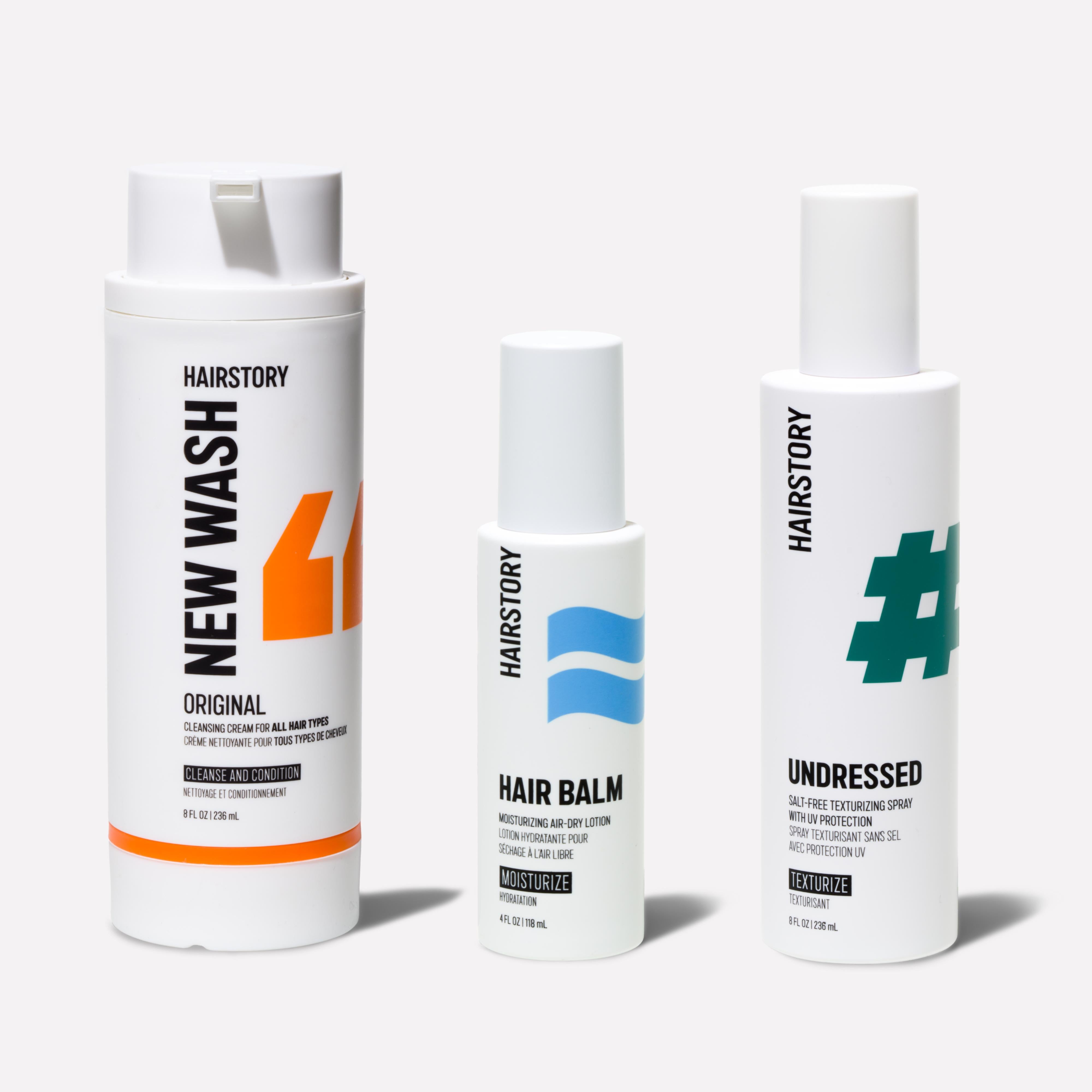
Cleansing should remove buildup without aggressively disrupting the cuticle—with the key word being "should." Traditional shampoos use harsh detergents to over-clean the hair. A detergent-free cleansing cream like New Wash supports scalp health while minimizing structural stress on the strand.
And when the cuticle stays more aligned, humidity has less opportunity to interfere.
How Does Porosity Affect Frizz?
Porosity is how easily your hair lets moisture in and out. High porosity hair absorbs water quickly but loses it just as fast. Low porosity hair resists moisture, but it can still frizz if product buildup keeps the surface from lying smooth.
In controlled studies, chemically treated hair showed up to 30% lower tensile strength compared to untreated hair. That reduction correlates with increased surface roughness and moisture instability.
High porosity hair tends to:
- Dry quickly
- Frizz in humidity
- Feel rough or uneven
- Tangle more easily
Low porosity hair may:
- Resist water saturation
- Experience surface frizz due to buildup
- Feel coated rather than hydrated
If you're not sure where you fall, our porosity guide walks through behavioral signs that are more accurate than the viral float test. Trying to control your frizz without knowing your porosity might do more harm than good.
Does Oil Actually Stop Frizz?
Short answer: temporarily.
Hair oils can create a hydrophobic barrier on the surface of the strand. This can slow down moisture exchange in humid environments.
However, oils do not repair lifted cuticles. If the underlying structure remains disrupted, frizz returns once the oil dissipates or humidity overwhelms the barrier.
Overusing heavy oils can also lead to buildup, especially on low porosity hair. That buildup can prevent proper moisture balance and create surface fuzz.
If you do opt for a hair oil, try Hairstory Oil. It's a lightweight blend of eight essential oils that leaves your hair soft and glossy without weighing it down.
How to Stop Frizz at the Structural Level
If you want frizz to decrease long term, focus on these shifts:
1. Reduce Excessive Heat
Reduce heat damage by tweaking your routine. Keep styling tools below 320°F (160°C) when possible. Use a heat protectant—like Hairstory Primer—consistently. And limit high-heat passes over the same section of hair.
2. Minimize Cuticle Disruption During Cleansing
Add this to the long list of reasons to avoid shampoos that leave your hair feeling squeaky clean: That sensation often signals the stripping of your protective hair oils.
A detergent-free cleanser like New Wash cleanses the scalp and hair without relying on harsh surfactants. Instead of forcing dramatic swelling cycles, it supports controlled moisture exchange. That's why it replaces shampoo and conditioner in one step—with the right cleanser, you don't need conditioner.
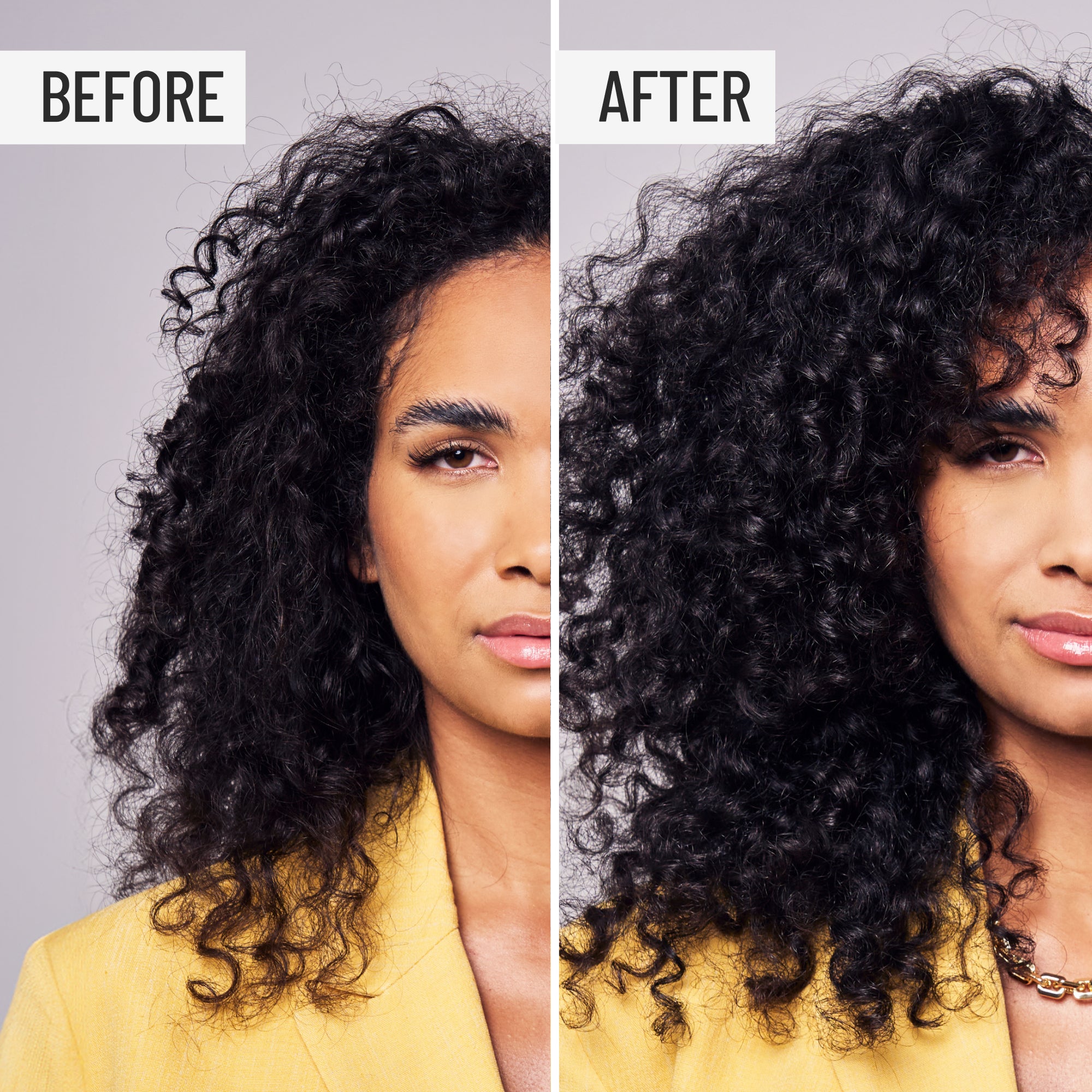
New Wash users often report reduced frizz within days or weeks because the cuticle experiences less repeated stress. Starting to understand why nearly a million people have ditched shampoo and switched to New Wash?
3. Limit Mechanical Friction
Wet hair is more elastic but also more vulnerable. Studies show hair can stretch up to 30% when wet before breaking.
After cleansing, dry using a microfiber towel or super-soft cotton T-shirt to reduce friction. Mist on Primer to infuse lightweight moisture and then detangle gently from the ends upward.
4. Protect From UV Exposure
UV radiation degrades proteins and protective lipids in the cuticle layer. Over time, this increases surface roughness and porosity.
Protect your hair from UV exposure by applying products like Hairstory Undressed or Oil before heading outside.
You can also avoid UV exposure by simply wearing a hat or other head covering. Just be sure to put them on and take them off gently, as they also can be a source of friction (aka cuticle damage).
Can Frizz Be Fixed Permanently?
Frizz can be reduced significantly. "Permanently" depends on the level of existing damage.
If the cuticle is chipped or eroded, it cannot regenerate mid-strand. Hair is biologically dead once it exits the follicle. You cannot regrow a cuticle layer halfway down the shaft.
However, you can:
- Prevent further disruption
- Improve surface alignment
- Reduce swelling cycles
- Strengthen the appearance of the strand
If your frizz is accompanied by visible splitting or white dots along the hair shaft, you may be dealing with structural breakage. Our guide on how to fix split ends explains what can and cannot be repaired.
Frizz doesn't need to be managed endlessly, it just needs to be understood!
The Real Secret to Smoother Hair
Frizz is often framed as a moisture deficit. Use this mask! Apply that serum! But moisture without structure won't help smooth things out.
Remember: When the cuticle lies flatter, moisture behaves predictably. When the cuticle is lifted, moisture becomes chaotic. So you can't stop frizz by coating it into submission. You have to protect the architecture of the hair fiber so it responds consistently to its environment.
Structure, then styling products. That's the secret to smoother hair.
Read More
- High vs. Low Porosity Hair: What's the Difference? (full guide coming soon)
- Heat Damage Symptoms: How to Tell If It's Too Late (full guide coming soon)
- How to Fix Split Ends (What Actually Works) (full guide coming soon)
The information in this article is for educational purposes only and is not intended as medical advice. Always consult a board-certified dermatologist or qualified healthcare provider if you have concerns about your hair or scalp health.