What Hats Actually Do to Hair
The effects of wearing a hat on hair are mechanical, thermal, and chemical in combination.
Mechanically, a hat applies sustained pressure to the hair shaft in a specific direction. At the crown, this compression flattens the root, collapses any volume that existed before the hat went on, and physically creases strands that have been held in one position for an extended period. The longer the hat is worn, the more set these impressions become, particularly in hair that has been styled with any heat. The brim of a cap creates a specific horizontal compression at the point of contact that leaves a visible indent across the back or sides of the hair.
Thermally, hats trap body heat and create an enclosed warm environment at the scalp. This warmth increases oil production, accelerates sebum distribution down the shaft, and can make hair feel greasier after an hour under a hat than it would have after a full day without one. In winter, the combination of hat warmth against cold dry air creates a particularly challenging environment, because the scalp sweats under the hat while the exposed ends of hair are affected by cold, dry air simultaneously.
The static generated by synthetic hat materials, particularly common in winter beanies and athletic caps, is among the most immediately visible hat hair effects. Static lifts individual fine strands away from the head in a way that no amount of smoothing by hand fully resolves without the right product.
Different Hats, Different Problems
Beanies and fitted winter hats cause the most significant hat hair because they cover the most surface area, apply even pressure across the entire crown, and generate the most heat at the scalp. They also produce the most static, particularly when worn over dry hair in cold, low-humidity conditions.
Baseball caps and fitted sports caps cause compression primarily at the crown and the horizontal brim line, producing the characteristic flat-top-and-bent-brim pattern that is among the most recognizable hat hair shapes. For longer hair, the brim creates a bend point that can be difficult to fully undo.
Wide-brim sun hats sit higher on the head and create less crown compression, but generate significant heat at the scalp and can flatten hair at the point of contact over extended wear.
Prevention: What to Do Before the Hat Goes On
The best hat hair is the kind that does not form in the first place, and the simplest prevention strategy is to avoid putting a hat on freshly styled, product-heavy hair. Hair that has been blow-dried and finished with silicone-based products is more likely to hold a hat impression than air-dried or lightly styled hair, because the heat of blow drying sets the strand into whatever shape it is in, and the hat then sets it further.
Applying Undressed to hair before a hat goes on serves two purposes. At the root, it provides volume and texture that gives hair something to recover to when the hat comes off. Through the lengths, it creates a light-hold texture that resists compression more effectively than unstyled or heavily conditioned hair. Because Undressed does not use synthetic film-forming polymers, it does not increase static and does not leave a residue that traps impressions the way heavier styling products do.
Avoiding heavy product application at the roots before extended hat wearing is also practical advice. Hair Balm, applied to mid-lengths and ends only, avoids adding any additional weight or coating at the roots that the hat will compress.
Recovery: Fixing Hat Hair After the Hat Comes Off
The fastest and most reliable hat hair fix is a small amount of water. Lightly misting or dampening the compressed areas with water partially resets the hydrogen bonds in the hair shaft that hold the flattened shape, making the strand more receptive to reshaping. For mild hat hair this is often sufficient on its own. For more significant compression, following with product is necessary.
Undressed applied to dry hair immediately after removing a hat is the most effective single product for hat hair recovery. Applied at the root area that has been compressed, it lifts and separates flattened strands, absorbs any excess oil accumulated under the hat, and restores the body and texture that compression removed. Applied to the crown and worked through with fingers, it can recover most hat hair within sixty seconds. For the brim-line impression left by a cap, a slightly more generous application at that specific point combined with lifting those strands away from the head while they dry restores the shape within a few minutes.
Hair Oil for Static
Static is the hat hair problem most resistant to physical correction. Smoothing static-affected hair with dry hands makes it worse. Applying a wet product flattens rather than separates. Hair Oil, a single drop pressed between the palms until nearly invisible and then lightly pressed over the surface of static-affected strands, is the most effective quick fix. The oil neutralizes the electrical charge that is lifting strands and provides enough surface weight to bring them back without coating or flattening the rest of the style.
For people who consistently deal with static from hat wearing, particularly in winter, applying a small amount of Hair Oil to the crown before putting on a beanie creates a surface coating that reduces static generation from the fabric contact.
Washing Hair After Hat Wearing
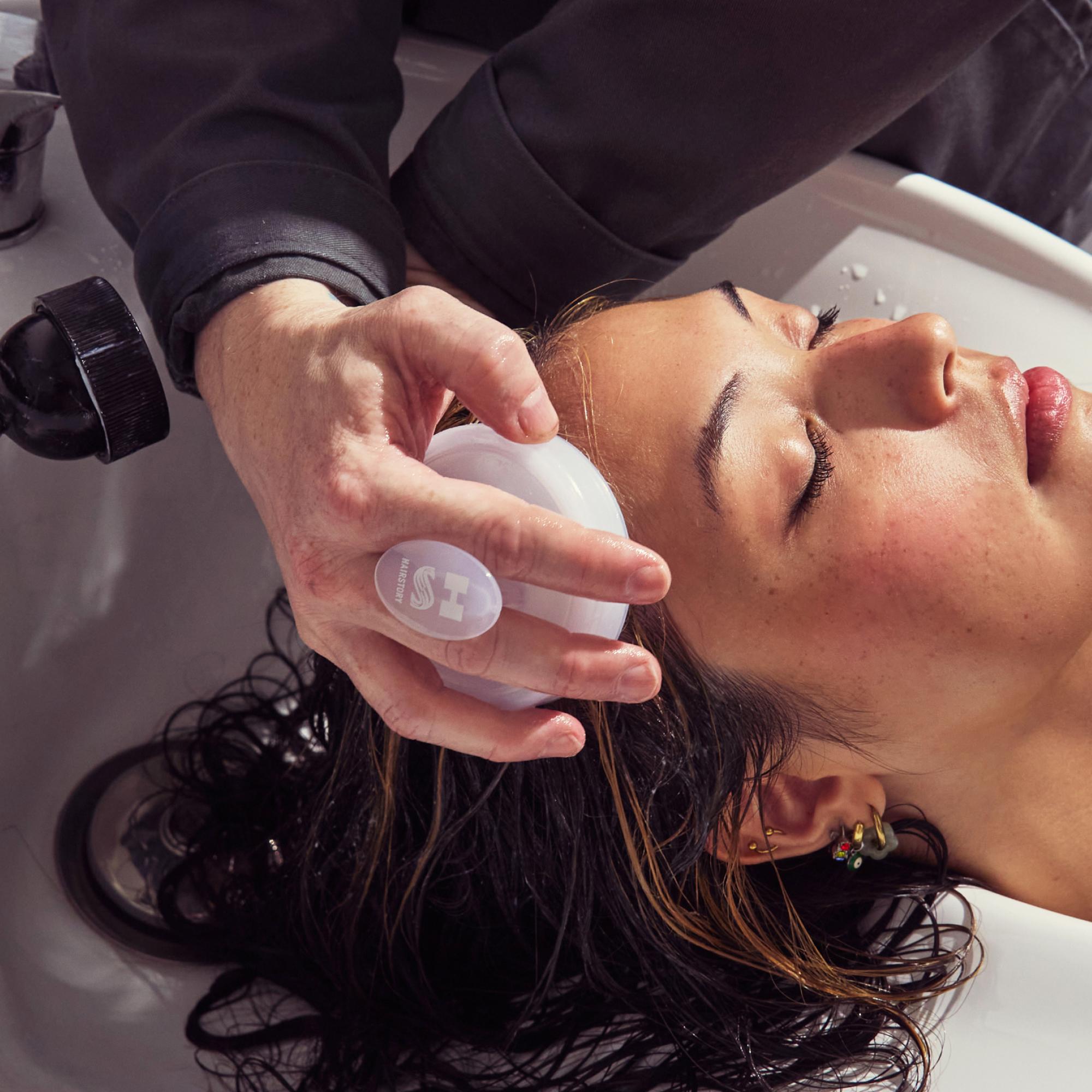
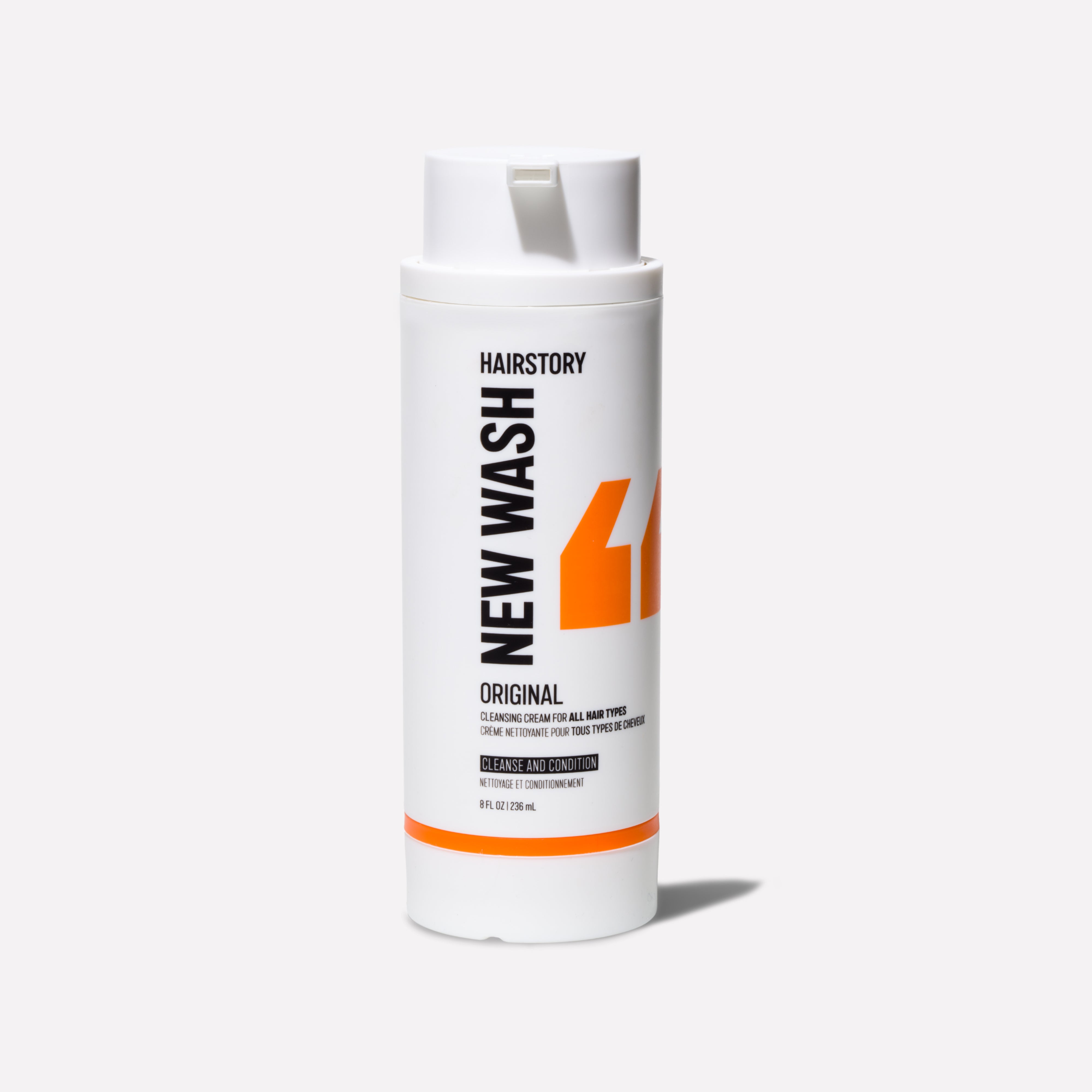
For people who wear hats daily, the scalp oil and sweat accumulation from extended covered wear makes consistent and effective cleansing more important than for people who rarely wear hats. New Wash (Original) is the appropriate regular formula for most hat wearers, providing effective scalp cleansing without the stripping that would accelerate oil production and make the hat-wearing cycle progressively oilier. New Wash (Deep Clean), used every one to two weeks, addresses the more significant buildup that daily hat wearing accelerates, including the combination of sebum, product, sweat, and any hat material residue that accumulates at the scalp.
For people who wear hats that are washed infrequently, particularly athletic caps and helmets, the hat itself becomes a source of product and sebum residue that transfers back to the hair at each wear. A more regular Deep Clean session is particularly relevant in these circumstances.
Styles That Survive Hats
Hair worn in a low bun, braid, or other contained style before putting on a hat fares significantly better than loose hair because the hat cannot compress and crease individual loose strands in the same way. When the style comes out after the hat, the hair falls naturally rather than retaining an impression. For curly and wavy hair specifically, protective styles under a hat preserve the curl pattern far more effectively than wearing hair loose, because the hat cannot disrupt what is already contained.
A Hat Hair Routine with Hairstory
Apply Undressed at the roots before wearing a hat for volume that survives compression and recovers more easily afterward. When the hat comes off, mist compressed areas lightly with water, apply Undressed at the root and affected areas, and work through with fingers to restore volume and texture. Apply a single drop of Hair Oil to static-affected areas to neutralize charge and smooth flyaways. Wash regularly with New Wash Original and use Deep Clean every one to two weeks for scalp reset under regular hat wearing conditions.
Hat hair is a thirty-second problem with the right product in hand. The preparation that prevents it is thirty seconds more.