We all want hair that’s “just right.” Some of us are too dry – more on that here – and some of us are too oily, and that’s why you’re here. Both conditions are easily manageable, and, it should be said, perfectly natural!
So let’s begin by reframing this “problem” as just another of the many differences between us on this marvelous spectrum of humanity. Less shame, more information. Agreed? Read on.Without some oiliness, our skin and hair would be brittle and susceptible, and it turns out we’d be less able to regulate our temperature, and more susceptible to germs, among other things.
Oil: What and Why
Microscopic sebaceous glands secrete a waxy oil called sebum. Sebum is our natural moisturizer, a ‘homemade’ elixir that softens and waterproofs our skin and hair, among other things. We have the greatest number of glands on the face and scalp, and none on the palms of our hands and soles of our feet.
One type of sebaceous gland is connected beneath the skin to every hair follicle on the body. Each cluster of glands deposits sebum, which travels to the skin surface along the hair shaft. Sebum also plays an important thermo-regulatory role: In hot conditions, it emulsifies sweat to create a sheet of moisture that is less readily lost in drops, thus delaying dehydration. In colder conditions, sebum coats the skin in a less liquid form to repel chilling rain.
Sebaceous glands also serve to protect the body against bacterial and fungal infections by secreting acids to form a thin film on the skin that acts as a neutralizing barrier to microbes. Sebaceous lipids also help maintain our supply of vitamin E.
When this process works too well, it results in oily skin and hair, a condition that is known medically as seborrhea. When not enough sebum is produced, skin and hair become dry.
Sebum: More and Less
Sebum production is controlled by hormones – specifically, androgens like testosterone and estrogen. Testosterone has been shown to stimulate secretion, and estrogens have been shown to inhibit secretion. During puberty, sebaceous glands enlarge, hormones become more active, more sebum is produced; boys may produce up to five times more sebum than girls. Sebum production starts to decrease by age 20 and continues to slow with age.
Sebum can also be affected by certain diseases. Disorders related to the pituitary and adrenal glands, ovaries, and testicles can either increase or decrease sebum production. Starvation reduces production, and Parkinson’s disease increases it. Fluctuations can also be caused by pregnancy, puberty, menopause, and stress.
Certain medications like oral contraceptives, antiandrogens, and vitamin A derivatives all known to reduce sebum production. Others, like testosterone and progesterone, are known to increase sebum production. A vitamin-B deficiency can also have an effect.
Several medical conditions involving sebum include acne, sebaceous cysts, hyperplasia, and sebaceous adenoma, usually due to overactive glands producing excess sebum.
Your Hair, Your Sebum
The reason that people with fine hair are more likely to complain about oiliness is simple: There may not be enough hair to fully absorb the amount of sebum their scalps produce.
Straight hair tends to look oilier because the sebum travels easily from roots to tips without curls or kinks as obstacles. Fine, straight can spell double trouble.
People with curly or coily hair complain of oiliness at the roots and dryness at the tips because oil builds up close to the scalp, and because curls act as obstacles it doesn’t travel as efficiently down the hair shaft.
Dos and Don’ts
If you experience what you feel is excessive sebum – whatever the cause – here are some simple ways to manage it:
Showering
Cool it in the shower. Hot water stimulates sebaceous glands and encourages them to produce more sebum. Your skin will appreciate it too. Try rinsing hair with cold water to close your hair cuticles and prevent glands from going into overdrive.
Shampooing
We know. You want to wash your hair every day because it’s so oily. But daily shampooing, in fact, is perpetuating your condition and even making it worse. Detergent strips your scalp of its natural oils – and it does an admirable job of replacing them as quickly as possible. Try cutting back on to washing every other day or 2 to 3 times a week. Ease into it by replacing one of your wash nights with a rinse night – just water, no shampoo.
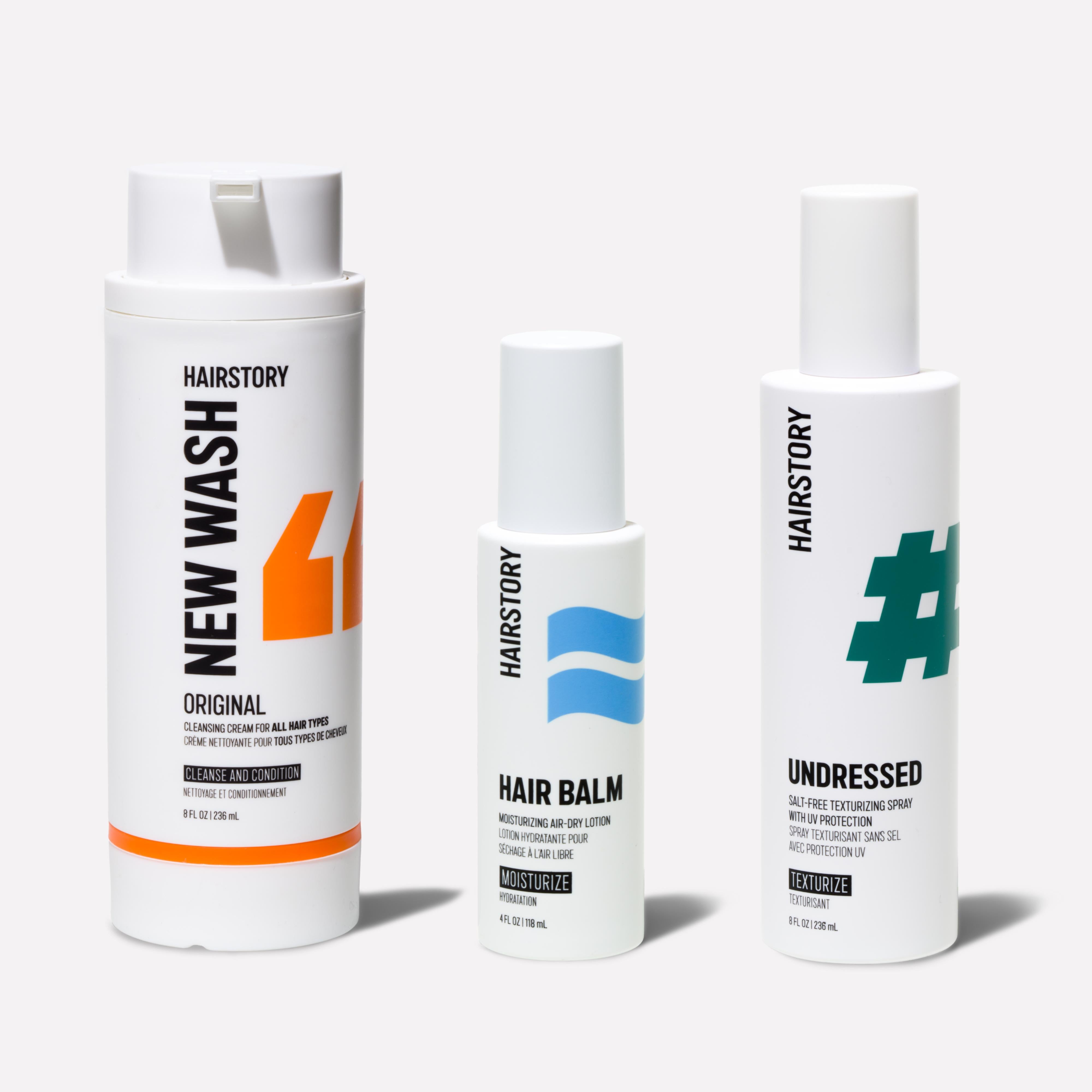
Your best course of action is to quit shampoo altogether! You can wash in a kinder, gentler way with a cleanser formulated without detergent at all – like New Wash (Deep) – made with apple cider vinegar and Argan oil especially for oilier types – to send a different signal to your glands and lower the threat level from a constant code-red. Give them a break. To get a deep clean for your oily scalp without damage, use our scalp massage brush.
Conditioning
Applying too much conditioner to your hair, especially at the roots can weigh it down and make it look greasy. Never apply conditioner to your scalp. Instead, use it mid-length to ends where you actually need extra moisture. Be meticulous about rinsing it out completely (take at least 30 seconds).
Brushing
Brushing helps spread sebum along the hair shaft with every stroke. If your hair is dry, that’s a good thing. But if it is oily, use a brush 3 times a day at the most, and use one with boar bristles.
Ponytails
Tying hair back in a ponytail is practically automatic, but when you think about it, this default style can make hair look greasier as oil and dirt get trapped underneath, and rubber bands serve as dams and reservoirs. Grease can pool on your scalp instead of spreading down the hair shaft.
Touching
Fiddling with your hair transfers oils from your fingertips to strands. Whether you are the fondler or the lucky one being fondled, hands off!
Sleeping
Change your pillowcase regularly. Oily linens can transfer oil back to your hair – and aggravate facial acne if you’re prone to it.
Clean Tools
Use clean brushes, combs, rollers, and curling irons, free of residue from conditioners and styling products. Wash brushes and combs once a week using a mild cleanser, and air-dry to avoid damaging the bristles. Swab curling and flat irons regularly with cotton balls soaked in pure alcohol.
Powders
If you’re oil-prone, you’re probably an expert in using dry shampoos and powders to sop up the excess and extend the time between washes. Just look for those with a loose, fine powder that you can shade onto hair invisibly. Avoid powders disguised as texture sprays that make your hair feel “dirtier.” Hairstory Powder gets raves reviews for its versatility and ease.
Styling
Go for hairstyles that lift your hair away from the scalp and limit contact with the place where oil originates. Appropriately named, Hairstory Lift is designed to help you do just that when blow-drying – without overwhelming fine hair.
* * *
Remember that oil is not some cruel joke Mother Nature thought up to thwart your vanity. It’s a highly sophisticated process that does much more good than harm, and balance is key. If you suspect that you may have an underlying condition preventing any of these tips from helping you achieve ‘just right,’ see your doctor, or dermatologist or endocrinologist (hormone specialist) for some peace of mind. Meanwhile, let us know how it goes.