This article is not for people whose hair is a problem. There are plenty of those, and the science series on this blog addresses most of their questions. This article is for the people who will read that sentence and think: That is not me. My hair is fine. I have no complaints.
I want to ask those people one question — honestly, not a rhetorical one — before they move on. Have you ever wondered what your hair actually is, underneath everything you put on it? Not what it looks like after the routine. What it actually is.
Because there is a difference. And the size of that difference, for most people, is the number of products sitting on the shelf in their shower.
A Personal Detour Worth Taking
I am 64 years old and reasonably fit. I play golf at a 7 handicap and tennis at a 4.0 level, I ski where there is snow, and I work a lot. I look healthy to most people who meet me, and I feel healthy most of the time. I am also a type 2 diabetic with Hashimoto's thyroiditis, and I take nine prescription medications plus seven additional supplements and vitamins to keep the machine running.
I want to be clear about something: I am not complaining, and I am not asking for sympathy. I am making an analytical observation. If you saw me on a golf course, you would not think that man is held together by sixteen products. You would think: That man looks healthy. And you would be right about the appearance and wrong about the condition.
The Hashimoto's I could not have prevented — autoimmune, genetic, not negotiable. Type 2 diabetes is a more complicated story, and I will not pretend otherwise. Years of choices and a body with a particular metabolic tendency added up to a condition that, had I paid attention to the mechanism earlier, I might have been able to alter. I understand science, I knew the mechanism, I just did not pay attention to it because I was too close to the problem to see it. The standard approach to life seemed fine. The consequences were evolving silently, arrived gradually, and then all at once.
I thought about this recently while counting products. Sixteen items, daily, to look like a healthy person who needs nothing. The pharmaceutical industry is not keeping me healthy. It is managing the gap between my biology and the appearance of health. It does this job extraordinarily well. I am genuinely grateful for it. And I am clear-eyed about what it is.
The stakes are not the same in hair care. I want to be honest about that. Stripped sebum is not diabetes. A damaged cuticle is not thyroid disease. The health consequences are not comparable, and I would not suggest otherwise. But the mechanism — ignoring the normalized routine that produces an appearance of health while managing a condition it helped create — that part is precisely the same.
The Five-Product Question
Most people with hair they describe as good enough use between three and seven products in their regular routine. Shampoo. Conditioner. Dry shampoo. A smoothing serum or cream. A heat protectant. A mask, weekly. Sometimes, a leave-in treatment. Each of these products exists and is purchased because it does something the hair needs.
The question worth asking is: why does the hair need all these things?
The shampoo strips the sebum film — the natural lipid layer the scalp produces to protect the hair. The conditioner temporarily replaces the lubrication that the shampoo removed. The dry shampoo manages the overproduction of sebum that the scalp produces in response to repeated stripping. It is the body's compensatory response to a signal that the lipid layer is disappearing and needs urgent replenishment. The smoothing serum addresses the frizz and flyaways produced by lifted cuticle scales and the electrostatic charge that a stripped surface carries. The heat protectant aims to limit additional damage to a fiber already compromised by the stripping cycle. The mask attempts to restore surface properties that the weekly shampoo routine has degraded.
Each product is a genuine response to a real need. The routine works in the sense that the hair at the end of it looks like healthy hair. What it does not address is why the needs exist. The needs exist because the cleaning mechanism creates them. Remove the mechanism, and the needs dissolve — not all at once, not without an adjustment period sometimes, but structurally and permanently.
A five-product system is not evidence of great hair. It is evidence of a system working very hard to produce the appearance of great hair. The person who uses five products and has no complaints is not wrong about the appearance. They have simply never asked what is underneath it.
The iPad You Did Not Know You Needed
When the iPad was introduced, I was certain I did not need one. I had a phone and a laptop. The phone fit in my pocket. The laptop did everything a computer needed to do. The iPad seemed like a solution looking for a problem I did not have. I said this loudly, and with some confidence — I even laughed out loud when I saw people making a line at the 5th Avenue Apple store to buy one.
I am currently on my fifth iPad. I cannot imagine working without it. What changed was not that I developed a problem for the iPad to solve. What changed was that I encountered a different way of operating, and discovered that what I had been calling fine was not the ceiling. There was a different experience available that I had no framework for before I had it.
This is an honest description of what happens for most people who switch from a conventional shampoo routine to a non-detergent cleansing system, even if they think everything was fine. They were not suffering. Their hair was OK. They had no complaints. And then they discovered that OK was a floor, not a ceiling — that the hair they had been managing was not the hair they actually had, and that the hair they actually had was better.
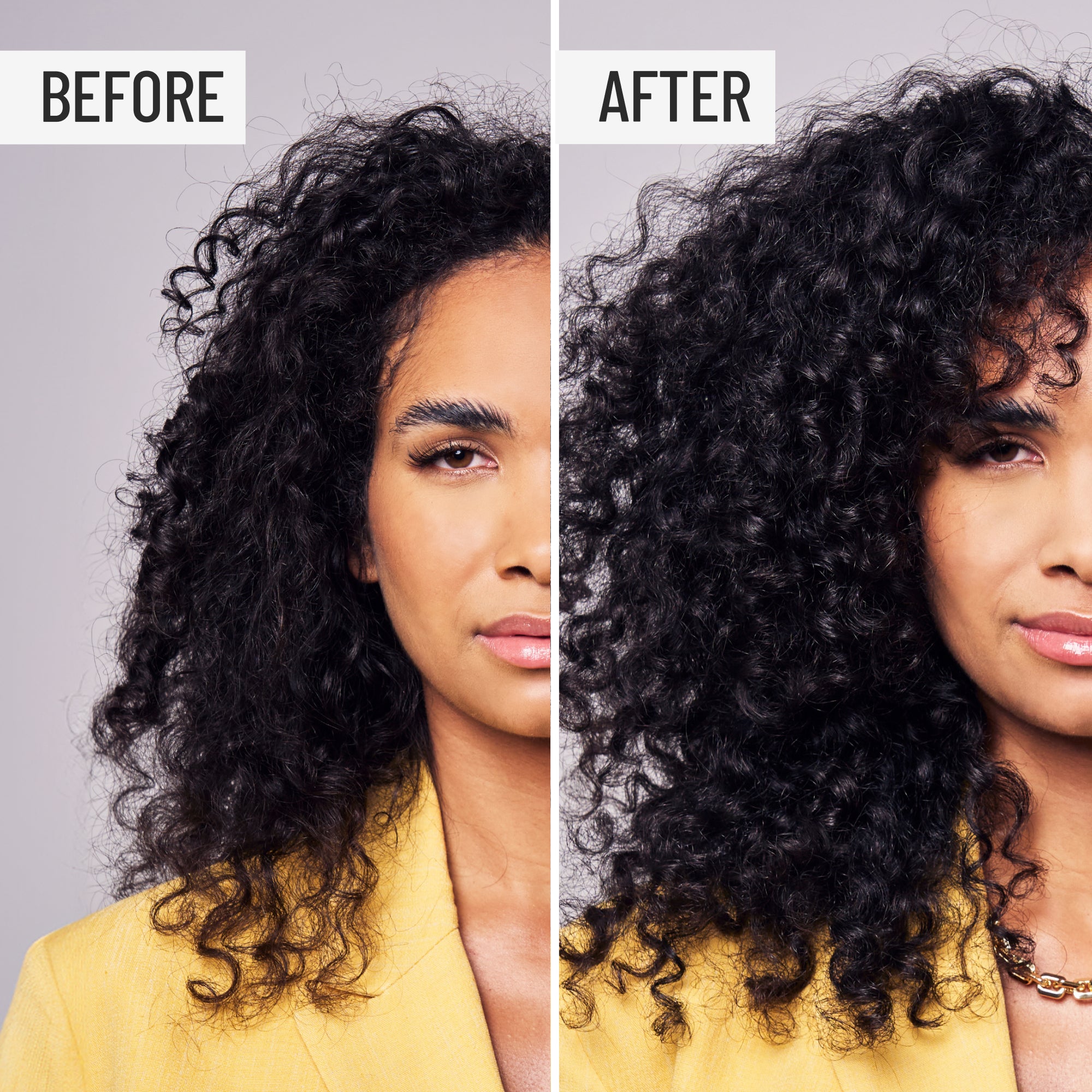
One participant in a 103-person consumer study wrote, after three weeks of switching: "After New Wash, I discovered my real texture. I didn't realize my hair was so wavy." She had been washing her hair for decades. She thought she knew what her hair was. She had been seeing the managed version of it for so long that she had mistaken it for the original. The science behind why this happens — at the level of the fiber and the follicle — is explored in depth in our post on wavy hair.
She was not a person with a hair problem. She was a person who thought her hair was the best it could be.
The Reversibility Advantage
Here is where the analogy to my health situation reaches its limit, and where the hair story becomes more hopeful than the metabolic one.
Type 2 diabetes, once established through years of metabolic stress, is genuinely difficult to reverse. Pancreatic function, insulin resistance, and systemic inflammation are conditions with real biological inertia. I manage them well. I am not complaining. But I cannot simply stop the mechanism and watch the damage undo itself.
Hair can. As long as the follicle is alive and producing fiber, and the sebaceous gland is secreting sebum, the biology can recalibrate. The sebum system that has been in compensatory overproduction in response to repeated stripping will, when the stripping stops, find its natural baseline. The cuticle of a new fiber growing from an unstressed follicle will be structurally sounder than the cuticle of a fiber that has been repeatedly stripped and corrected. The hair emerging going forward will reflect its actual nature rather than the managed version of a damaged one.
The reset button is called the follicle. It is still there. It is still producing. The sebum system is waiting to do its job without interference. The window is open for as long as the hair is growing — which, for most people reading this, is right now.
The person who thinks their hair is great is not wrong about today. They are simply unaware that a different tomorrow is available — one that requires fewer products, less correction, and less work to maintain. Not because they did something right, but because they stopped doing something that was quietly harming them.
The Only Question That Matters
I am not suggesting that someone who uses a battery of hair products is wrong if they see their hair as good enough for them. I suggest that everyone might find it interesting to ask one question: how much of what I am doing is maintenance, and how much is "correction"?
Maintenance is what you do to keep something in good condition. Correction is what you do for something that has been disrupted and needs to be managed back toward a functional state. Most conventional hair care routines are almost entirely "correction" — because the cleaning mechanism at the beginning of the routine creates the conditions that everything else is designed to address.
The practical test is the foam question, established in The Surfactant Spectrum on this blog. If your shampoo foams, it contains a detergent. If it contains a detergent, it crosses the sebum threshold. If it crosses the sebum threshold, every product after it in the routine is "correction." That is not a value judgment. It is a description of the mechanism.
You may decide, after understanding the mechanism, that the routine you have is the one you want. That is a perfectly legitimate choice made with full information. Or you may decide that you are curious — the way I was eventually curious about the iPad I was certain I did not need. Even knowing all these mechanisms now, you could still think that your hair is good enough at the present moment, but don't you want to know how much better it could be with only a very easy change of habits?
Have you ever met your actual hair? It is still there. It has been there the whole time. It is waiting for you to stop stripping and "correcting," to finally find out what it is.
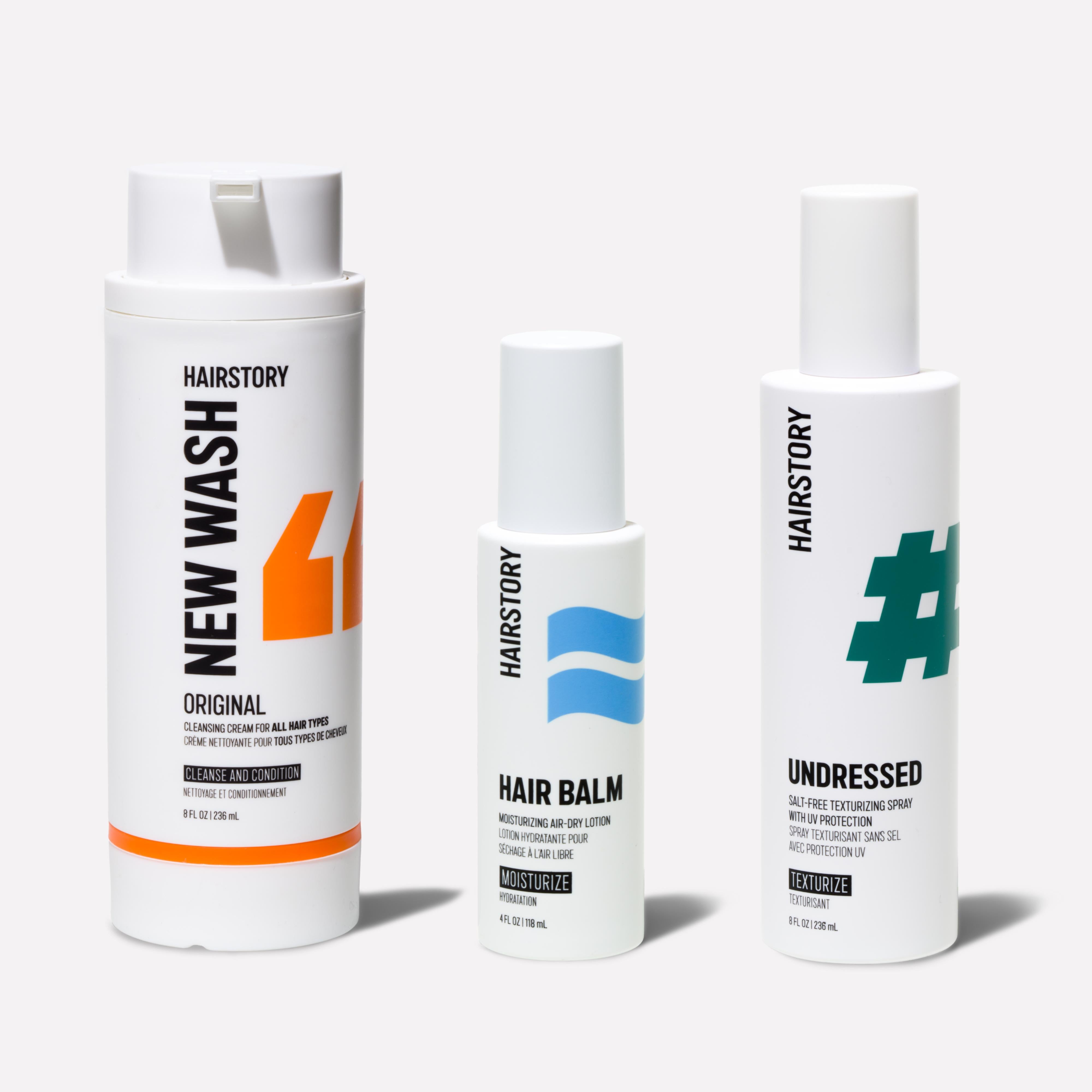
Ready to find out? Explore New Wash — the non-detergent cleanser that lets your hair be exactly what it is.
About the Author
Mauricio Gatto Bellora holds a doctorate in Pharmaceutical and Biochemical Sciences from the University of Buenos Aires, with a research specialization in microencapsulation. He has served as CEO of multiple global companies across the pharmaceutical, cosmetics, and nutrition sectors, including Allergan Latin America, Natura Cosméticos, and MonaVie. He is a co-founder of Hairstory. Read more from Mauricio.
Keep Reading
- The Surfactant Spectrum: Why Some Cleansers Strip and Others Don't
- The Strip-and-Restore Trap: How Conventional Shampoo Creates the Problems It Promises to Solve
- The Right Question: What the Sebum Threshold Tells You About Every Product on Your Shelf
The information in this article is for educational purposes only and is not intended as medical advice. Always consult a board-certified dermatologist or qualified healthcare provider if you have concerns about your hair or scalp health.