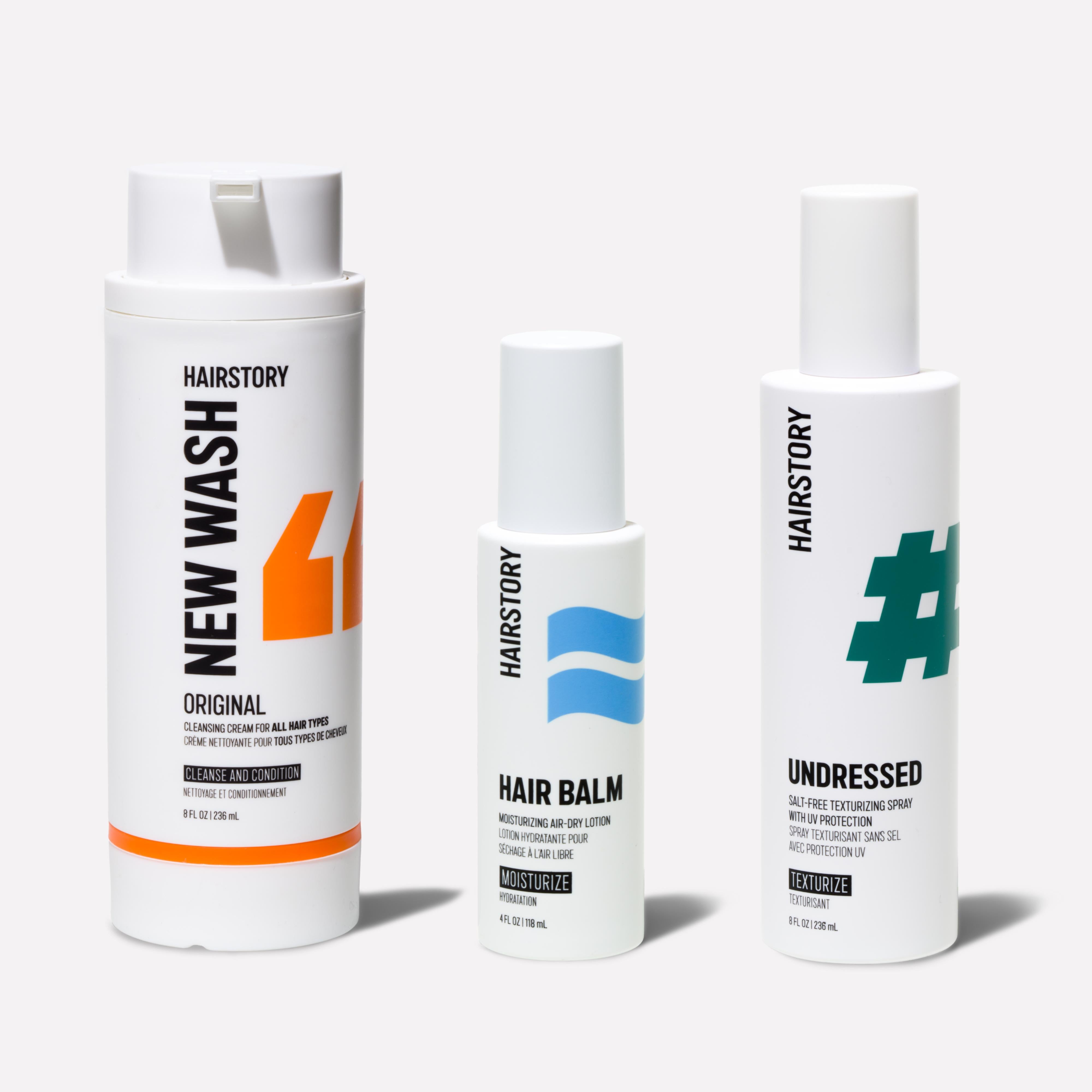
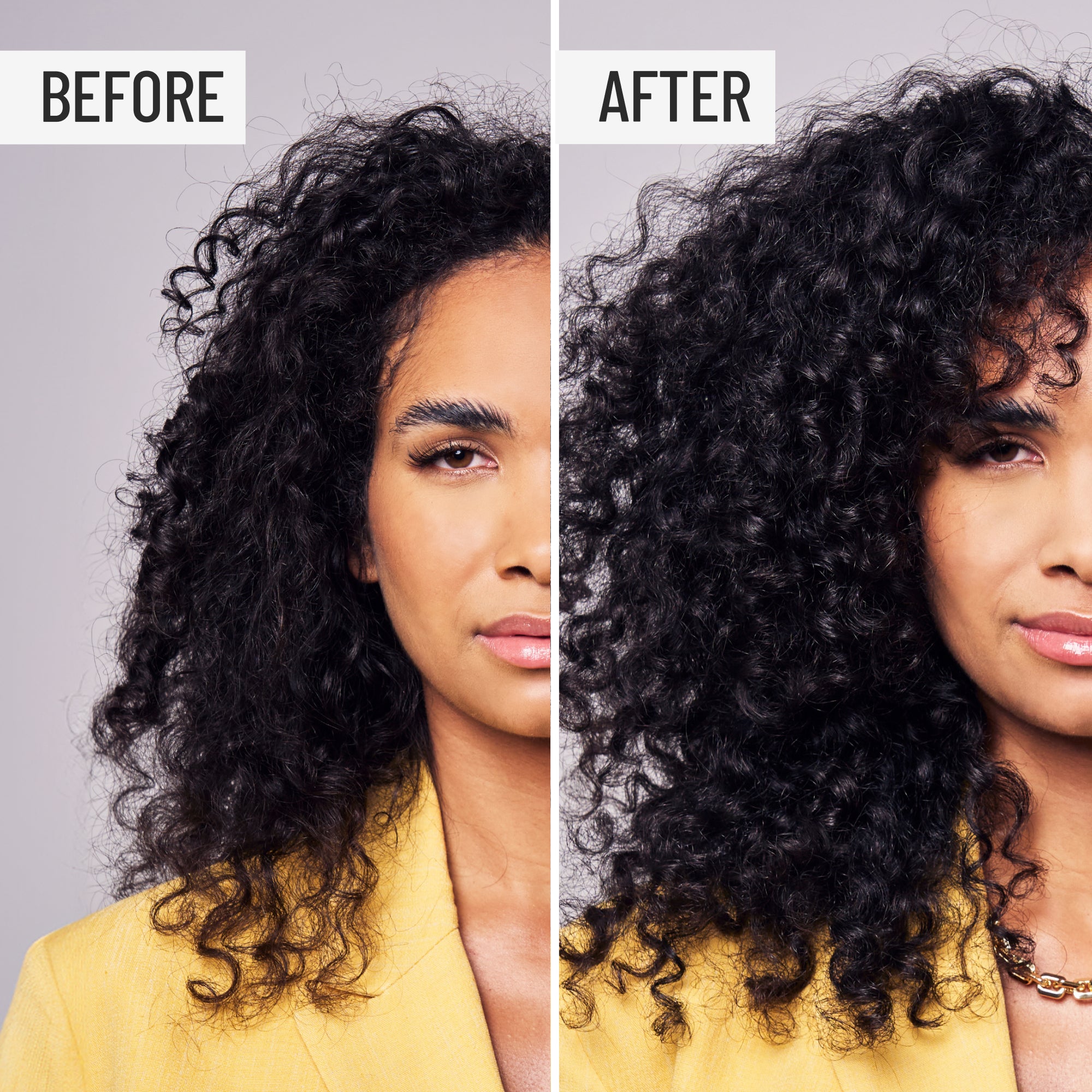
Detergents strip everything, including the oils your scalp actually needs. Every product after your shampoo exists because your shampoo created the damage. New Wash doesn't use detergents at all. Sulfate-free changed the molecule. New Wash changed the approach. Those are not the same thing.
Nobody's explaining this clearly. And once you understand what's actually happening on your scalp, you can't unknow it.
So here it is.
When we say New Wash is detergent-free, sulfate-free, and biodegradable, most people nod along and keep reaching for their five-step routine. Because what does that actually mean? What even is a detergent? What's a surfactant? And why does it matter what's in your cleanser?
It matters more than the haircare industry wants you to know.
What Is a Surfactant? (And How Is It Different From a Detergent?)
Start here: surfactants are a massive family of molecules. Some are natural. Some are synthetic. And within that family, there's a specific subcategory called detergents — synthetic surfactants, engineered ones.
Every surfactant molecule has a water-loving head and a water-repelling tail. That tail hates water so much it swims straight toward oil instead. That's the whole mechanism, and it's actually brilliant chemistry.
The problem is what happens next.
What Is the Sebum Film and Why Does It Matter?
Your scalp produces something called the sebum film. It's not glamorous, but it is essential: it's your scalp's natural protective barrier. Two distinct layers make it up: the intact film (the barrier itself) and the loosely bound residue that accumulates on top due to environmental and product buildup.
The loosely bound stuff should go. That's the grime, the buildup, the gunk. You want that gone.
The intact film is yours. Your scalp made it. Your scalp needs it.
Conventional shampoo doesn't distinguish between the two. That's where the cycle starts.
How Detergents Actually Work: The Heist
Those surfactant molecules hate water and love oil, so they swarm toward your scalp's oil film, wrap their tails around the oil blobs, and disguise the oil as water molecules so it rinses away.
Clever? Yes. The problem is detergents, the synthetic kind, which are engineered to be aggressive. They don't gently lift the loosely bound residue and leave the rest. They swarm all of it: the grime, yes, but also the intact film. Your scalp's protective barrier. The oil your scalp actually needs.
The names you'll see on labels: sodium lauryl sulfate, sodium laureth sulfate, ammonium lauryl sulfate. And then there's sodium hydroxide, which is used to unclog drains, found in paint thinner, and present in many shampoos. Check your labels.
Why Your Entire Haircare Routine Is a Correction, Not a Solution
Here's the part the industry doesn't want to say out loud.
The average haircare routine: shampoo, conditioner, mask, leave-in, repair serum. Five products. But only one of them is an innovation. Every single product after the first is a correction.
Conditioner exists because detergent-based shampoo strips the hair's protective oils. The mask exists because conditioning alone can't undo the damage. The repair serum exists because the cycle of stripping and partial restoration is wearing the hair down over time.
None of those products solves a problem. They manage a problem that the first product created.
New Wash removes that first domino.
The Adjustment Period: What's Really Happening When You Switch to New Wash
Switching to New Wash and thinking it isn't working? Does your hair feel greasy, and is something wrong? The instinct to bail is understandable.
It's also premature.
Think of a furnace that's been running on overdrive for years. Your scalp has been locked in a loop: detergents strip the oil, the scalp panics and overproduces to compensate, the detergents strip again. That's the only cycle it knows. When the stripping stops, it doesn't immediately recalibrate. It keeps producing at the same rate.
That's the grease. It's not a sign that New Wash isn't working; it's a sign that your scalp is catching up.
The average skin cell lifecycle is 27 days. That's almost exactly the adjustment window. One full cycle. Give it that.
Here's what you might experience, and what's actually happening underneath.
Greasy Hair After Switching to New Wash
Your scalp is still overproducing because it hasn't learned that it doesn't have to anymore. It will recalibrate. It just needs time to complete a full cellular turnover cycle.
Itchy Scalp After Switching to New Wash
The protective ecosystem on your scalp has been disrupted, potentially for years. The itch is your scalp's microbiome rehabilitating itself. It's a sign of movement, not damage.
Dry and Brittle Hair After Switching to New Wash
Almost always: silicone washout. And that's actually a good thing. Think of silicones like a laminate coating on wood. Beautiful surface, smooth, shiny. But nothing gets through. Not moisture. Not natural oils. Nothing. When you stop using detergent-based cleansers, the coating wears off over several weeks, and your actual hair becomes visible. The brittleness isn't New Wash. It's the truth your old products were covering up.
Dandruff and Flaking After Switching to New Wash
Almost always a sebum regulation issue, not dryness. Your scalp microbiome is a living ecosystem. Every detergent-based wash is like pouring bleach on a garden: the good bacteria disappear, and in that depleted environment, yeast, most commonly Malassezia, takes over. It feeds on scalp oil, and its overgrowth is what's behind most dandruff. New Wash takes longer than an anti-dandruff shampoo. But it addresses the source, not the symptom.
What's Actually Going On If "New Wash Stopped Working"
The formula hasn't changed. What almost always has: a different water source, styling products with foaming agents in the mix, or physical changes like stress, diet, or hormones. Any of those can restart the disruption cycle. Look at what else changed first.
How to Use New Wash the Right Way
Use more than you think you need. This is not shampoo. A little does not go a long way.
Coat your hair root to end the way you'd apply a hair mask. Apply to damp hair, splash a little water as you go to help distribute the cream evenly, massage your scalp vigorously, then rinse for a full two minutes, raking your fingers through the whole time.
The nape of the neck is the densest area. Give it extra attention.
How Often Should You Wash With New Wash?
As often as you need to, and that's not a dodge. Traditional wash frequency rules exist because detergent-based shampoos damaged the scalp and required recovery time between washes. New Wash doesn't strip your scalp, so there's no damage to recover from.
Wash when you need to wash.
The Bottom Line: Detergent-Free vs. Sulfate-Free
New Wash is not a better sulfate-free shampoo. It's not in that category. Sulfate-free products changed the molecule. New Wash changed the approach by using fatty alcohols and essential oils that clean below the stripping threshold. No synthetic detergents. Not the sulfate ones, and not the sulfate-free alternatives either.
Break free from wash-grease-repeat. Try New Wash.
The information in this article is for educational purposes only and is not intended as medical advice. Always consult a board-certified dermatologist or qualified healthcare provider if you have concerns about your hair or scalp health.