Tangling is one of the most common complaints in hair care and one of the least well-explained. The standard answer — use more conditioner, detangle carefully, avoid heat — addresses behavior without addressing the cause. The person with extreme tangling is not doing anything wrong. Their hair is behaving exactly as the physics of their situation predicts. Understanding why tangling occurs at the structural level changes both expectations and solutions.
The Architecture of a Hair Fiber
Each hair fiber is a layered structure. At the center is the cortex, the bulk of the fiber, composed of keratin proteins whose mechanical properties determine the hair's strength and elasticity. Surrounding the cortex is the cuticle, a series of overlapping protein scales — like roof tiles — that protect the cortex and determine the fiber's surface properties. The cuticle scales point toward the tip of the fiber, away from the scalp. When they are intact and lying flat, adjacent fibers slide past each other with minimal resistance. When they are lifted, damaged, or roughened, they catch on the scales of neighboring fibers. That catching is tangling.
The cuticle is not a passive structure. Its condition depends directly on the chemistry acting on it. In a healthy state, the scales are held flat by the sebum film — the natural lipid layer the scalp produces — which fills the gaps between scales, reduces the coefficient of friction between fibers, and provides a continuous lubricating surface along the shaft's full length. The sebum film is not cosmetic. It is structural. Its presence or absence determines whether the cuticle behaves as a smooth surface or a field of microscopic hooks.
What Lifts the Scales: The Detergent Mechanism
Every detergent shampoo — regardless of its marketing positioning, its origin claims, or its price point — crosses what can be described as the sebum threshold: the binding energy holding the sebum film in place on the hair surface. This is not a gradual effect. As established in the physics of surface-active agents, the threshold is binary. Either the detergent's hydrophilic group generates sufficient force to displace the sebum, or it does not. All detergents, by definition, do. The sebum is removed with each wash.
With the sebum gone, the cuticle scales are no longer held flat. They lift. On a single fiber, it would be a cosmetic problem: the fiber feels rough and looks dull. On a head of hair comprising roughly 100,000 fibers in close proximity, lifted scales on each fiber create a surface-interaction problem of a different order. Every fiber is now a potential catch point for every adjacent fiber. The probability of entanglement increases not linearly but combinatorially. Each additional compromised fiber multiplies the interaction surface available for interlocking with its neighbors.
This is why extreme tangling tends to worsen progressively rather than remaining stable. The damage from detergent stripping is cumulative. Each wash lifts the scales further and depletes the sebum that would otherwise keep them flat. The hair that was manageable six months ago and is now a daily battle has not changed its fundamental nature. The cumulative effect of repeated stripping has simply reached a threshold of its own.
The Electrostatic Dimension
The cuticle disruption caused by detergent stripping has a second consequence that compounds the mechanical interlocking problem: electrostatic charge. The intact sebum film, beyond its lubricating function, maintains the hair surface's electrical properties within a range that keeps adjacent fibers electrically neutral relative to one another. When the lipid layer is removed and the underlying protein surface is exposed, the hair acquires a net negative charge — a consequence of the protein surface chemistry at the pH of normal washing conditions.
Like charges repel. Negatively charged fibers push away from each other rather than lying together, causing the hair to splay and expand rather than fall in coherent groups. This is the physical basis of frizz and flyaway — not a humidity response in isolation, but an electrostatic response to the charge state created by stripping. The splaying increases the exposure of each fiber to its neighbors, enlarging the interaction surface available for mechanical interlocking. Electrostatic repulsion and mechanical tangling reinforce each other: the more the hair splays, the more surface area is available for scale-to-scale entanglement.
Conditioner addresses this electrostatic problem directly and effectively — in the short term. The quaternary ammonium compounds in most conditioners carry a positive charge that neutralizes the negative charge on the hair surface, causing the scales to lie flatter and the fibers to behave more cohesively. This is a real and measurable effect. It is also temporary. The positive charge is not bonded to the hair. It washes away. The next wash with detergent restores the stripping, re-lifts the scales, and re-establishes the negative charge. The conditioner is not solving the problem. It manages the interval between each recurrence of the problem.
Friction: The Third Factor
The third physical contributor to tangling is the coefficient of friction between fiber surfaces. An intact sebum film dramatically reduces fiber-to-fiber friction — the fibers slide past each other rather than catching. A stripped fiber surface, with lifted cuticle scales and no lubricating lipid layer, has a significantly higher coefficient of friction. Fibers that would previously have slid apart when disturbed now grip each other. Movement, sleeping, wind, towel-drying, pulling on a shirt — all convert this grip into entanglement.
The practical consequence is that extreme tangling is often worse in the morning, after sleep. Eight hours of movement against a pillow, with every fiber gripping its neighbors at a high coefficient of friction, produces the kind of tangling that requires significant mechanical force to address — force that itself causes additional cuticle damage, which increases the coefficient of friction for the next night, which produces worse tangling the next morning. The cycle is self-reinforcing, and it begins anew with every detergent wash.
Why Most Solutions Manage Rather Than Resolve
The products marketed for tangling — detangling sprays, leave-in conditioners, smoothing serums, oils — all operate on the same principle: deposit something on the hair surface that temporarily reduces friction and electrostatic charge, making the existing damage more manageable. They are not addressing the lifted cuticle scales. They are lubricating them, so the hooks catch less aggressively. The improvement is real. The cause is untouched.
Anti-frizz products work the same way. Silicones, in particular, are highly effective at coating the cuticle surface and reducing both friction and static, which is why they are ubiquitous in smoothing and detangling products. They also accumulate with repeated use, eventually requiring removal with a strong detergent — which strips the sebum film, lifts the scales, and restores the conditions that made the silicone necessary in the first place. The product cycle for tangling-prone hair is among the most self-sustaining in the category: strip, tangle, condition, smooth, accumulate, strip again.
The question is not which detangling product works best. It is whether the cleaning agent responsible for the underlying condition can be replaced with one that does not produce it. If the cuticle scales are not being repeatedly lifted, the friction remains low, the electrostatic charge remains balanced, and the mechanical basis for extreme tangling is removed at the source rather than managed after the fact.
What the Right Approach Would Look Like
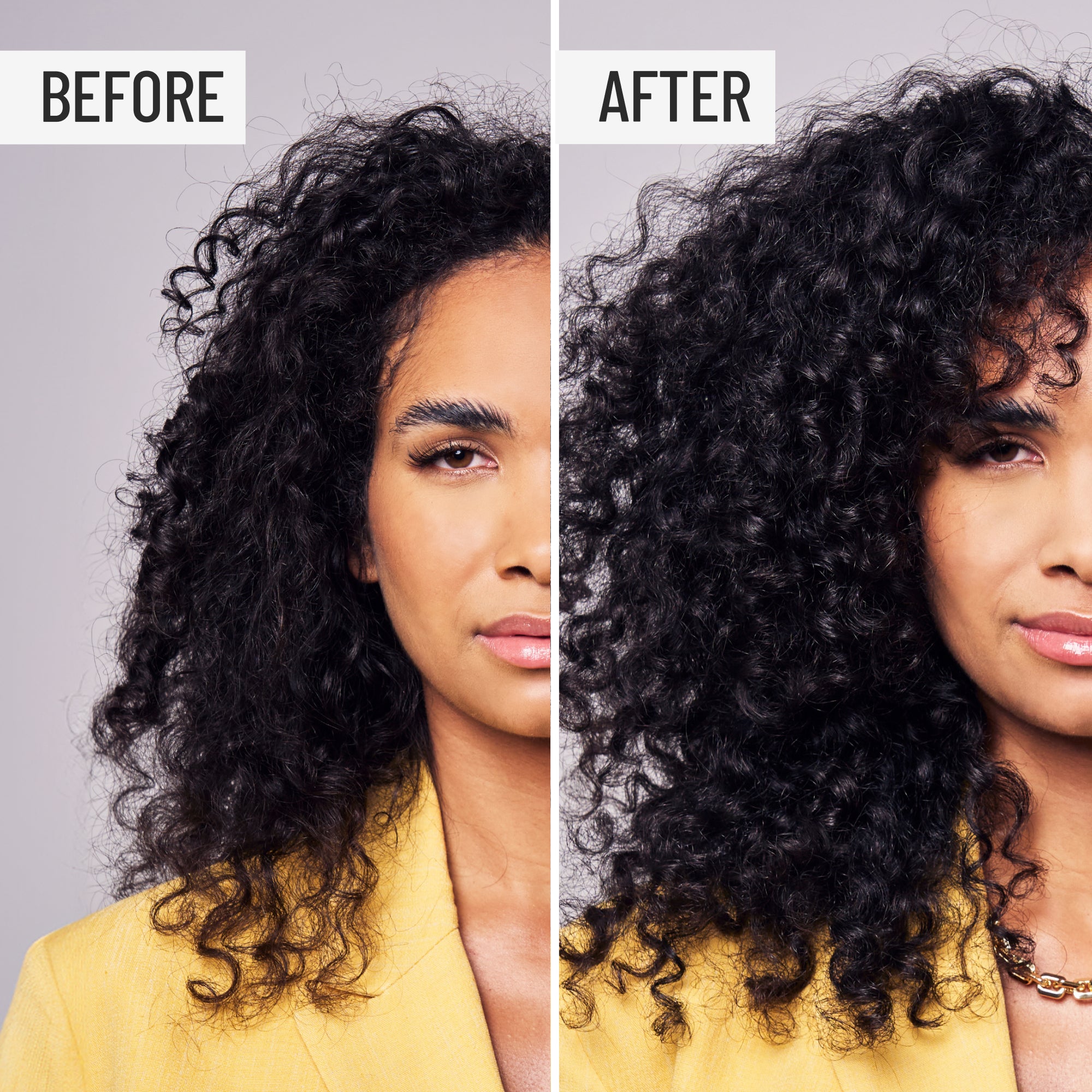
A cleaning system that operates below the sebum threshold does not remove the sebum film. Without sebum removal, the cuticle scales remain flat. Without lifted scales, fiber-to-fiber friction stays low. Without the exposed protein surface that stripped hair presents, the electrostatic charge that causes repulsion and splaying does not develop to the same degree. The conditions that produce extreme tangling are structural — and they are structural consequences of a specific cleaning mechanism, not of the hair itself.
Extreme tangling is not a hair type. It is a condition — one produced by a specific mechanism that operates with every detergent wash. The question worth asking of any cleansing product is simple: Does it foam? If it does, it crosses the sebum threshold, lifts the scales, and creates the conditions for tangling with every wash. Understanding that is the first step toward addressing the problem at the level where it actually exists, rather than at the level where its symptoms are most visible.
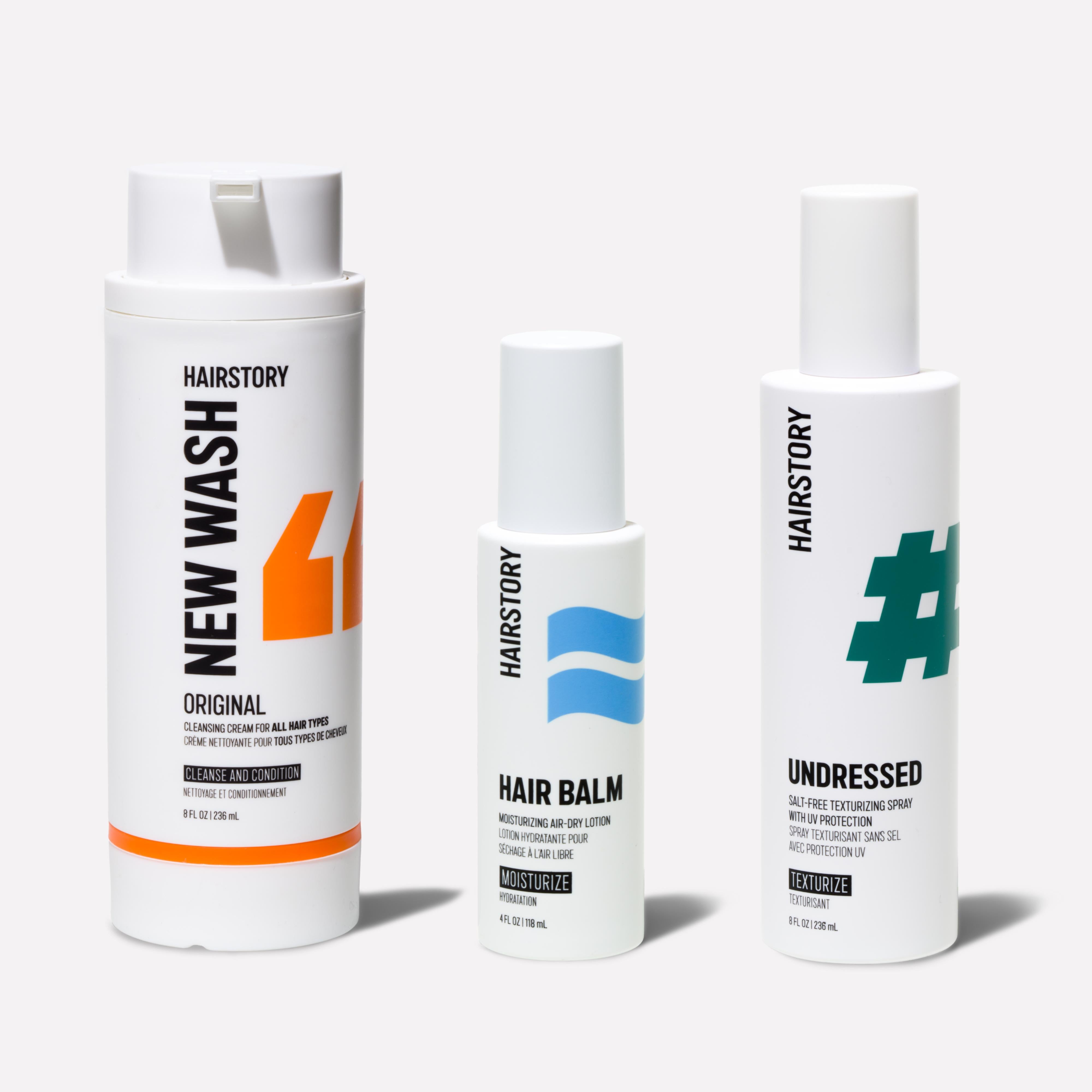
If you're ready to break the cycle, New Wash is a detergent-free cleansing system designed to clean hair without stripping the sebum film — keeping cuticle scales flat, friction low, and tangling at bay.
Next in this series: Article 8 — Why is Curly and Coily Hair Always Dry? The structural geometry that makes curly and coily hair inherently vulnerable to dryness, and why conventional shampoo compounds a problem that already exists before the
first wash.
About the Author
Mauricio Gatto Bellora holds a doctorate in Pharmaceutical and Biochemical Sciences from the University of Buenos Aires, with a research specialization in microencapsulation. He has served as CEO of multiple global companies across the pharmaceutical, cosmetics, and nutrition sectors, including Allergan Latin America, Natura Cosmeticos, and MonaVie. He is a co-founder of Hairstory. Read more from Mauricio.
The information in this article is for educational purposes only and is not intended as medical advice. Always consult a board-certified dermatologist or qualified healthcare provider if you have concerns about your hair or scalp health.