We want to be upfront about something. When co-washing routines started circulating everywhere, the conditioner cleanse and the clarifying shampoo chaser, we understood the appeal completely. So many people's hair is thirsty, damaged, or just not behaving. And when your hair won't retain moisture, you'll try anything that promises relief.
We get why co-washing caught on. We really do. We just want to explain why it's solving the wrong problem.
So what exactly is co-washing?
Co-washing, short for conditioner washing, is a cleansing method designed for hair that struggles to hold onto moisture. Curly and coily textures, dry or damaged hair, high porosity hair, and people with active lifestyles are the usual candidates.
The idea is simple: instead of reaching for shampoo, you massage a cleansing conditioner into your scalp and hair. One real perk is that co-washing doesn't strip pigment from color-treated hair the way conventional shampoo does.
The standard routine looks like this. Fully soak your hair, squeeze out the excess water, coat your hair with the cleansing conditioner, massage it into your scalp, and rinse thoroughly. Some folks even do a second round if their hair is very dry.
That routine is going to sound familiar in a minute.
Why co-washing is overkill
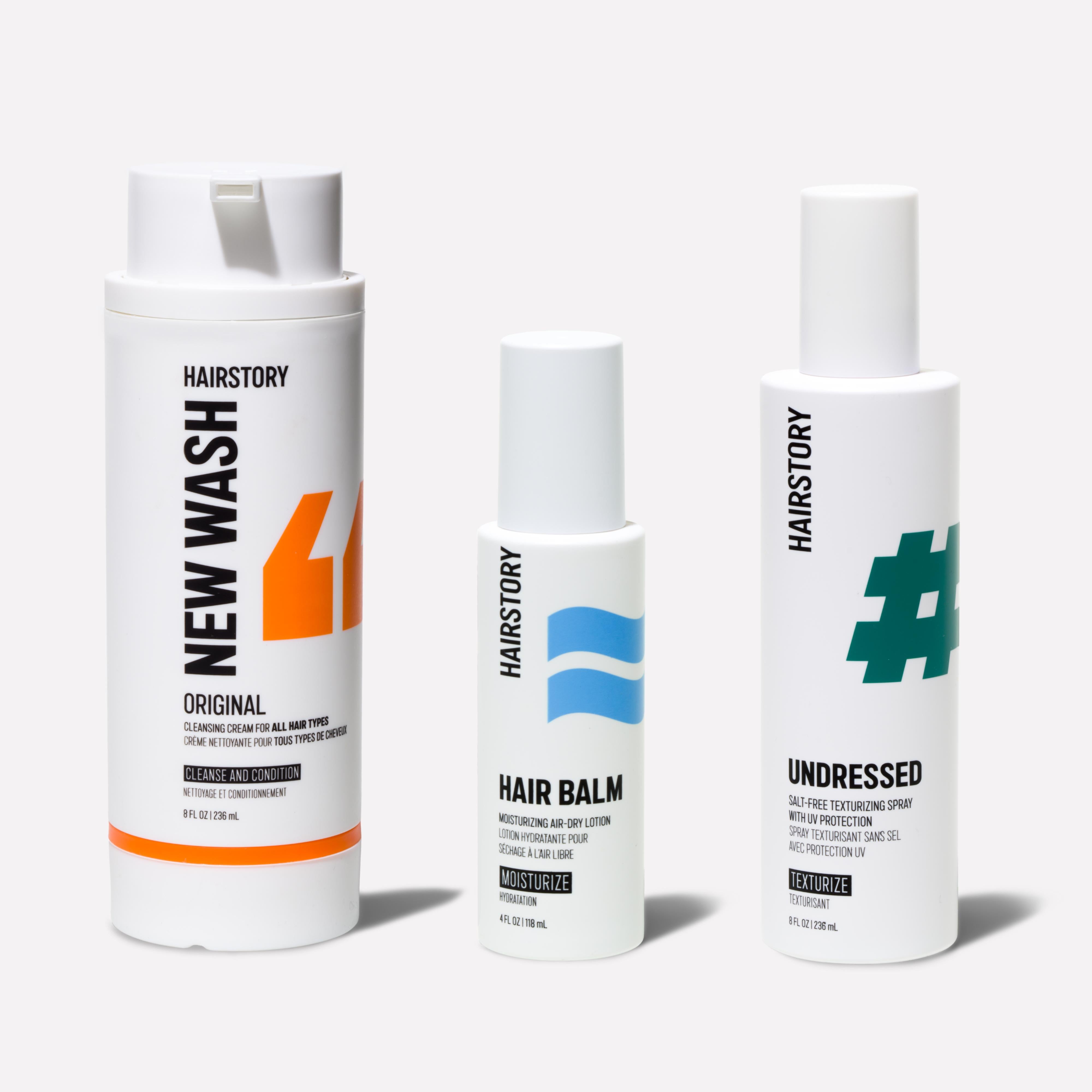
Here's what's important to understand before we go any further: New Wash is not a co-wash. It's a cleansing cream. It's one step. No follow-up conditioner required.
The co-washing routine and the New Wash routine look almost identical on the surface. The New Wash method, apply, splash, massage, rinse, is the same basic architecture. The difference is that New Wash is doing the work of both steps in one, and it's doing something that co-washing actually can't do.
Co-washing targets the texture of your hair. It coats and conditions. What it doesn't do particularly well is cleanse your scalp. Think of it like this: you're moisturizing your hair, but you're not really cleaning anything. The conditioner sits on your scalp rather than lifting the buildup from it, and over time, that leads to clogged follicles and residue accumulation.
That's why most co-washing routines require a clarifying shampoo every two to four weeks, sometimes more. You're essentially managing the buildup created by the co-wash itself which is its own kind of product cycle. Not quite as bad as the conventional shampoo-conditioner loop, but still a loop. Still not a solution.
The real issue: hair is dead, and we've been sold a myth
Here's the part that changes everything when it's explained correctly. The haircare industry uses words like "repairing" and "nourishing" without questioning whether that language actually makes sense. It sounds right.
It's not right.
Your hair grows from a follicle, a living organ embedded in your scalp that gets a blood supply and responds to the environment. The moment your hair breaks the surface of your scalp, it keratinizes. The keratin proteins harden. The structure is complete. And then it's dead. Your hair shaft is not alive. It does not respond to external stimuli. It does not absorb nutrition.
What your hair develops is a protective layer: a thin lipid film that functions as a natural conditioner. That film is the thing you actually want to protect.
So when brands use words like repair, renew, and nourish on a hair product, they're describing a biological impossibility. You cannot repair a dead structure. What those products are actually doing is coating the cuticle with film-forming agents that smooth down lifted cuticle scales. It looks better. It feels better temporarily. But the underlying texture, your actual hair, hasn't changed.
What you can actually do: nourish your scalp
At Hairstory, when we talk about nourishing, we're talking specifically about how oils interact with the scalp barrier: a living, responsive surface that absolutely does respond to what you put on it.
Your scalp is where the work happens. A healthy scalp produces the sebum film that naturally conditions your hair. It supports the follicle. It maintains the ecosystem that determines how your hair grows and behaves. When you shift your focus from coating your hair to actually supporting your scalp, everything downstream changes.
That's the premise behind New Wash. It's not a better shampoo. It's not a co-wash with extra steps removed. It's a completely different approach to cleansing and one that works with your scalp's natural oil production instead of against it. The data backs it up: a study of 103 participants conducted over three weeks found that 85% said they'd ditch shampoo permanently after switching. More than 27,500 verified customers have said the same.
Co-washing will always be an option. But if you've been doing it for a while and you're still fighting the same problems, it might be worth asking whether you're solving the right thing.
A routine comparison, if you're curious
If you're co-washing right now, your routine likely looks like this:
- Soak hair
- Squeeze out water
- Apply cleansing conditioner
- Massage into the scalp
- Rinse
- Apply regular conditioner
- Rinse again
- Use clarifying shampoo every few weeks
The New Wash routine:
- Apply to damp hair
- Splash a little water to distribute
- Massage your scalp thoroughly
- Rinse for a full two minutes
Co-wash and New Wash are not the same thing. We know old habits die hard, but your hair is already dead and it's time to nourish your scalp.
The information in this article is for educational purposes only and is not intended as medical advice. Always consult a board-certified dermatologist or qualified healthcare provider if you have concerns about your hair or scalp health.