The field of skin surface lipids (“lipidomics”) is constantly evolving and is open for many new discoveries. But here’s what we know so far: In nature, layers of waxes act as protection for leaves and fruits of plants, or skin, feathers, and fur of animals. Waxes are resistant to oxidation, water, and heat. Besides protection, they also serve as lubrication.
Additionally, they seal in the internal moisture of tissues while preventing excessive hydration. In certain instances, wax crystals demonstrate unusual surface self-cleaning properties that repel not only moisture but also physical or biological invaders. And here’s what we know about sulfates: sulfate-based shampoos and soaps are too-effective cleansers that destroy these essential, waxy layers and leave our skin and hair vulnerable.
SULFATES AND CLEANSING
Shampoo has been part of our lives, our parents’ lives, grandparents, great-grandparents, great-great-great grandparents’ lives (you get the point), but what do we really know about this sudsy stuff? We know that sulfates are responsible for creating the lather in shampoos and soaps, and for removing dirt and oil.
Sulfates are considered safe in concentrations below 1 percent or when used for short periods of time, according to the Journal of the American College of Toxicology, although any concentration over 2 percent will cause some degree of skin irritation. But, a shampoo that contains sulfates typically has a concentration of around 15 percent, and is packed with conditioning agents to buffer the drying effects.
There are more than 100 different varieties of sulfates – some synthetic, others made from natural sources, like coconut or palm oils. Some are derived from sulfur- and petroleum-based products. If your shampoo foams, it contains some form of sulfate. And with sulfates now on the least-wanted list, lather may be a thing of the past. Say hello to “squeakless-clean.”
Find a more detailed explanation of the science and safety of sulfates here.
SULFATES AND HAIR
Hair is made of about 91 percent protein. When that protein is damaged, it can weaken, break, split, and misbehave. Sulfates are closely linked with such damage. One study from 2005 shows that hair immersed in a sodium dodecyl sulfate solution loses seven times as much protein as hair immersed in water. If your hair is very fine, losing a little protein can add up to a big problem.
SULFATES AND SKIN
Sulfates can cause severe skin irritation and a painful or itchy rash called contact dermatitis. People with low levels of ceramides – one type of waxy lipid found in skin cells – are more likely to experience dermatitis after being exposed to sulfates. By the time you reach your early 30s, the level of ceramides in your skin begins to decrease, your skin barrier weakens, which on its own can lead to irritation, dryness, and redness. Best not to add injury (sulfates) to insult (aging).
SULFATE-FREEDOM
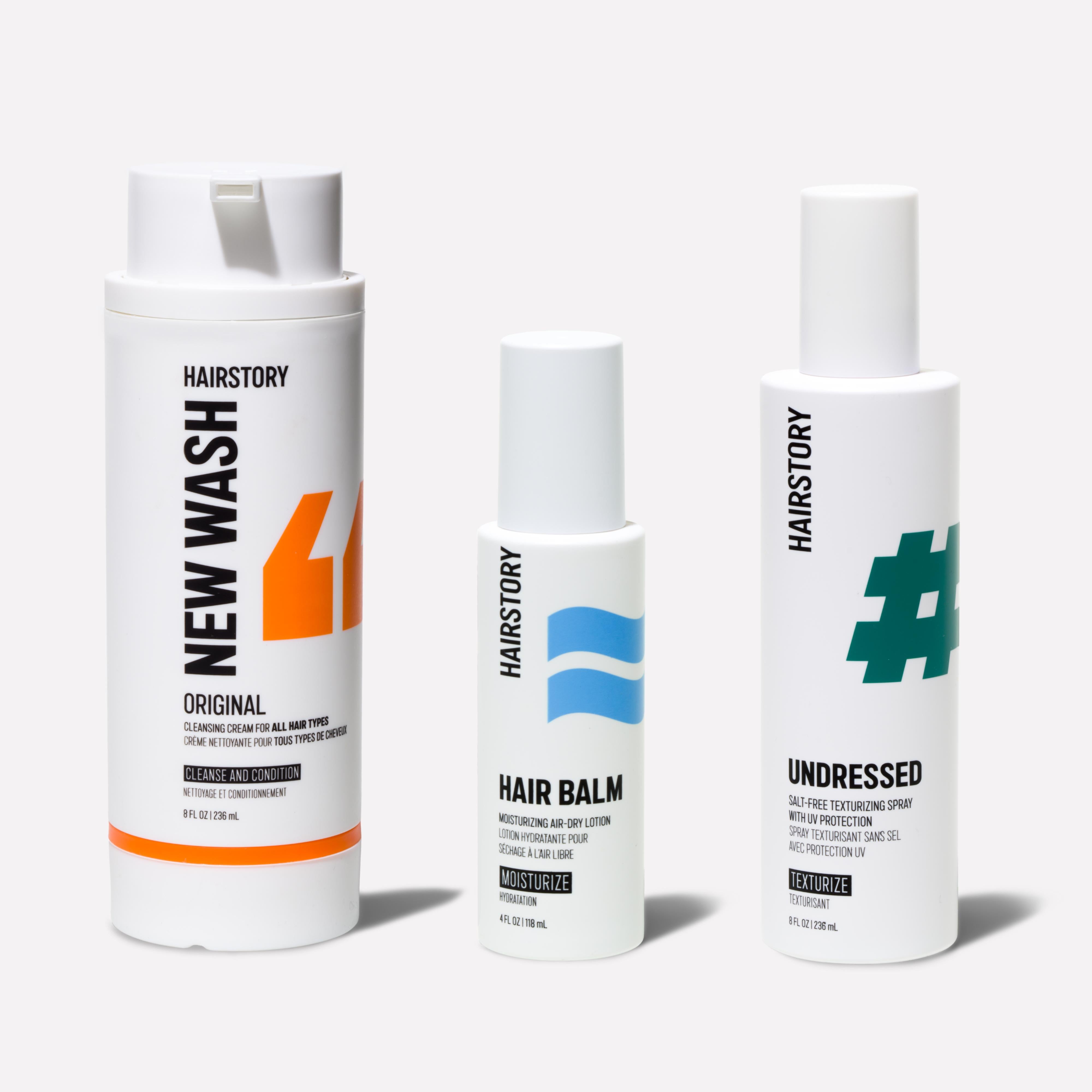
Sulfate-free shampoos feel different. There’s less foaming, they require some extra rinsing, and the “squeaky-clean” feel we’ve been taught to love doesn’t hold water after all. Hairstory offers three versions of its signature product called New Wash, a pioneer in the category that is not only sulfate-free but entirely detergent-free.
Below the hairline is the province of the people at the Crude product company who sum it up this way: “Sudsing cleansers have only been the norm in human hygiene for the last century – before the industrial revolution, humans cleansed primarily with natural ingredients like water, oil, and clay.” It seems like the time for another revolution.