Jojoba oil (hoe-HOE-bah) tops the list of essential oils that are beneficial for the hair and scalp due to its active components that mimic your body’s naturally moisturizing oils.
If your hair or scalp shows signs of dryness or dandruff, say hello to Jojoba and healthy hair. Here is why and how you should include its moisturizing magic in your haircare regimen or find a hair cleanser that includes it.
WHAT IS JOJOBA?
The Jojoba plant (Simmondsia Chinensis) – is a native of the southwestern United States and northern Mexico. An evergreen shrub with broad, tough, gray-green leaves, its pale, yellow-green flowers bloom in winter, and the female plants’ acorn-shaped seeds ripen in the summertime.
Jojoba grows throughout the Sonoran Desert and into the coastal mountain ranges of southern California, where it is commercially cultivated for its oil and for landscaping in arid areas.
More than 40 percent of a Jojoba seed consists of a prized liquid wax that shows an unusual resistance to being oxidized and remains stable even in high heat conditions, one of the reasons it is chosen for styling products in the hairdressing arena. Jojoba oil can often be mistaken for an essential oil. But technically, Jojoba oil isn’t an oil at all, but a member of the wax family.
WHAT IS IN JOJOBA OIL?
Jojoba is rich in nourishing vitamins, minerals, and antioxidants, including vitamin B, vitamin C, vitamin E, copper, and zinc. The fatty acids in Jojoba oil condition hair and are believed to protect it from heat styling damage and prevent hair breakage.
Those potent antioxidants combat conditions that lead to scalp issues, and if you have color-treated hair, they can help prevent unwanted tonal shifts. If you have a dry scalp, it can be very beneficial.
One of the components of jojoba oil is zinc, one of the elements that help to ensure that your hair follicles remain fertile places for new growth. It also helps to keep the oil glands working optimally so your hair and scalp don’t dry out. Jojoba oil also features stearic acid and palmitic acid, both natural conditioners with protective abilities. Jojoba Oil isn’t the only hair-positive oil out there; learn more about the various essential oils that are good for hair.
WHAT DOES JOJOBA OIL DO?
One reason jojoba oil is so commonly used in cosmetics is that it is non-comedogenic, meaning that it does not tend to cause blackheads by blocking skin pores. It has a consistency that is readily absorbed by hair and skin rather than sitting on the surface.
IS HAIR GROWTH ONE OF MANY JOJOBA OIL BENEFITS?
You may have heard that Jojoba oil has been in the news as the next big thing in promoting hair growth and as a cure for baldness, but the research isn’t there yet to start celebrating. In fact, a recent study found it was less effective than minoxidil (Rogaine) or than one of the benefits of peppermint oil for hair. However, it’s helpful to know the benefits of peppermint oil for hair to be sure what the healing properties actually are.
SOOTHE THE SCALP
Jojoba oil is, however, a great way to treat scalp conditions – from simple dandruff to severe psoriasis – as a result of its antibacterial and antifungal powers. And since it regulates your oil production and mimics your sebaceous glands and sebum production more closely, it helps create a more hospitable environment for healthy growth.
CONDITION THE HAIR
Jojoba oil is much lighter than many other oils – good news for people with fine hair who need some help in the moisturizing department but can easily get weighed down by typical conditioners or another hair product. If you're worried about oily hair or an oily scalp, jojoba oil might be the hair care product you've been looking for.
DELAY GRAYS
Copper deficiency may result in loss of pigment and prematurely gray hair; studies of copper’s potential as an anti-aging compound are underway. Because jojoba oil contains copper, applying it could help to slow down the graying process.
HOW DO YOU USE JOJOBA OIL?
There are three ways to include Jojoba oil in your hair care.
1. Apply it directly.
Warm up a tablespoon or two of the oil beforehand on the stovetop or microwave (don’t cook it) to make it easier to apply. Work it through the entire hair shaft from roots to tips; massage your scalp with it if you’re feeling dry or experiencing flakes. Leave in for about 20 minutes, then wash and rinse, similarly to the way you would with a normal hair conditioner.
2. Add it to your favorite products.
Use a few drops of Jojoba oil to mix with a dollop of your usual conditioner – especially the leave-in variety – before use.
3. Look for products that contain it.
The easiest way to make sure you get a regular – and regulated – dose is to scan ingredient lists in the hair products you commonly use. Just make sure that it’s relatively high on that list as ingredients are shown in order of the highest concentrations to lowest. But be wary of ingredients that do not belong on your hair.
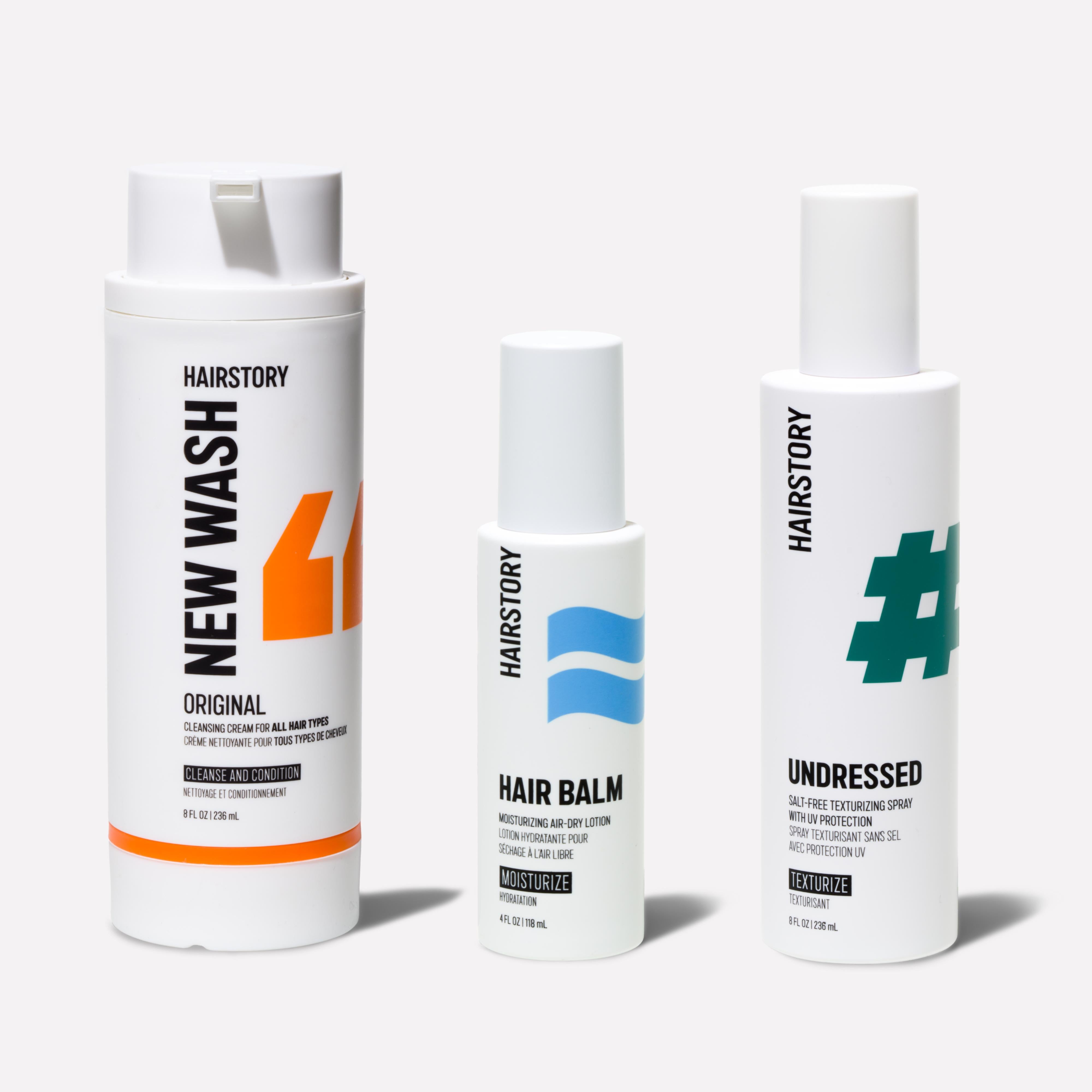
Hairstory New Wash, a detergent-free hair cleansing option, is one of those products. Jojoba oil is featured high on its ingredient list for all of the reasons above, and it joins Aloe Vera, Sunflower, and Evening Primrose oils to form a gentler detergent alternative. It also contains a healthy dose of Keratin to keep hair strong; learn more about what keratin does for hair.
CAN I BE ALLERGIC TO JOJOBA OIL?
Allergic reactions to jojoba oil are possible but quite rare – it’s always a good idea to apply it to a small patch of skin first and keep an eye on it – and it has been deemed safe for use during pregnancy or while breastfeeding. Your skin and dry scalp will thank you.
* * *