How to Fix Split Ends: Here's What Actually Works
Fact: You can't permanently repair a split end. Once the hair fiber splits, the damage is structural. Irreversible. Done.
That's because hair is biologically dead once it leaves the scalp, and no product can fuse it back together long term. The only true fix is trimming. Everything else is temporary management.
So…that may not be what you want to hear. But it's what your hair needs you to understand!
Split ends (also called trichoptilosis) happen when the protective cuticle wears away and the inner cortex begins to fray. According to dermatological research, repeated mechanical stress, heat exposure and chemical processing all contribute to cuticle erosion and fiber splitting.
The good news: While you can't glue split ends back together, you can dramatically reduce how often they happen.
What Are Split Ends, Exactly?
A split end occurs when the hair shaft frays into two or more strands at the tip. If you examine it under a microscope, the cuticle appears chipped or missing, exposing the cortex beneath.
Hair fibers are made primarily of keratin protein. When intact, the cuticle protects the cortex from friction and moisture loss. Once that outer layer erodes, the cortex weakens and separates.
Research published in the International Journal of Cosmetic Science has shown that surface damage increases significantly after repeated heat styling and chemical treatments. Bleached hair, in particular, shows measurable reductions in tensile strength compared to untreated hair.
Split ends are a late-stage signal. By the time you see one, the strand has already taken a hit structurally.
What Causes Split Ends?
Although sometimes they seem to appear out of nowhere, split ends don't happen randomly. These are the four biggest contributors:
1. Heat Styling
Keratin proteins begin to break down around 311–320°F (155–160°C). Many flat irons and curling tools exceed 392°F (200°C). Repeated exposure weakens the cuticle and increases brittleness.
Studies examining thermal damage show that high heat reduces hair's mechanical strength and increases surface cracking.
2. Chemical Processing
Bleaching and permanent coloring penetrate the cortex to alter pigment. In the process, they disrupt cuticle integrity. Research indicates that chemically treated hair can experience up to 30% reduction in tensile strength compared to virgin hair.
3. Mechanical Friction
Rough towel drying, aggressive brushing and tight hairstyles all create friction. Wet hair is especially vulnerable because it can stretch up to 30% before breaking.
Doing even one of these regularly can cause micro-fractures to accumulate at the ends.
4. Repeated Swelling During Washing
Hair swells when wet and contracts when dry. Studies on fiber fatigue show repeated expansion and contraction cycles reduce durability over time.
Aggressive surfactants can exaggerate swelling, increasing structural stress. When the cuticle lifts repeatedly, the strand becomes more prone to fraying. This is why your cleansing method matters more than most people think.
Can Split Ends Be Repaired?
Short answer: no.
Products marketed as "split end repair" work by temporarily sealing the frayed edges with conditioning polymers or silicones. These ingredients smooth the surface and reduce the appearance of splitting, but they do not fuse keratin back together.
Dermatologists and cosmetic chemists agree: Trimming is the only permanent solution to split ends. That said, temporary smoothing can reduce friction and prevent further splitting up the shaft.
The key is understanding the difference between cosmetic improvement and structural repair. If your ends feel rough but aren't visibly split yet, you might be able to prevent it.
How to Prevent Split Ends Long Term
Structural preservation is the key to preventing split ends.
Nourish With Reparative Ingredients
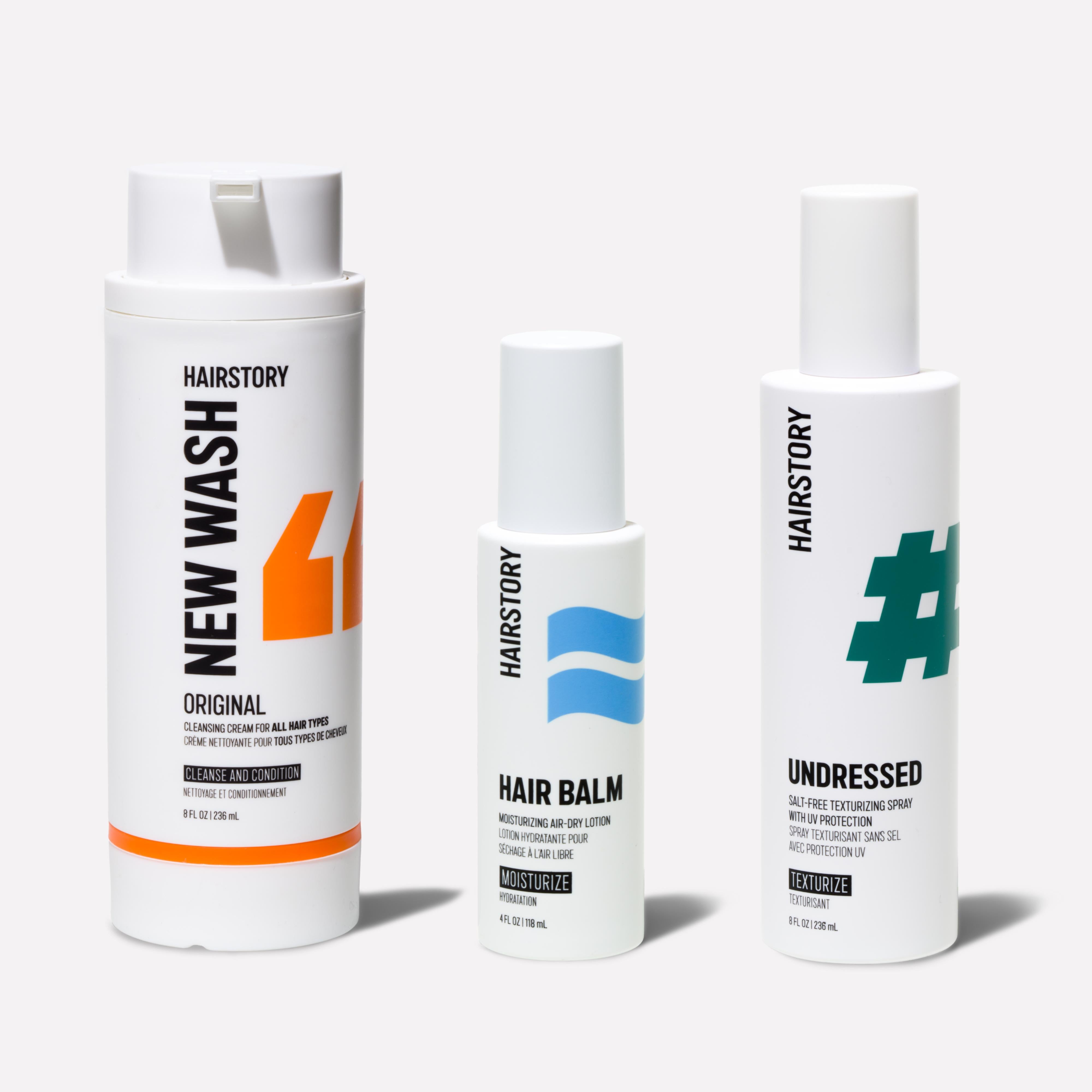
Hairstory formulated ProTarget Technology®, found in Bond Serum and Bond Boost for New Wash, to zero in on compromised and fragile areas of the hair. Its unique double repair technology targets damage both inside the fiber and on the cuticle.
Within the hair fiber, a clinically proven complex with itaconic acid and arginine restores disulfide bonds that have been damaged by chemical treatments like dyes, bleach and relaxers. On the outside, nourishing ingredients including panthenol and ceramide NP replenish moisture to heal frizz and prevent split ends and breakage.
Lower (or Eliminate) Your Heat Exposure
Avoiding exposure to direct heat is another straightforward way to prevent split ends. Instead of heat styling, consider air-drying with a leave-in moisturizing lotion like Hairstory Hair Balm.
If you're going to use a hot tool, keep the temp below 320°F (160°C) and always use a heat protectant like Hairstory Primer. When using your blow-dryer, flat iron, curling iron or wave tool, avoid making multiple passes over the same section.
And remember that heat damage doesn't always show up immediately! If you're unsure whether your hair has early signs, review the most common symptoms of heat damage.
Be Gentle With Wet Hair
After washing your hair with detergent-free New Wash, there are a few prevention steps you can take:
- Start by applying a lightweight moisturizing and detangling mist like Primer
- Detangle starting at the ends
- Use a wide-tooth comb instead of a brush
- Avoid rough towel drying at all costs—using a microfiber towel or soft cotton T-shirt instead will reduce surface friction
Rethink Your Cleansing Routine
Hair doesn't get damaged only from styling. You might be causing damage in the shower.
Traditional shampoos often rely on strong surfactants (like detergents) to aggressively remove oil along with the dirt and product buildup in your hair. Repeated swelling and lipid removal have been proven to leave the cuticle more vulnerable over time.
A detergent-free cleanser like New Wash removes what you want to remove—dirt, oil, buildup—while supporting the hair's natural surface balance. Instead of creating dramatic expansion cycles, it helps maintain smoother cuticle alignment.
And when the cuticle stays more intact? The hair resists splitting for longer.
Trim Strategically
Most haircare professionals recommend trimming every 8–12 weeks, depending on your hair length and styling habits. Regular micro-trims can prevent small splits from traveling upward, which—like a small crack in a window—can lead to more significant breakage.
Are Split Ends Related to Porosity?
Your split ends and hair porosity are often connected.
High porosity hair has a lifted or compromised cuticle. That raised cuticle increases friction and moisture instability, which accelerates fraying at the ends.
If your hair dries extremely fast, tangles easily or frizzes in humidity, you may be dealing with elevated porosity. Our guide to high vs. low porosity hair breaks down how to identify it.
Split ends are often a downstream effect of chronic cuticle disruption. Frizz, porosity imbalance and split ends are connected through structure.
When Should You Worry About Split Ends?
Just like shedding, occasional splitting at the very ends is normal, especially for longer hair.
But frequent splitting, white dots along the shaft or breakage higher up than usual may signal more significant structural damage.
If the splitting travels several inches upward, trimming sooner rather than later can help prevent further loss.
The Bigger Shift: Stop Treating the Ends, Start Protecting the Strands
It's tempting to focus only on the visible damage because that's what you actually see when you look in the mirror. But it's important to remember that by the time those ends split, the damage has already occurred.
The more powerful shift is upstream prevention:
- Lower cumulative heat
- Reduce mechanical stress
- Protect from UV exposure
- Cleanse without aggressively disrupting the cuticle
Think of it this way: You can't glue a split end back together, but you can create conditions where splitting happens less often and your hair remains as healthy as possible.
Read More
- How Often Should You Wash Your Hair?
- Is Shampoo Bad for Your Hair?
- High vs. Low Porosity Hair: What's the Difference?
The information in this article is for educational purposes only and is not intended as medical advice. Always consult a board-certified dermatologist or qualified healthcare provider if you have concerns about your hair or scalp health.