Rising temperatures and droughts due to climate change have affected the largest reservoirs in the U.S, Lake Mead and Lake Powell. Their water levels hit historic lows and about 30 states are experiencing severe to exceptional droughts. Federal officials are now imposing new water restrictions on Arizona, Nevada and California under a new two-year federal plan announced in August 2026.
A low-water hair routine is a way of washing that cuts how often you wash and how long the water runs, without stripping your scalp's natural oils. Here's where your water goes, why traditional shampoo keeps you washing more often, and how a one-product routine can help you wash less.
How Much Water Does a Shower Actually Use?
While we all try to be sustainably conscious, there are some obvious water wasters you should know by now: leaky faucets, running half-full appliances, overwatering the lawn or garden, using the toilet as trash, running tap water while you're brushing your teeth, taking really long showers or washing dishes.
It appears that most of our water-wasting habits start and end in the bathroom. It's convenient to have the water running while you need it, especially while washing your hair. However, it's wasteful. On average, roughly 16-20 gallons of water is used over an eight-minute long shower.
Do You Need a Long Shower for Better Hair?
The industry has taught us that the longer you stay in the shower, the more beautified or gussied up you'll be.
That “everything shower” you take is called everything for a reason. To achieve full glam, you’ll need a shampoo, a conditioner, a leave-in or a mask or a treatment or a double cleanse and a body scrub and body wash.
What Is a One-Product Hair Routine?
At Hairstory, we're heretics and we'll say that over and over again. We've spent decades understanding that the world needs fewer and better things, especially haircare. Most of all, haircare. Hair is one of the most visible parts of our identity and we all work hard to maintain it. But you don't have to work that hard in order to have healthy, beautiful hair.
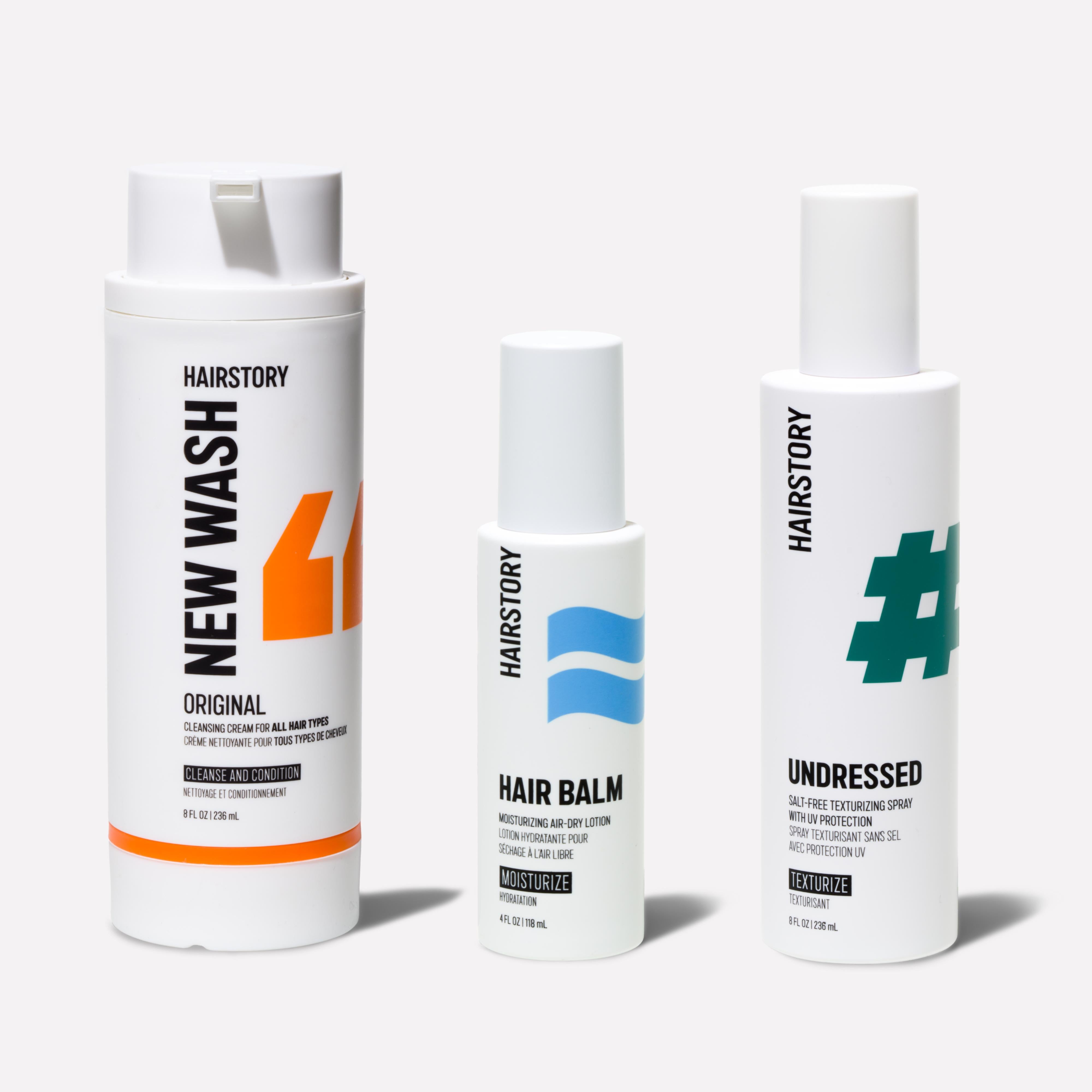
We've built a whole new category of haircare with a new way to wash. Our Two-time Tatler award winner New Wash is a one-product routine that delivers a sustainable and beautified outcome that shampoo and conditioner simply cannot. The strip and restore trap isn't sustainable. Products that strip your hair of its inherent characteristics, as in your scalp's natural sebum layer, are the same products you try to restore your hair with. It's not sustainable for you nor the environment.
How Long Does a Pre-Wash and New Wash Routine Take?
We take pride in our water footprint because our Pre-wash and New Wash method is no more than a ten-minute routine; a minute of which you apply and massage in your Pre-wash and three minutes of which you let it settle. Then, five minutes of which require you to be in the shower; a minute of which requires you to apply New Wash and splash some water to emulsify, and four minutes of which require you to rinse.
We’ve calculated about a ten-minute routine for most hair types, but for thicker, curlier hair that requires sectioning and detangling, it’s typically a 20-minute routine. If you like to let your New Wash sit in your hair, especially for color-treated hair, maybe tack on a minute or two.
The largest benefit New Wash users experience is going longer in between wash days. Pre-wash helps extend that time in between because it's basically a two-minute scalp shower. While the last step of the New Wash routine does require thorough rinsing, you're washing less altogether.
Why Do I Feel Like I Need to Wash My Hair So Often?
One problem caused by washing your hair with detergent-based shampoo is wasting more water. You wash more frequently because you want your hair to feel "fresh," but you don't realize the detergents are making your hair feel oily at the roots and dry at the ends. Whatever your "I need to wash my hair" indicator is essentially wrong. When you start using New Wash and Pre-wash, you could save at least two showers a month or 32-40 gallons of water.
What’s The Easiest Way to Save Water in the Shower?
What may be a dissatisfactory tip: turn the water off if you're not actively using it. You're saving gallons by stopping the water flow.
Does Hard Water Make You Rinse Longer?
Yes. A lot of customers find that using New Wash in hard water requires more rinsing. To put the amount of waste in perspective, you're wasting more time, money and energy by not investing in a long-term solution. Hard water already creates waste on its own as the flow is affected by mineral buildup which in turn affects efficiency and energy. The calcium and magnesium in hard water binds with compounds in products to create a film that requires you to rinse more.
The Bottom Line
At the end of the day, you have options to make conscious efforts toward your scalp health, hair and the planet. You save water when you wash less and you have a better scalp and better hair because of it. Oh, and you save time. Give Pre-wash and New Wash a shot. We're low-maintenance, low stakes and we take water preservation seriously.
Keep Reading
- How Often Should You Wash Your Hair?
- The Right Question: Hair Care and the Sebum Threshold
- WTF Are Detergents and Surfactants?
- Co-Washing Is Not an Alternative to Shampoo
The information in this article is for educational purposes only and is not intended as medical advice. Always consult a board-certified dermatologist or qualified healthcare provider if you have concerns about your hair or scalp health.