It's getting cold outside. You're staying under the blanket a little longer, scrolling through your phone the whole weekend. What do you see? Pinterest mood boards and endless searches:
"What's the most popular brunette hair color for fall 2026?" Cherry cola brunette. "What brunette shade is best for my skin tone?" "What should I ask my colorist for to get expensive-looking brunette hair?"
You're still thinking about going brunette. You're holding back because you know what your hairdresser is going to say.
"You really wanna do that? It's not easy to go back to blonde."
You don't care, you need a change. You're itching for it.
And with that change comes a result. You're going brunette because you've done it before and it looks so good. It's like you've unlocked a new character. You're a whole new person.
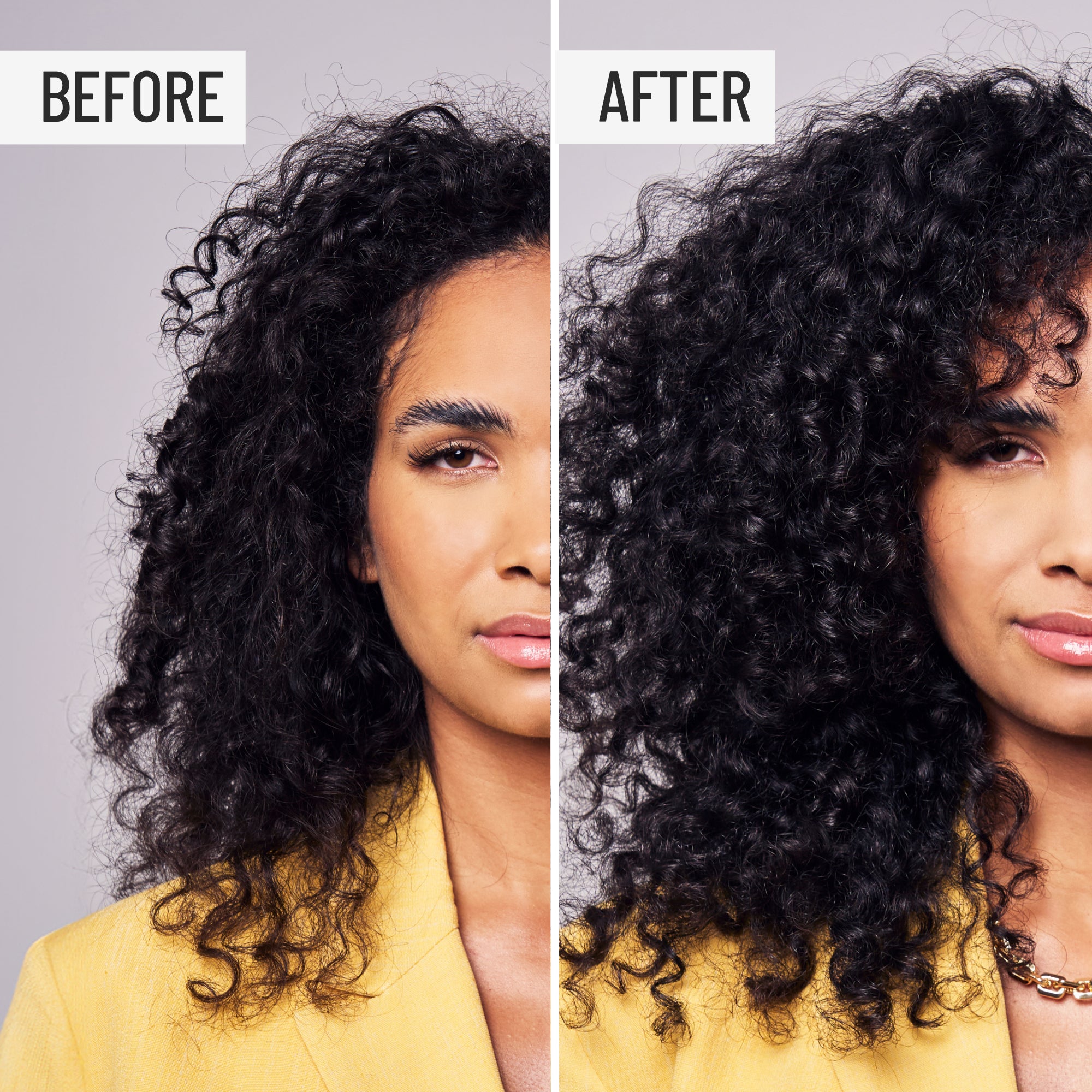
With your whole new person comes the straw-like texture you know all too well, especially after years of going blonde. When you see the final result in the chair, you run your fingers through your coarse hair. So you go home and start pulling bottles off the shelf. It doesn't help that you probably have a shower full of hair masks, conditioners, and scalp treatments.
How Does Hair Color Damage Your Hair?
Permanent color and bleach damage your hair by lifting the cuticle to reach the cortex, where your natural pigment lives, and breaks some of the bonds that hold each strand together. In other words, we hairdressers have to damage your hair in order to color it. So when we want to reinforce damaged hair, we want to do it with as few products as possible.
What Are Disulfide Bonds in Hair?
Disulfide bonds are the chemical links between keratin fibers that give hair its strength and shape. Our science expert, Mo Bellora, holds a doctorate in Pharmaceutical and Biochemical Sciences, and he breaks it down like this. Think of each strand of hair like a rope. Up close, each rope is made up of thin, twisted strings. Those are the keratin fibers.
Each of those keratin fibers, or thin strings, is connected by tiny snaps, or disulfide bonds. When you get chemical treatments like color, bleach or perms, those disulfide bonds get unsnapped. A perm resnaps them into a new shape. Color and bleach leave some of them broken.
A clue you can smell: burning hair smells like rotten eggs. That's hydrogen sulfide, a sulfur gas released as heat breaks down those same bonds.
What Does Bond Repair Actually Do?
You can't reverse the damage done to the hair. As dermatologist Dr. Zoe Diana Draelos puts it, bond builders "cannot fully recreate virgin hair strength." But you can reinforce some connections with chemistry.
It's like this. You wear your favorite pair of sneakers every day. When the plastic cap of a shoelace breaks off, it starts to fray. You can still tie your shoes, but you're careful not to let it fray even more.
What you can do is figure out a way to hold the fraying together. You can use tape as a makeshift cap. That's basically what bond repair does for your hair.
Do Bond Repair Shampoos Work?
In my experience, bond repair shampoos have a built-in conflict: the detergents that strip your scalp work against the ingredients meant to repair it. When my clients' hair felt like straw, they'd ask me for bond repair shampoo recommendations.
I'd tell them it's a bandaid fix.
Why Doesn't Hairstory Make Shampoo?
Hairstory doesn't make shampoo because traditional shampoo relies on aggressive detergents that strip your scalp. We also don't make conditioners or masks.
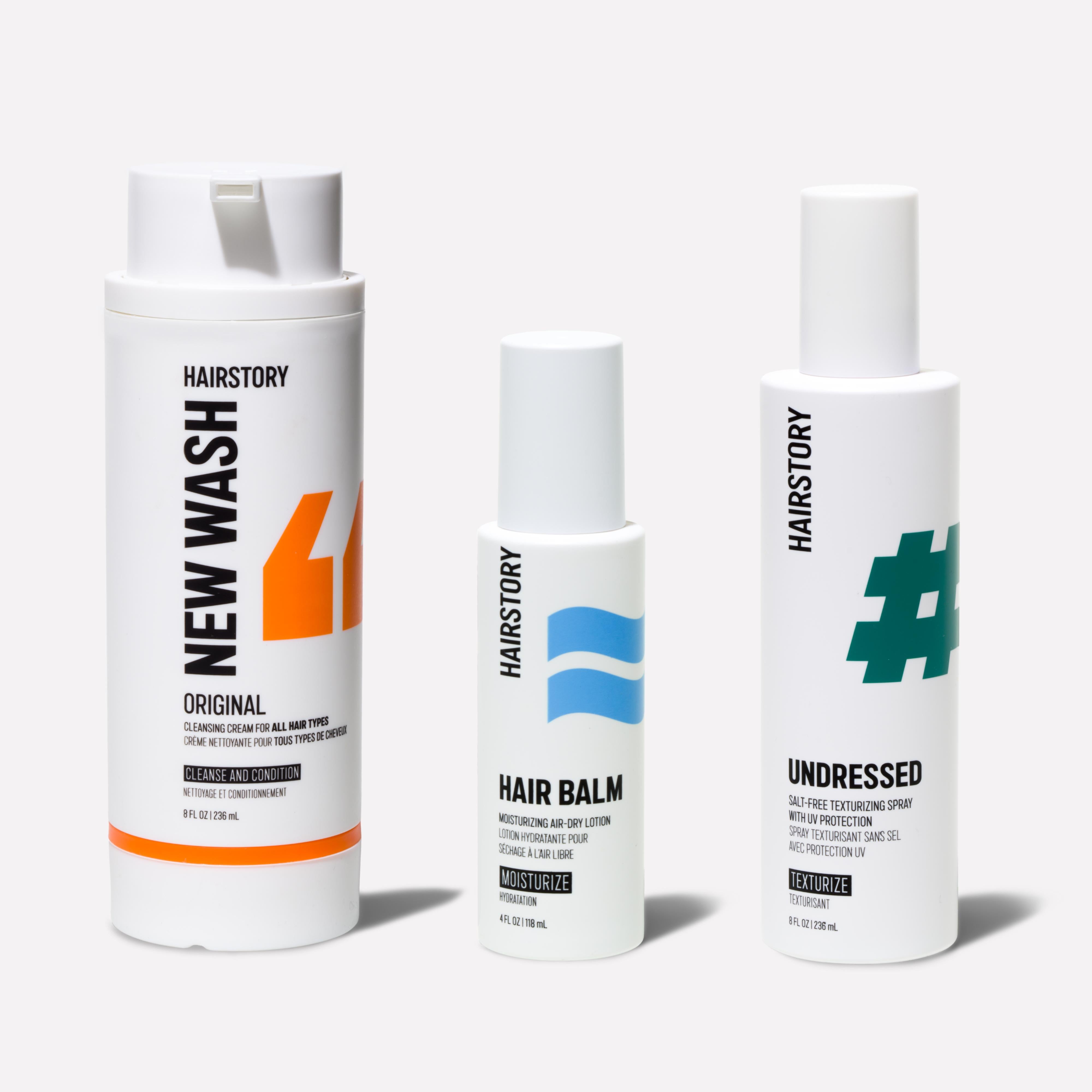
The first time I was handed a bottle of New Wash, I was skeptical. I was using this cream cleanser on my clients, and after a couple of appointments, they were sitting in my chair saying their hair never felt better. That's when I started believing in a one-product, low-maintenance routine.
We don't believe in a bandaid routine. We believe in one preventative product for your hair made with gently cleansing ingredients so you don't need to add more products to your routine.
If you're a New Wash convert, you've given up a million bottles in exchange for fewer wash days and scalp health. You did the hard part. You switched and simplified your routine. You've stopped the damage of aggressive washing, but you can't undo damage that's already done. So why let repair add another bottle?
How Does New Wash Bond Repair Work?
Remember those snaps? When they break, they leave behind a negative charge. That's part of why damaged hair gets frizzy.
ProTarget Technology uses liposomes to deliver arginine, a positively charged amino acid. Arginine is drawn to the negatively charged sites left by broken disulfide bonds, where it can help bridge the gap. Remember those snaps? When they break, they leave behind a negative charge. That's part of why damaged hair gets frizzy. It can't heal itself.
Without detergents in the way, bond repair can work with a base that supports a healthier scalp. That's the idea behind our New Wash Bond Repair. It's our New Wash Original formula with Bond Boost mixed in, so you don't have to add a step. It cleans without the damage of stripping detergents and helps reinforce the damage you already have.
That's the tape on your shoelace. It doesn't make the lace brand new. It holds the frayed fibers together so the lace can do its job again.
So go ahead. Show me the cherry cola mood board. I'm still gonna ask if you really wanna do it. But this time, you've got an answer.
The Bottom Line
- Permanent color and bleach lift the cuticle and break disulfide bonds in the cortex, leaving damage behind.
- Bond repair can't reverse that damage. Hair is dead tissue and can't heal itself. What bond repair can do is reinforce the weak spots.
- Arginine carries a positive charge, so it's drawn to the negatively charged sites that broken bonds leave behind and helps bridge the gap.
- Traditional bond repair shampoos pair repair ingredients with stripping detergents.
- New Wash Bond Repair is New Wash Original with Bond Boost already mixed in. It's a detergent-free cleanser that helps reinforce the damage you already have, all in one step.
Keep Reading
- Why Shampoo Is Worse for Color-Treated Hair
- The Strip-and-Restore Trap
- How to Stop Frizzy Hair
- Everything You Need to Know About Detergent
This article is for informational purposes only and is not a substitute for professional medical advice. If you're experiencing hair loss, breakage, scalp irritation or other ongoing hair or scalp concerns, talk to a board-certified dermatologist. Results vary by hair type, condition and treatment history.