If you’ve read the ingredients on the back of your shampoo, body wash, or hand soap bottles, chances are that you came across the words Sodium Lauryl Sulfate (SLS) – a standard ingredient in many personal care products.
But what is SLS? In general, it’s a cleaning agent made of mineral salts that contain sulfur. It’s one of the many types of sulfates that make your shampoo lather on wet hair.
HOW DOES SODIUM LAURYL SULFATE WORK?
Most people need more than just water to remove oils, grime, and styling products that build up on your scalp and coat your hair. That’s where SLS comes in.
SLS is a surfactant, which means that it has the ability to alter the surface tension of a substance and affect the ability to attach to it. SLS and other surfactants are amphiphilic, which means that they can attach to both oil and water. When you apply shampoo to your hair, SLS forms a strong attachment to the oils and the impurities suspended in them. When you rinse, it also attaches to water, and everything efficiently goes down the drain. Your hair feels squeaky-clean – not the ideal signal for a healthy clean as it happens – and you reach for the conditioner to make it feel better.
WHAT OTHER PRODUCTS CONTAIN SODIUM LAURYL SULFATE?
Because SLS is so effective at removing grease and stains, it is found in many household and industrial cleansers – laundry detergent, dishwashing liquid, and spray cleaners. SLS is also present in some foods as an emulsifier or thickener; it makes marshmallows and dried egg products light and fluffy. Because SLS helps liquids mix, it’s also used in fruit juices.
WHAT ARE THE DANGERS OF SODIUM LAURYL SULFATE?
This question, and the answers, are controversial. While you’ll find research that says they’re safe, you’ll also find warnings about its dangers. The difference is in its context – concentration and strength.
According to the World Health Organization (WHO), SLS in raw form “can be harmful if swallowed or [comes] in contact with skin.” Ingesting or inhaling SLS may cause a sore throat, cough, nausea, vomiting, or diarrhea. Contact can irritate eyes and cause redness, pain, or itchy skin. SLS is also combustible and can “give off irritating or toxic fumes (or gases) in a fire.”
A 2015 report from the National Institute of Health (NIH) says that SLS can be safe for various parts of the body, but only in prescribed concentrations. For example:
- Eyes: Based on a study of lab animals, researchers say SLS won’t irritate the eyes if the product has less than 0.1%.
- Skin: If a product has a concentration greater than 2%, it could irritate normal skin when left on for 24 hours.
- Hair: If a shampoo has a high concentration of SLS, it could damage your hair.
- Ingestion: Consuming pure SLS is toxic, but although it can be safe when eaten, guidelines for precise amounts haven’t yet been determined.
SLS is not regulated by any government groups. And while ingredients are listed in order of the amount used in a formulation, you’re not likely to know the exact percentage of SLS used. That same NIH report explains that the concentration of SLS found in consumer products varies by product and manufacturer – anywhere from 0.01% to 50% in cosmetic products and 1% to 30% in cleaning products.
IS SODIUM LAURYL SULFATE BAD FOR THE ENVIRONMENT?
According to The WHO, SLS shouldn’t be allowed in the environment in its raw form because “it can be toxic to aquatic life.” However, not everyone agrees on whether or not the amount of SLS found in domestic cleaning products is enough to cause harm if allowed to enter waterways through sewage (industrial use is another matter entirely).
In general, SLS quickly biodegrades, and by the time a cleaning product reaches a body of water, most of the SLS is broken down. Researchers believe that as long as one liter of water is present for every 0.5 mg of surfactant, fish, and most other aquatic life will be unharmed. You’d have to have a ratio of 0.1 mg per liter of water to create a toxic situation.
Even if SLS doesn’t prove harmful to the environment, other chemicals found in shampoos are. Learn more about how shampoo impacts the environment here.
IS SODIUM LAURYL SULFATE SAFE FOR YOUR HAIR?
Some will argue that SLS does too food a job of cleansing. Why? The major side effect of washing your hair with SLS – or any detergent for that matter – is that it doesn’t just remove some oil, it removes all of the oil, even the beneficial ones. Learn more about why shampoo is bad for hair.
Once you’ve finished washing your hair with detergent, it can be frizzy, feel dry, and look dull. When all of the natural oil your body produces is removed from your scalp, it loses its protective barrier and becomes vulnerable to dryness and irritation.
So what happens when you strip your scalp of natural oils? It overcompensates and produces more. This, of course, creates oily hair, which you then have to wash again – we call this the “wash, grease, repeat cycle.”
WHY SHOULD YOU WASH YOUR HAIR WITHOUT SODIUM LAURYL SULFATE?
Using hair products without SLS – or detergent – can make a dry scalp and dull hair properly balanced and moisturized.
Even swimmers and people who exercise regularly can benefit from using SLS-free products:
- Swimmers: You wash your hair regularly, and shampoo can cause a very dry, itchy scalp. An SLS-free product is much gentler.
- Regular Exercisers: Sweat salts can build up on your hair, but you don’t need SLS to remove it.
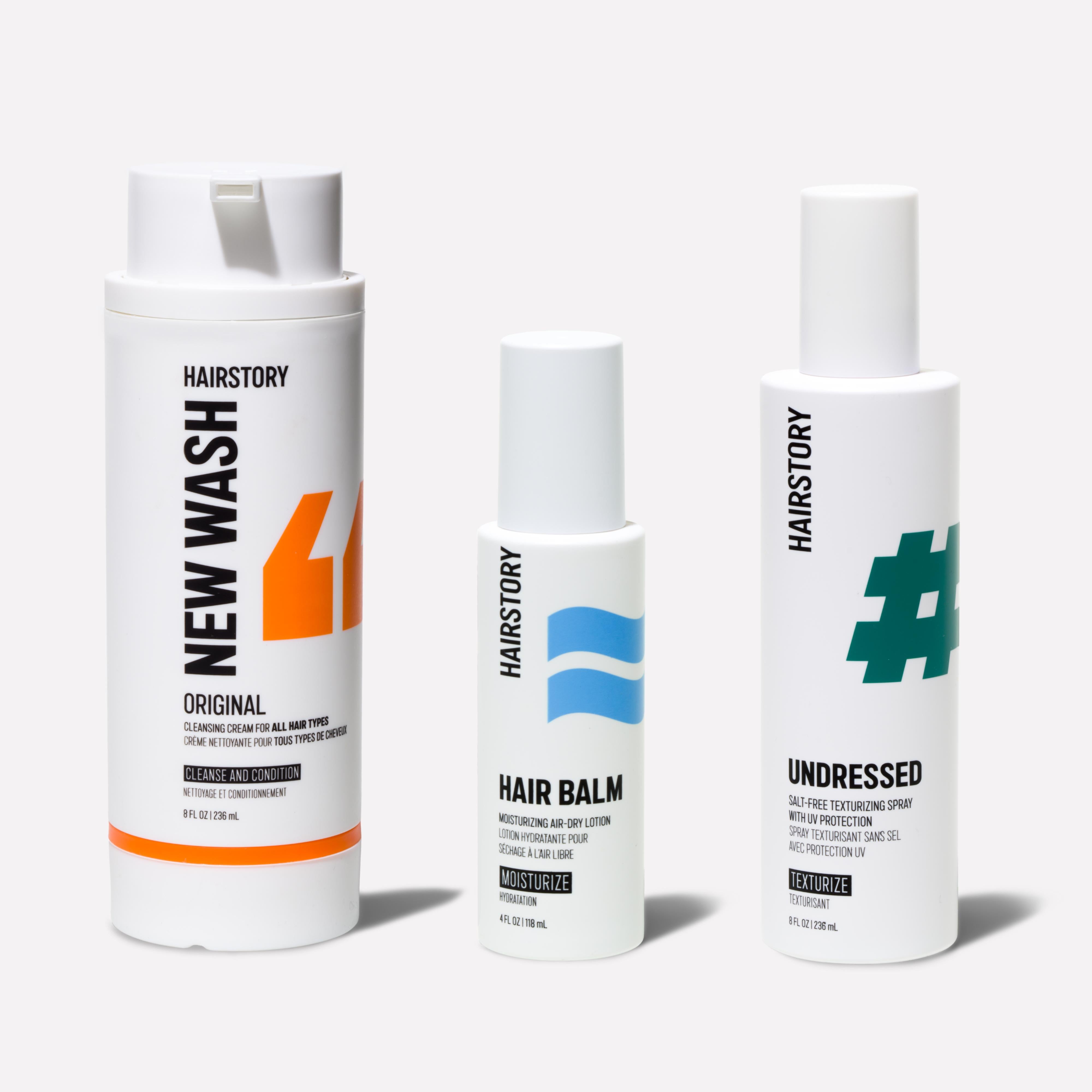
New Wash is a great alternative. SLS- and detergent-free, it will keep your scalp and hair healthy, moisturized, and balanced – and you won’t need to use conditioner.
WILL YOUR HAIR GET CLEAN WITHOUT SODIUM LAURYL SULFATE?
Yes, your hair can get clean without the use of sulfates. SLS-free products are typically milder and less drying. New Wash contains essential oils and naturally-derived ingredients that will clean your hair without stripping your scalp of its protective barrier. It comes in three formulas:
- New Wash (Original) is the best for most people unless their hair is either very oily or very dry – and are typically frequent or infrequent washers respectively.
- New Wash (Deep) offers a deeper cleansing while managing oiliness by using apple cider vinegar and argan oil. Anyone can use it to clarify hair from time to time.
- New Wash (Rich) gives you extra conditioning if hair is very dry (curly) and is a great alternative for conditioner-only washers who want to actually clean their hair.
SLS-free cleaners do require some more work on your end. Instead of a quick wash with a foamy, dirt-and-oil-grabbing SLS-filled shampoo, you do need to spend time scrubbing your head to remove all of the dirt. With an SLS-free shampoo, your new routine will look like this:
- Step 1 – Apply: Generously coat your hair with your SLS-free product, working from your scalp to your ends. Make sure you apply it to everything that needs cleaning.
- Step 2 – Scrub: Use your fingers (or our shower brush) to massage your scalp extremely well. Do this for at least one minute to help evenly distribute New wash throughout your hair and activate the cleansing ingredients.
- Step 3 – Rinse: Rinse your hair really, really well. You might want to use our shower brush to help. You should be able to glide your fingers through wet hair as if you’d used conditioner.
- Step 4 – Repeat if you feel like your hair needs more nourishment or cleansing. Because you’re not stripping your hair, there’s no harm.
- Step 5 – Style: If you’re using New Wash, you don’t need a conditioner. But you may want to add an anti-frizz serum and a mousse or gel. But you can shrink that multi-step process with Hair Balm – it’s a leave-in conditioner, anti-frizz cream, and styling gel in one.
To use, work increasing amounts of Hair Balm through damp hair with your fingers or a comb. Then, just let your hair air dry. If you have curls, scrunch while they dry for shape and definition; use Hair Balm on dry hair to touch up frizz or flyways anytime.
HOW LONG WILL IT TAKE FOR A CLEANSER WITHOUT SODIUM LAURYL SULFATE TO MAKE MY HAIR FEEL BETTER?
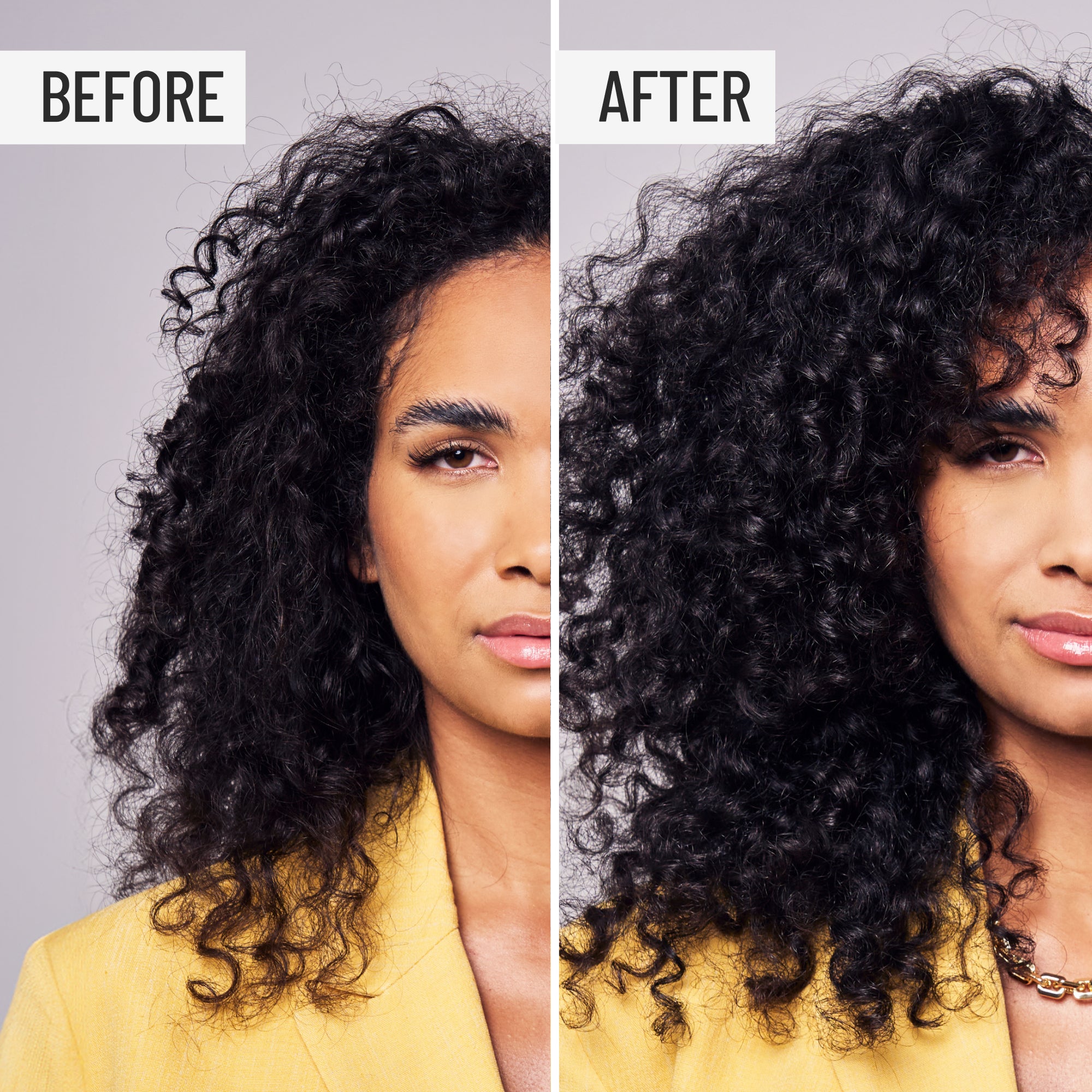
Because everyone’s hair and skin are unique, the time it will take for your hair to become healthier will vary. Some people will feel a huge difference immediately; for others, it may take time, especially if hair is very damaged, the scalp is very irritated, or overactive oil glands need some time to get the message.
LIFE WITHOUT SODIUM LAURYL SULFATE
Understanding how SLS can strip your hair of its natural (and necessary) oils is a real “aha” moment for many people. Suddenly, it makes no sense at all: the never-ending cycle of washing only to get greasy in a day or two, or constantly conditioning hair but wondering why it’s still so dry.
Eliminating SLS will help. With a bit of patience and persistence, you and your hair will adjust. And if you want to make a huge change and quit shampoo and detergent altogether, we’ve got plenty of New Wash here waiting for you.
Sources:
Sodium Lauryl Sulfate. Chemical Safety Facts. URL.
Britannica, The Editors of Encyclopaedia. "Surfactant". Encyclopedia Britannica, 11 Feb. 2020, https://www.britannica.com/science/surfactant. Accessed 2 April 2021.
What Is Sodium Lauryl Sulfate, And Why Do We Use It?. Seventh Generation. URL.
Detergent pour – 66 loads. Method. URL.
Sodium Lauryl Sulfate Showcard. ILO. URL.
Bondi, Cara Am et al. “Human and Environmental Toxicity of Sodium Lauryl Sulfate (SLS): Evidence for Safe Use in Household Cleaning Products.” Environmental health insights vol. 9 27-32. 17 Nov. 2015, doi:10.4137/EHI.S31765