What is greenwashing and what does greenwashing mean? It’s always smart to raise a skeptical eyebrow when you hear a company making environmental claims to “save the Earth.” Jumping on an eco-friendly bandwagon may be smart marketing, but beware of greenwashing, a practice designed to influence consumer perception by making you believe that a company or brand is doing more to protect the environment than it really is – whether by outright lies or a simple lack of scientific proof.
What is greenwashing and what does greenwashing mean? It’s always smart to raise a skeptical eyebrow when you hear a company making environmental claims to “save the Earth.” Jumping on an eco-friendly bandwagon may be smart marketing, but beware of greenwashing, a practice designed to influence consumer perception by making you believe that a company or brand is doing more to protect the environment than it really is – whether by outright lies or a simple lack of scientific proof.
EXAMPLES OF GREENWASHING
Truth in Advertising, a site dedicated to “empowering consumers to protect themselves and one another against false advertising and deceptive green marketing,” is calling out companies for misleading us about their so-called cleaner, sustainable products and their environmental impact:
- Tide Purclean laundry detergent claims to be “a powerful, plant-based clean you can feel good about.” The truth: 25% of its ingredients are not plant-based, and some are derived from petroleum, a fossil fuel that contributes to greenhouse gas emissions.
- Nestle is under legal fire for its corporate greenwashing and misleading claims that it uses “sustainably sourced cocoa beans.” Its key ingredient in chocolate products allegedly contributes to deforestation in West Africa on farms that use child and slave labor.
- Kauai Coffee makes the green claim that its disposable pods are “100% compostable” and “designed to go back to the land – not the landfill.” The catch is that the capsules packaging have only been certified to decompose at “industrial facilities” and not in your backyard compost pile.
To be fair, sustainable practices and the eco-friendly gauntlet is new territory for many manufacturers, and few marketing departments are staffed by devious liars. The intentions for sustainable products may be pure, but with so many independent certification organizations trying to fill a federal gap in regulations that might guide us toward a more sustainable future greener regulations, it’s complicated.
And even those certifiers are not exempt from scrutiny; The Rainforest Alliance provides a seal of approval for environmental and social responsibility. However, a clean water group claims that certified farms are cheating by allowing aerial fumigation over schools and homes and open-source rivers with no chemical protection and are suing.
The term greenwashing first appeared in an essay by environmentalist Jay Westerveld in 1986 essay when hotels asked guests to reuse towels as part of a larger so-called environmental strategy to reduce carbon footprint that appeared to be only a cost-cutting strategy, encouraging guests to be environmentally aware when the hotels at large were exhibiting environmentally recklessness.
HOW TO SPOT GREENWASHING
Greenwashing is difficult to spot – and it’s unlikely to stop without a governing body to verify a product's sustainability claims and environmental issues before it is launched to consumers.
Many of the terms used on labels have lost all real meaning in the marketplace, and without consensus on a definition, these buzzwords become easy to use with impunity.
“Any company that says it isn't greenwashing is probably kidding themselves,” writes Emma Loewe, Senior Sustainability Editor at Mind Body Green. This is especially common in the fashion industry making unsubstantiated claims about their sustainable brand, when in reality, their products and supply chain are directly contributing to carbon emissions and climate change. “I consider it a sign of sincerity – not weakness – when a company discloses what challenges they face in the journey to meet their sustainability goals. After all, if a company only sets goals it knows it can meet, chances are the goals aren't ambitious enough.”
In that spirit, here is what Eli Halliwell, CEO of Hairstory includes in a message to all employees:
“We founded Hairstory on the principles of sustainability. To us, sustainability means much more than good environmental stewardship; it means balance, self-perpetuation, creating something of enduring value. It also means we need to manage the business within the constraints of our current reality…
We apply the principles of sustainability to our products, to our business conduct, to our environmental footprint. By generating economic activity, we acknowledge that we impact our world – we consume resources, we generate waste. Our goal is to minimize this impact where and whenever possible, recognizing we are bound by the constraints of economics, technology, regulation, and funding.
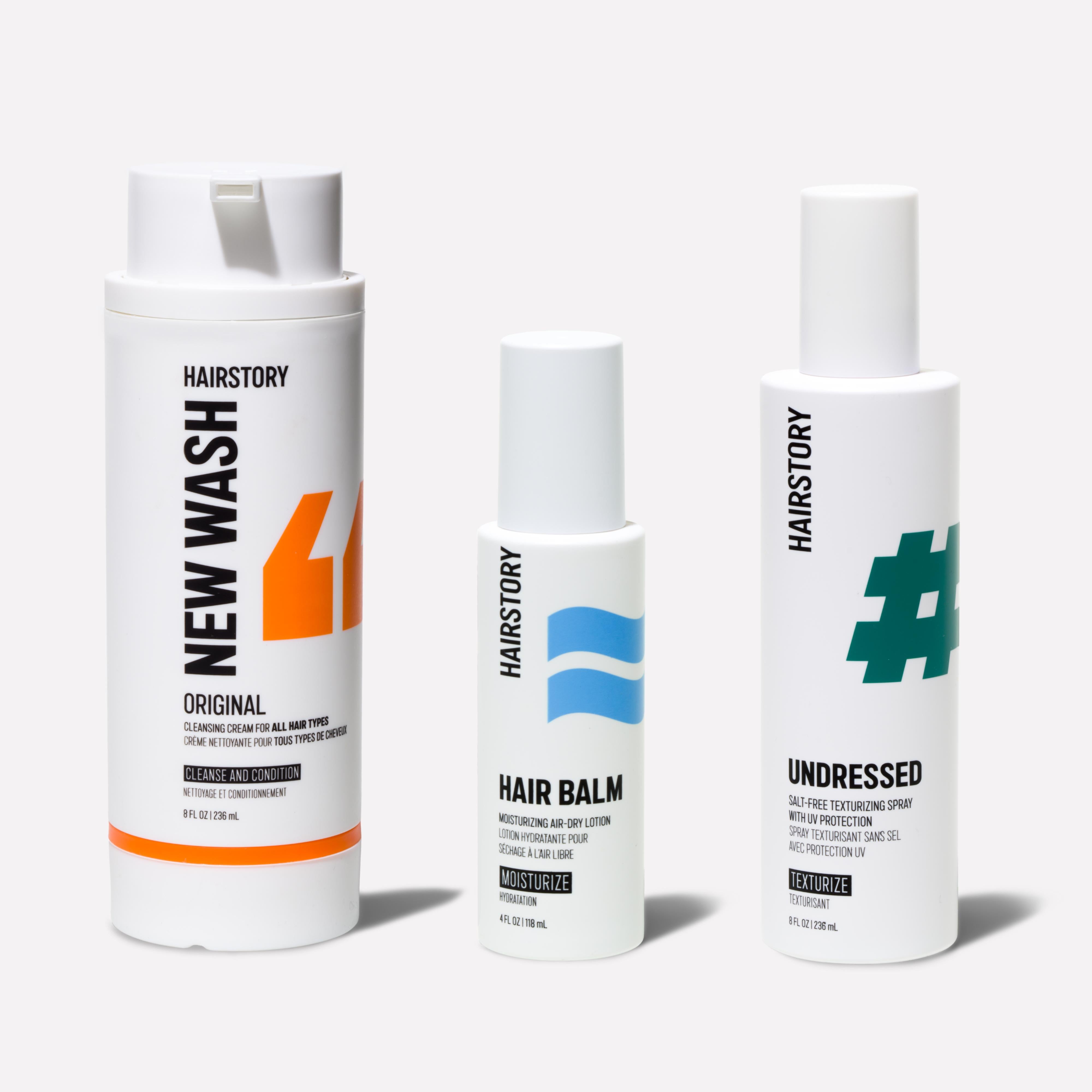
Our products such as New Wash are biodegradable and committed to this goal of sustainability. We joined 1% for the Planet to donate a meaningful share of our sales to water-focused sustainability non-profits.
We live in a world of hyperbole, of greenwashing, of over-promising and under-delivering, and we choose instead the path of honesty, transparency, and evolution. Sustainability is a journey, not a destination. We are not perfect and never will be, but we must always strive to improve.”
Ever wondered, “What is clean beauty?” or “What is sustainable packaging?”. Check out our blog to learn more about these topics and how you can begin your journey to living a more sustainable lifestyle.
Sources:
Emma Loewe mbg Senior Sustainability Editor Emma Loewe is the Senior Sustainability Editor at mindbodygreen and the co-author of The Spirit Almanac: A Modern Guide To Ancient Self Care. “Greenwashing Is Harming The Environmental Movement: Here's How To Spot It.” Mindbodygreen, 15 Sept. 2020, URL
“Earth Day 2020: Companies Accused of Greenwashing.” Truth In Advertising, 18 Feb. 2021, URL
“Campaign for Safe Cosmetics-Working for Safer Cosmetics.” Safe Cosmetics, URL