Authors of articles on caring for colored hair seem to have reached a consensus on ways to keep your hues vibrant and less likely to fade: Don’t wash for 2 days; wash sparingly thereafter; protect it from heat sun, heat, and chlorine; condition, condition, condition.
We agree – for the most part – but we have a very different view on the hair washing part.
The fact is that the very act of washing – no matter what kind of cleanser you do or do not use – will contribute to the fading of color that has been deposited, and will do no favors for hair that has been bleached. Even water alone will cause some degree of diminishment; anything that swells the hair shaft and causes the cuticles to lift will allow color deposited in the cortex to escape.
Beauty experts agree that shampoos with sulfate-based detergent are bad for color. We agree – wholeheartedly – and furthermore, we think that they’re the devil in bubbly disguise for anyone who lives and breathes, whether or not they have a colorist. Read more about the sulfate scare here.
COLOR-SAFE?
Most “coloristas” suggest a shampoo labeled as color-safe. This generally means it is formulated with a less aggressive variety of detergent to lift the cuticles less, thus closing the doors where color can sneak out. It is also likely to contain extra conditioning agents, proteins, or other supplemental ingredients to “support” color-treated hair.
One blogger even goes so far as to suggest this: “Try to mix conditioner with your shampoo to create a milder cleanser.” Another advises using coconut oil on the ends of your hair before shampooing to protect color from water and shampoo. Both suggestions have merit, in theory.
But (and this is a big but) how can a detergent-based shampoo – designed primarily to remove things while it stays on your head for all of a minute – actually add anything of consequence to your hair? How can all of those lovely-sounding, life-giving goodies have a chance to actually do anything before gurgling down the drain? Is this not the province of leave-in products?
Detergent – sulfate-based or otherwise – is the enemy of color-treated hair, virgin hair, curly hair, straight hair, fine hair, thick hair, baby hair, gray hair – any kind of hair, not to mention the skin on the scalp.
And while we’re on this particular rant, why do hair product companies insist on making a product that we need protection against in the first place?
GO DETERGENT-FREE
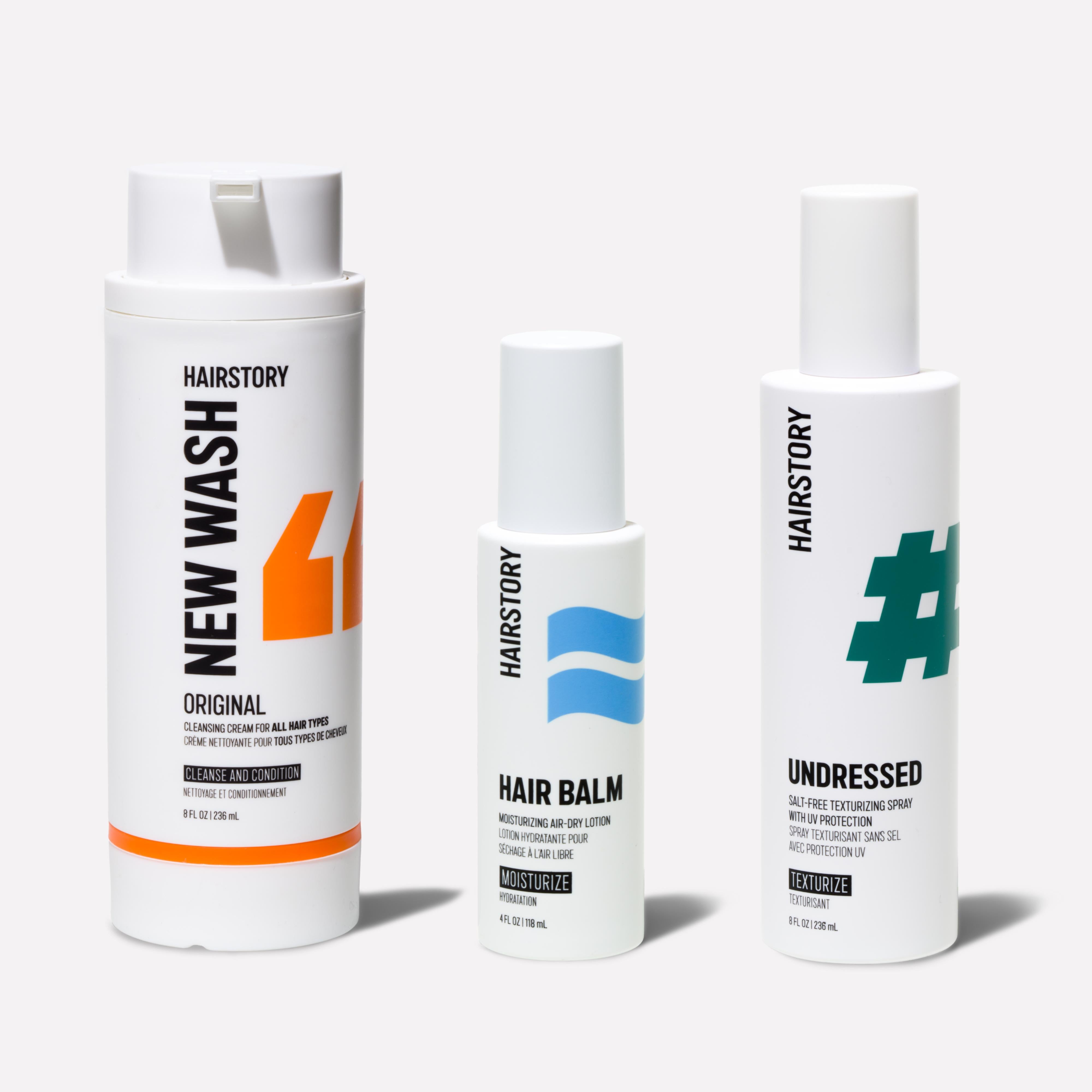
We admit that our perspective is an unusual one, but it’s an important one: We urge you to cleanse intelligently. Detergent – sulfate-based or otherwise – is the enemy of color-treated hair, virgin hair, curly hair, straight hair, fine hair, thick hair, baby hair, gray hair – any kind of hair, not to mention the skin on the scalp. That is why we built our company around New Wash, an oil-based cleanser that contains no detergent whatsoever, and cleanses in an entirely different way, moisturizing at the same time. We’ll say that part again: New Wash conditions while it cleanses.
If you’re truly invested in protecting your color investment, washing the new way can help ensure that your color story stays brilliant from start to finish and tops the best-color list in any season.