Don’t despair over dry hair. It’s not a type; it’s a condition that many of us experience – and it’s fixable. Here is a step-by-step guide to help you turn that straw into gold.
1. Why is it dry? Isolate Root Causes
Do you use detergent-based shampoo?
Do you blow-dry, flat iron, or use a curling wand?
Do you go out in the sun without a hat?
Do you swim in chlorine without a cap?
Do you lighten your color with bleach?
Do you lack protein, vitamins A, B-12, B-7, C, iron, and zinc?
If you answered yes to any of the above, you may be making dry hair even drier. Read on for ways to restore your right to moisture.
(Note: If your hair is dry and you also experience fatigue, intolerance to cold, weakness or unusual hair loss, consult your doctor about possible underlying conditions.)
2. Don’t Mess with Natural Moisture
Your body knows how to keep hair and skin optimally moisturized. Your sebaceous glands clustered around hair follicles secrete sebum to waterproof and lubricate (among other functions). It’s an important but fragile system that can easily be disrupted by over-cleansing, especially with detergent-based shampoo. You’d be better off rinsing with water alone.
When you shampoo and rinse, sebum is lifted from strands and scalp too effectively – the natural barrier is destroyed. This is why conditioner was invented: To replace some of the moisture that shampoo strips away.
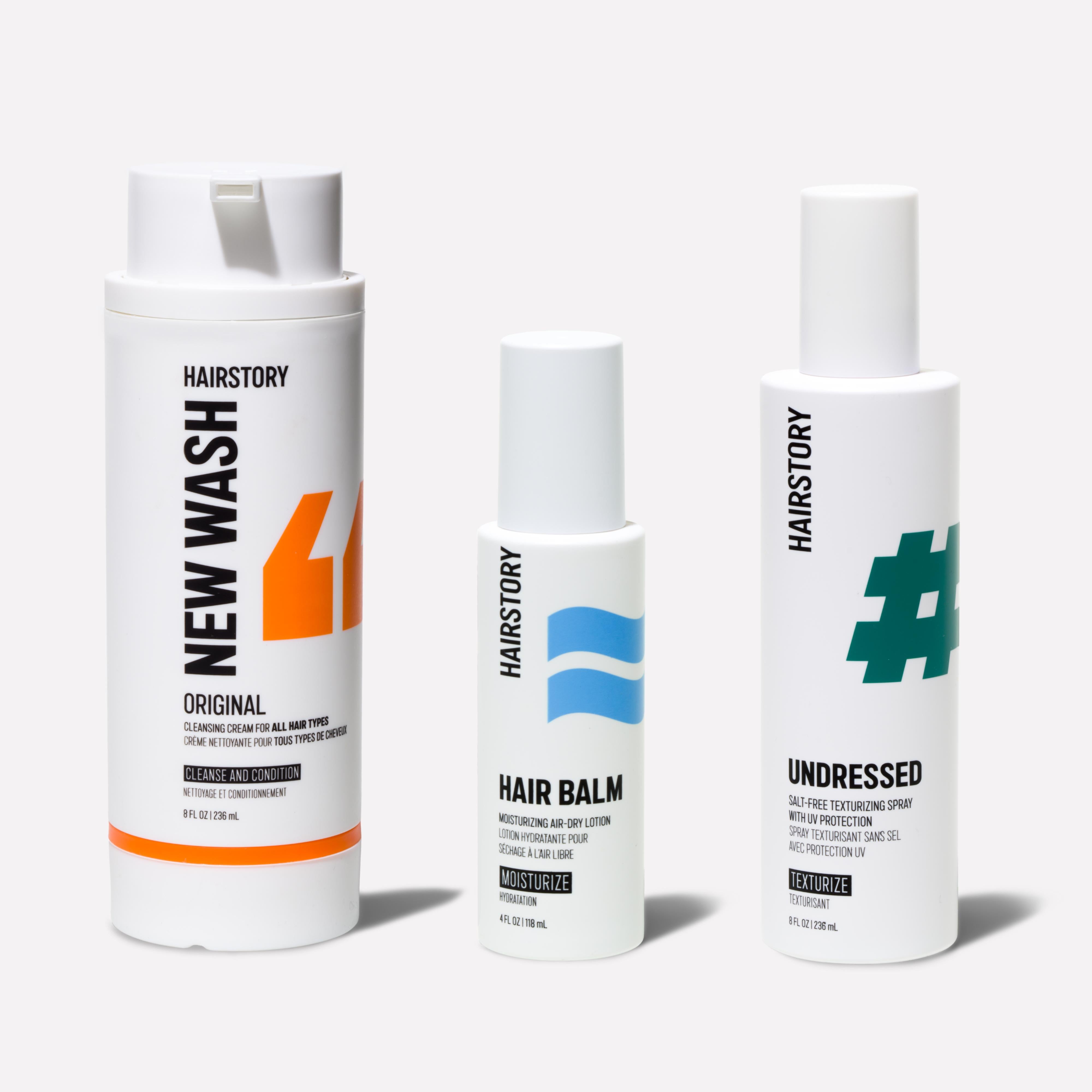
Keep shampooing to a minimum. Even better, eliminate “shampoo” altogether. Hairstory New Wash has all the cleansing benefits of shampoo but none of the risks. An ingenious blend of essential oils and saturated fats dissolve the impurities you don’t want while respecting the sebum that you do. It conditions while it cleanses, eliminating the need for a second product (and often a third or fourth once you’re out of the shower). Super-dry folks might consider the extra conditioning power of New Wash (Rich).
3. Cool It with Heat Styling
• Style like a pro: Choose professional grade appliances.
• One heat setting does not fit all: Find tools with adjustable temperature settings.
• Know your limit: Try not to heat style more than twice a week.
• Wear protection: Use a thermal hair protector that offers some hold.
• Work quickly: Limit contact and minimize exposure.
Heat tools are cool – until you get burned. Keep heat settings under 400°F, more than enough for any style. Fine or damaged hair requires the lowest heat setting; the thicker and stronger, the higher the temperature can be. It’s better to use a cooler tool longer (a few seconds per section) than a hotter one to save time. If you hear sizzling or smell burning when you touch metal to hair, your tool is far too hot! Read our complete guide to using hot tools safely.
4. Brush Up (and Down)
Nothing beats your natural oils to keep hair moisturized, and nothing beats brushing to help them reach the dryest areas toward the ends. Opt for boar bristles or a boar/nylon combo over plastic or metal. And be gentle with your scalp.
5. Wear Protection
The bad news is that environmental factors play a huge part in drying out hair. The good news is they’re the easiest to control.
Never venture out into the sun without a hat or a scarf. There are UV protecting products available but don’t look for SPF numbers as you would sunscreen for your skin.
Never let chlorine touch your hair! Wear a cap (so much sleeker and hydrodynamic). If you must go capless, wet hair before diving in so it won’t absorb as much chlorine. And rinse hair while it’s still wet; dried chlorine is stubbornly difficult to remove.
6. Use the Proper Products
We’ve already mentioned the marvels of New Wash, but here are more magic potions we recommend:
It is crucial to use a protectant when heat styling, but it’s not a get-out-of-damage-free card. Use all precautions above, always. Choose a product containing copolymers, proteins, and essential oils – to both insulate hair from heat and prevent moisture loss – such as Hairstory Dressed Up.
Remember that moisturizers can help mask damage and make hair feel a lot better, but they cannot actually repair it. But naturally dry hair can be revived with daily doses of a leave-in conditioner such as Hairstory Hair Balm (great while you sleep).
To preserve your style longer and wash out moisture less often, use a dry shampoo such as Hairstory Powder to absorb any oiliness (and give your volume a boost).