Prebiotics, probiotics, and postbiotics: what's the difference?
It's tricky. There's a whole alphabet of scientific terms that applies to cosmetic products. The "P" can stand for lots of things like peptides, prebiotics, probiotics, panthenol and parabens. We're here to talk about probiotics, prebiotics and postbiotics. What is the importance and what is the difference between them?
In the world of microorganisms, they all compete for space and food.
Probiotics are live bacteria that introduce good microbes to parts of your body that have residential microbiomes. Prebiotics act as food for your microorganisms. Postbiotics are non-living cell fragments of dead bacteria (enzymes, peptides) that feed tissue.
So what is the importance of the skin (and scalp!) microbiome and its relationship with all of these biotics?
Why your scalp microbiome matters
At Hairstory, we believe that prebiotics are essential to balancing your scalp health. We will say this until the cows come home: detergent-based shampoo and conditioners strip your scalp microbiome.
Our skin is the largest organ of the human body. It's easy to look at your arm and notice a blemish, but when it comes to your scalp, you can't really notice anything unless you're up close and personal in your mirror.
What you do notice over time are flat, dry or oily roots, frizz, and itching and flaking. These are usually the most common indicators that your scalp isn't getting the nutrients it needs.
We built a whole brand and category of haircare to show that hair health is scalp health. Your hair will behave based on the environment of your scalp. If your scalp is constantly stripped by detergents, your good and bad bacteria are, too. So if you do a scalp treatment and follow up with shampoo and conditioner, there's no room for new bacteria to grow.
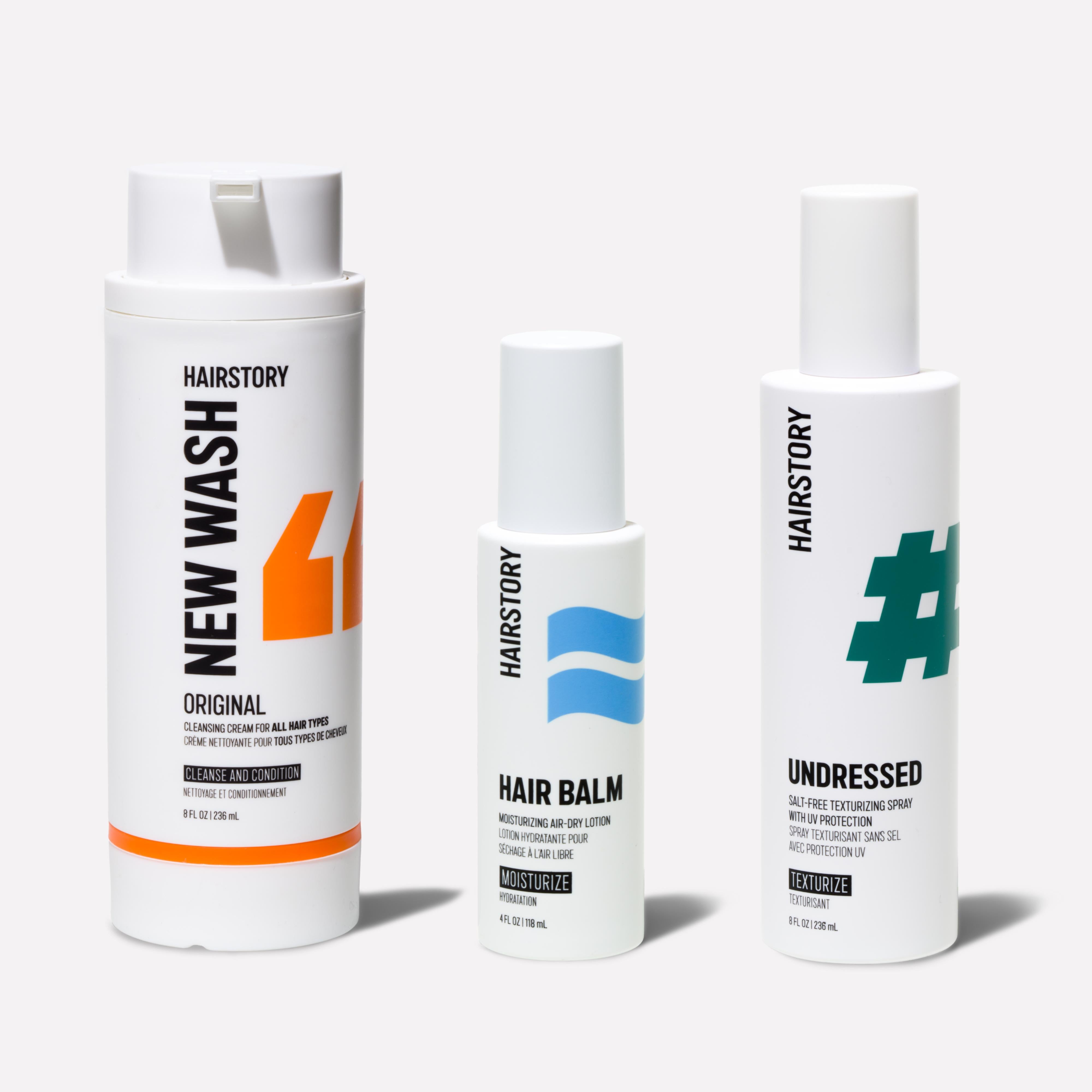
Our New Wash balances your scalp's flora. There's no stripping after each wash, only replenishing, especially with our prebiotic micellar scalp rinse, Pre-Wash that feeds your flora to support growth.
The science behind prebiotics for scalp health
Why do prebiotics have a relationship with scalp care in the first place?
According to this 2026 review, pre-, pro- and postbiotics can reduce pathogenic or disease-causing microorganisms.
You often see probiotics in yogurt and kombucha, even soda, to help restore the flora in your gut. And, you're typically advised to take them by your doctor when you're taking antibiotics.
Why?
Antibiotics kill the harmful bacteria causing your infection along with the beneficial bacteria your gut needs. Probiotics introduce new bacteria to your gut microbiome to restore the balance of flora.
Gut health is important for scalp health too. It can affect hair thinning since it offers internal nutritional support and reduces systemic inflammation.
Think of probiotics like new seeds scattered onto soil that's already planted. Prebiotics are the fertilizer that feeds what's already growing there. Postbiotics are more like mulch: not something that feeds new growth, but a layer that conditions the bed itself.
New seeds have to compete with an established garden, so most don't take hold. That's the real problem with probiotics: you can keep planting live cultures, but if the ecosystem doesn't accept them, you start from zero every time. Prebiotics skip that problem entirely by feeding what's already rooted.
Why we chose prebiotics over probiotics
While neither of the "biotics" are better than the other, they all serve different purposes, and based on our science for simply better haircare, we've found that prebiotics feed your scalp's good bacteria instead of trying to introduce new ones. The compounds selectively feed the scalp's existing bacteria like S. epidermidis without starving out the pathogenic overgrowths like the yeast Malassezia.
Probiotics on the other hand are living compounds which compromises shelf life and efficacy. Any water-based product needs a preservative system as the product could grow something harmful in a matter of time. And, preservative systems can't distinguish between good and bad microbes, so when you mix them with probiotics, the preservatives are immediately going to kill off the live bacteria. By the time it reaches the customers, the "live" culture is dead.
So, really, the only viable options in skincare are postbiotics and prebiotics. We see postbiotics like peptides being commonly used in skincare, but rarely do we see prebiotics. Postbiotics balance the skin and calm irritation by fragmenting dead bacteria for specific, targeted benefits. They both work well, but function differently. We chose to use prebiotics because they encourage long-term microbial balance to your native scalp flora.
Which is the entire reason why we built Pre-Wash. It can carry an active preservative system and a prebiotic in the same bottle without affecting the integrity of the formula. Our idea with our heroes New Wash and Pre-Wash are this: New Wash regulates and cleans your scalp's microbiome with nutrients it needs like fatty alcohols and lipids without stripping your hair with detergents. Now that your hair isn't being stripped with detergents, you can narrowly focus on scalp health by feeding your scalp microbiome with prebiotics, hence why we call it Pre-Wash.
Now that you know the potential of your scalp health with New Wash and Pre-Wash, the shampoo and conditioner in your shower caddy should seem counterintuitive. Why wouldn't you want a low-maintenance, scalp-conscious haircare routine? Shop Pre-Wash and New Wash now.
The Bottom Line
- Probiotics are live microbes; prebiotics are food for the microbes already on your scalp; postbiotics are non-living microbial byproducts that support skin tissue.
- Hairstory formulates with prebiotics, not live probiotics, because water-based products need a preservative system that would kill live cultures before they ever reach you.
- Pre-Wash is a prebiotic micellar scalp rinse, paired with detergent-free New Wash, to support scalp balance without the strip-and-repeat cycle of traditional shampoo.
Keep Reading
Reviewed by Mauricio "Mo" Bellora, Hairstory's science expert, who holds a doctorate in Pharmaceutical and Biochemical Sciences from the University of Buenos Aires, with a research specialization in microencapsulation.
This article is for general educational purposes and isn't a substitute for professional medical advice. If you're dealing with persistent scalp irritation, flaking, or hair thinning, it's worth checking in with a board-certified dermatologist.