Dear Susan,
I was sitting across the dinner table from my mother not long ago. She's in her seventies. Her hair is completely silver, worn short the way she's always worn it.
And I just sat there looking at her, thinking — wow. This looks so good on you.
Distinguished. Authentic. Beautiful. And maybe I'm a little biased, but I don't think so.
I didn't say it out loud, I just thought it. Your note reminded me I should fix that.
Your question hit me somewhere real. You didn't go to your hairdresser and say make it grayer, make it finer. You didn't choose this. It was chosen for you. And when something that's been part of how you announce yourself to the world starts shifting beyond your control — that shakes people. It's okay to say that out loud.
Here's something that helps me, and maybe it'll help you too. When things are happening to us, and we don't understand them, we feel like we've lost the wheel. But sometimes just knowing what's going on, the actual science of it, puts us back in the driver's seat a little. Not all the way. But enough.
What's Actually Happening to Your Hair
What's happening to your hair is real. Your melanocyte stem cells lose the ability to produce pigment over time, and a 2023 study in The Scientist explains exactly how, if you're curious. Think of it like this: your stem cells are like a reservoir of cells that color every single hair strand as it grows. The strand you're growing now is genuinely different material from the one you grew decades ago.
And for women, hormonal shifts layer on top of that. As estrogen declines, follicles miniaturize. Each new strand comes in finer. Medium-fine becomes fine. Fine becomes finer-than-fine. Harvard Health has written about this.
Our founder, Eli, has written about his own version of it on his Substack, including a conversation about low-dose oral minoxidil prescribed off-label for pattern hair loss. It's worth bringing to your dermatologist if that feels like a road worth exploring.
The Practical Part: What Fine Hair Actually Needs
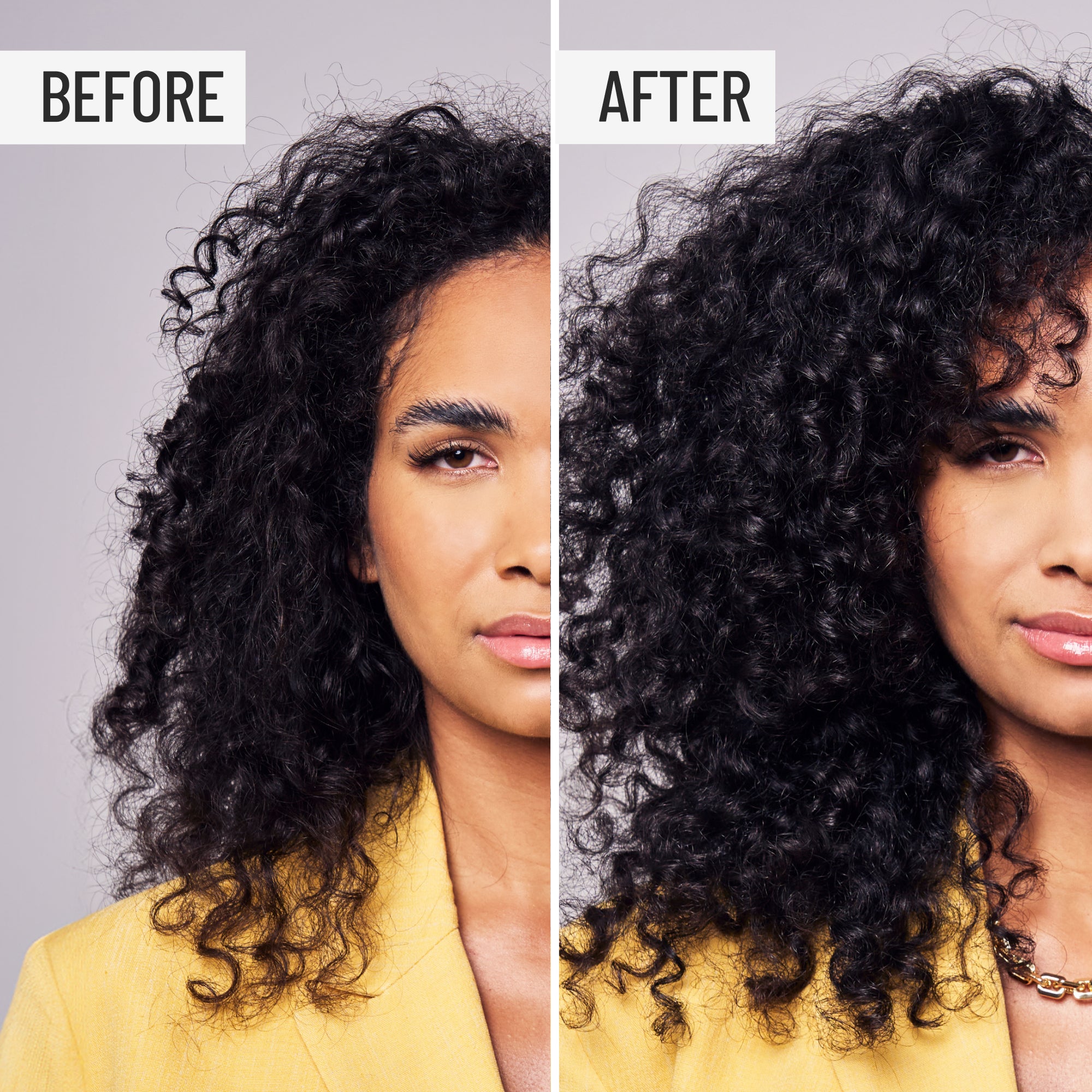
With fine hair, the instinct is always to pile on. More product, more hold, more of everything. I've watched that backfire in the chair more times than I can count. Think of it like this: fine hair is a lightweight fabric. You wouldn't press silk the same way you'd iron denim. What it actually needs is a clean, healthy scalp as its foundation. Everything builds from there.
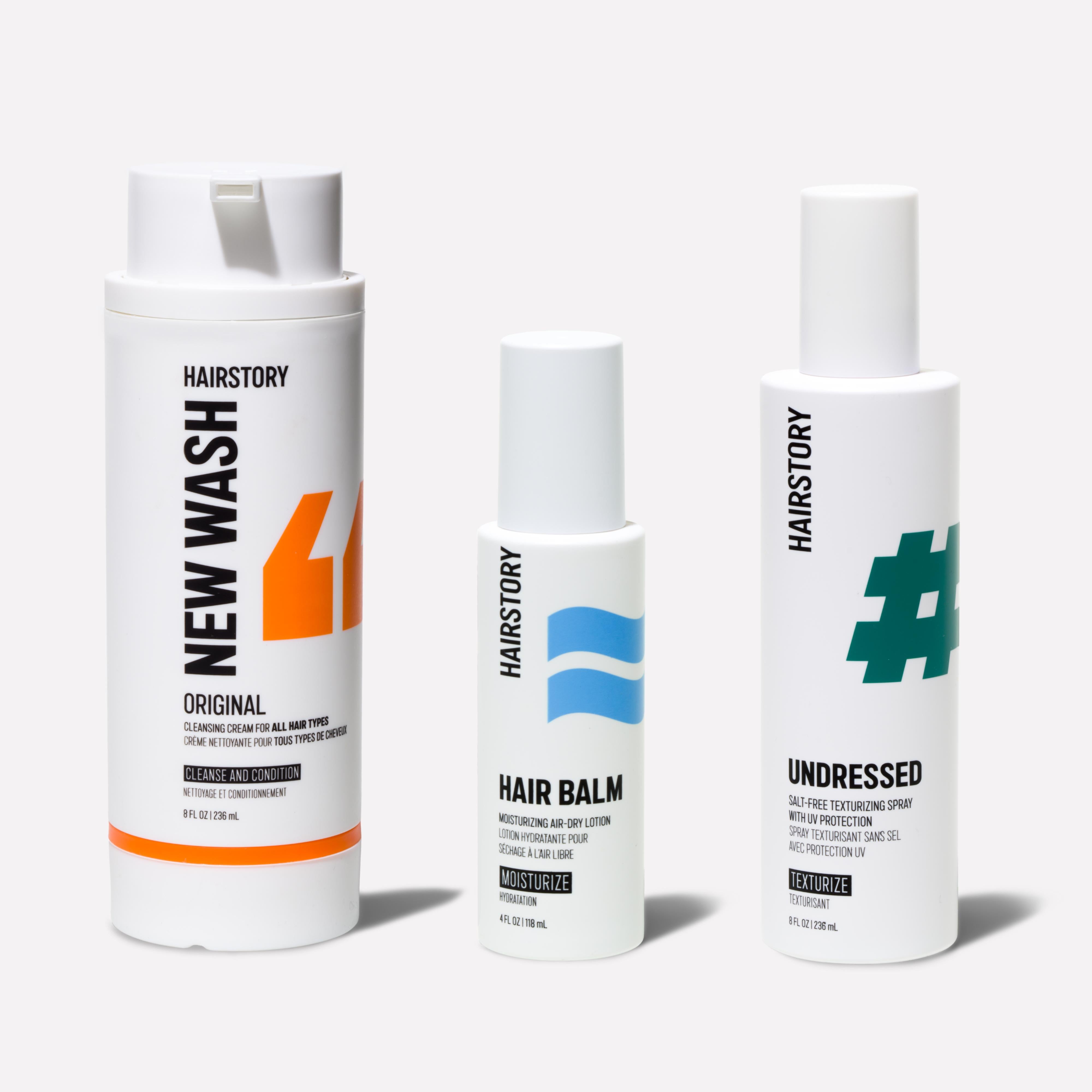
You already know New Wash, and as someone who's watched it work on a lot of fine-haired clients, I'll tell you it does something most cleansers don't. It cleans without stripping. For someone with pool exposure on top of hormonal changes, that balance matters more, not less. Original is usually the right place to start unless you're running particularly oily.
Short hair reads thicker. Always has. If a bob is something you'd consider, it's not a concession, it's a cheat code. And if you want root volume without a lot of technical effort, our Powder creates instant volume at the base. Just wash it back out within a day or two. Let the scalp do its thing.
The Story Running in Your Head
The story running in your head right now, the one where everyone notices, where you used to have something you've now lost, I hear that from the chair all the time. But maybe, just maybe, the people looking at you across the table aren't thinking about what you've lost at all.
Maybe they're thinking about what you've gained.
Now, if you'll excuse me, I've got to go tell someone I love very much that her gray hair is beautiful.
Sincerely,
The information in this article is for educational purposes only and is not intended as medical advice. Always consult a board-certified dermatologist or qualified healthcare provider if you have concerns about your hair or scalp health.