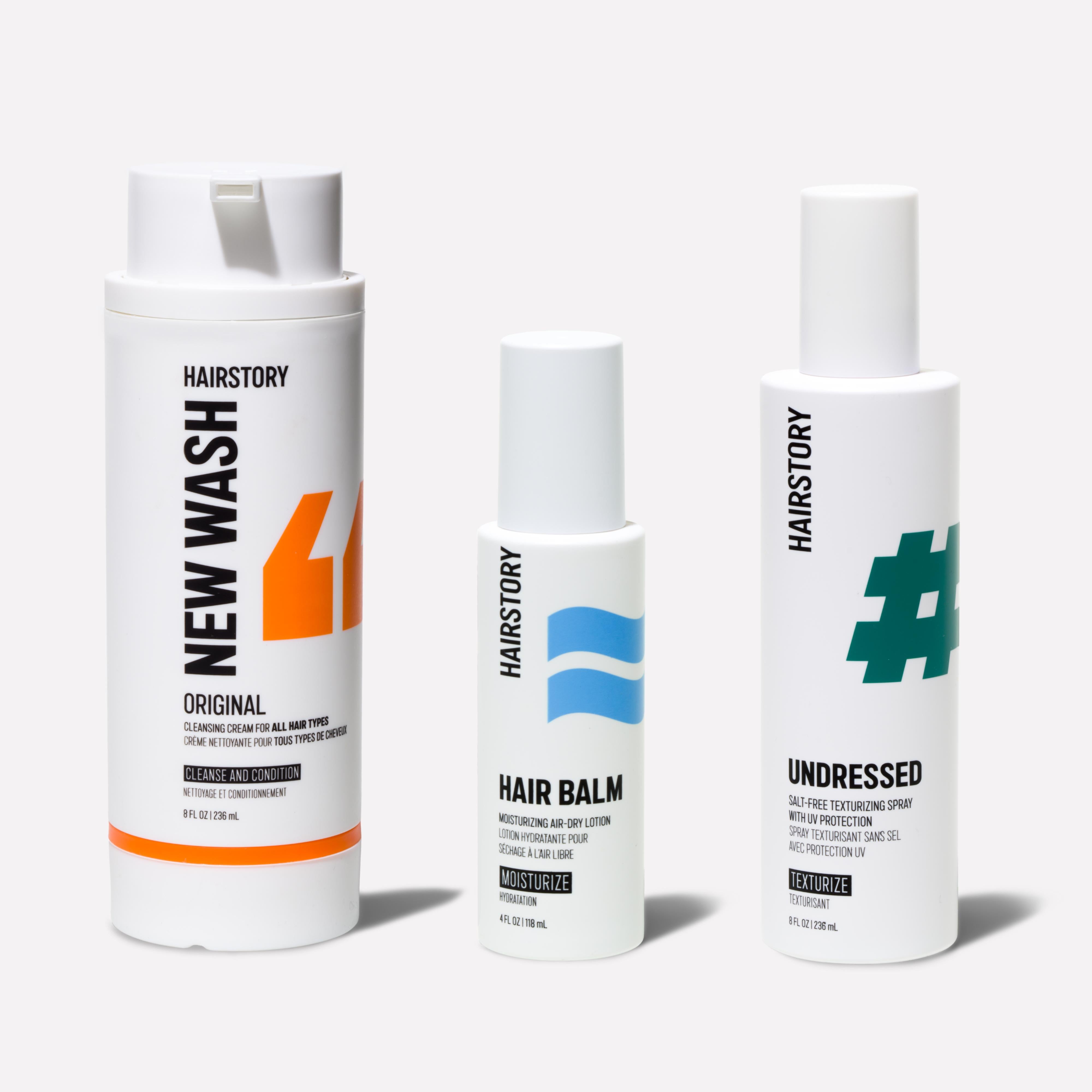
I'm standing on one of two floors at the Hairstory headquarters when I catch a glimpse of Eli popping his head up from his Thinkpad, smiling ear to ear.
We connected eyes, and I said, "What, what???"
He replied with "A million."
"We've hit a million people who decided to quit shampooing and use New Wash."
I saw that smile about ten years ago. I was in the New Wash trials when I begrudgingly sent my clients home with little bottles of cream labeled "New Wash." I was pleasantly surprised when they were smiling ear to ear at the next visit. I saw these clients for almost ten years, and the last thing I expected was this cream making a breakthrough in their routine.
This small bottle told a million people to make the switch to New Wash. A million. That's not a trend. That's a movement, and it happened because enough people finally looked at what was in their bottle and went: wait. This is what I've been putting on my hair?
I've been doing hair for 25 years and the conversation I have all the time in the chair is some version of "I've tried everything, and nothing works."
What I say every single time is you haven't tried the wrong things. You've been handed a broken system: one where your hair had no chance of ever being as great as it could be. We as hairdressers had to constantly tame the untameable and put so much energy into a look instead of helping someone look like themselves.
Here's How the System Works
Traditional shampoo and conditioner aren't helping you look like yourself. It's convinced you that your hair can only last for so long.
Think of it like this. Your shampoo foams. And that foam makes you feel all clean. It isn't. It's theatre. From drugstore brands like Dove and Pantene to the classic ones you've seen your whole life, they all contain the detergent Sodium Lauryl Sulfate. That detergent strips every single oil off your scalp's surface and gets away with it. The natural ones, too. The ones that are supposed to be there.
It's like squeezing a sponge so hard it has nothing left in it. And your scalp responds how you'd expect: it panics, and it overproduces oil to make up for what was stripped. So in two days you're greasy again. You shampoo again. It robs your scalp of its oils. It overproduces again.
That's not a haircare routine. That's a problem the industry invented and then sold you the "fix" for. The more damage your hair takes, the more products you need. That's the whole business model.
Your Shampoo's Dirty Little Secret
These ingredients make your scalp start from a deficit every time you wash.
We've learned that sulfate-free isn't enough. Detergent-free is what you want to look for. My friend Mo Bellora gets into the nitty gritty science behind those detergents here.
In a nutshell, every shampoo and conditioner with detergents is amphiphilic. Their bond to water and oil is equally strong. It's so strong that it takes away all the good stuff that protects your hair and scalp. It's like being in a toxic relationship. There's no boundaries.
New Wash is literally a new way to wash your hair. It's a new formula. It's been tested and intentionally designed over and over again to have weaker bonds with water, so dirt and buildup can be lifted without taking the natural good stuff. It's like being in a healthy relationship. There's boundaries.
Go into your shower and turn your bottles of Amika, Oribe, and yes, even your K18 around and read what's on the label. Detergents are high up on that list. This is what you're spending $40, $50, $60 on.
What New Wash Does Instead
It's like this: New Wash is a cleansing cream, not a shampoo. It uses fatty alcohols instead of detergents. And I know "fatty alcohols" seem like big words, but think of it like the difference between rubbing alcohol and butter. One dries everything out. One softens, conditions, and protects. Fatty alcohols are the butter. They're derived from natural oils and waxes. Their job is to dissolve the buildup without telling your scalp it's under attack.
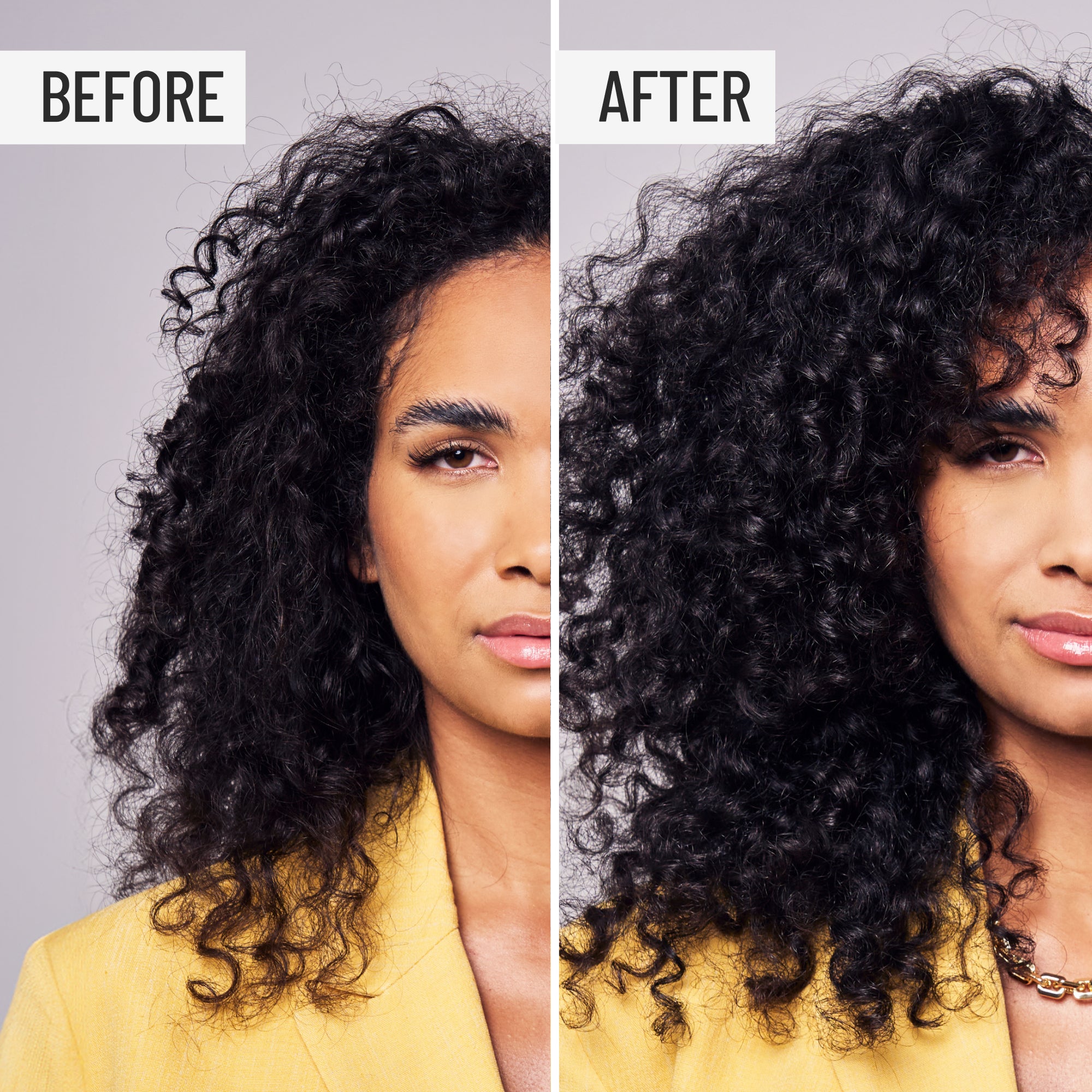
No foam. No strip. No panic response from your oil glands. So many clients walk in with four, five and sometimes seven day-hair. I can feel the shift in the shampoo bowl because their hair doesn't feel rough and hard to detangle. It's the opposite. And their hair holds the same style it did on day one.
New Wash is built with ingredients that make sense. Aloe, jojoba, evening primrose, and horsetail. It sounds like an elixir, but think of these ingredients as a language your scalp already speaks. Jojoba, for example, has that innate talent because it's got the same structure as your scalp's oils. It's not aggressive. It absorbs buildup as if it belongs there. These aren't marketing words. They're ingredients with actual jobs.
One step. Massage it in, rinse it out. That's the whole routine.
I'm not a data person, I'm a people person. That's why when the numbers came in, it made sense based on the years and years of conversations I've had with clients. So for all my data folks, there you go.
About the Price
We're not cheap. I won't pretend otherwise.
When I tell clients about the benefits of New Wash and the cost second, I see their eyes glaze over. I hear you. You never had a baseline to compare it to because you've never experienced this before.
When we say something is too expensive, we mean that we don't see enough value at that price, and I totally get that. You don't see enough value because you've been served the same thing in a different bottle. You've been constantly let down by the industry, so of course, you don't trust the price.
But just to remind you, the costs build up. The conditioner, the leave-in, the treatment, and the styler are all products you need to undo the damage that shampoo created. The cost of New Wash represents the price of natural ingredients like essential oils and fatty alcohols.
Now that you've seen it spelled out, the value of detergent-free haircare speaks for itself.
The Bottom Line
A million people didn't ditch shampoo out of nowhere. They got tired of the cycle, tried something that actually made sense, and didn't look back.
The industry has been getting away with bad chemistry for a very long time. Most people just never read the label.
Now you have. So trust me, and the 999,000 other folks.
The information in this article is for educational purposes only and is not intended as medical advice. Always consult a board-certified dermatologist or qualified healthcare provider if you have concerns about your hair or scalp health.