Tips on Hair Regrowth After Postpartum Hair Loss

Tips on Hair Regrowth After Postpartum Hair Loss

By Hairstory

Published on September 27, 2024 — 3 min read

Share this article

Home / The Archive / Tips on Hair Regrowth After Postpartum Hair Loss


For many people, one of the greatest joys in life is bringing a baby into the world. A woman’s body is capable of some truly phenomenal things, especially over the course of pregnancy and growing a tiny human. But after the baby arrives, a woman’s body can also do some unexpected things, and one of the biggest complaints new moms share is postpartum hair loss. If you’re suffering from postpartum hair loss and want to know what causes it and what you can do to help your hair regrow, keep reading.

If you’re suffering from postpartum hair loss and want to know what causes it and what you can do to help your hair regrow, keep reading.

What Causes Postpartum Hair Loss?

Many new moms notice what can seem like substantial hair loss in the first few months postpartum, especially around month four. The culprit for hair shedding? Falling estrogen levels. When you get pregnant, the body begins producing more estrogen, which prolongs the natural growth phase of hair and causes an increase in length and amount. Once your estrogen levels fall, the growth phase ends, which leads to a natural shedding phase.

How to Restore Your Hair

Hair loss after pregnancy is completely natural and can’t be completely prevented. But there are options available to mitigate hair loss and encourage restoration when the shedding phase ends.

Avoid heat styling

We all know that heat damages your hair. Ditch your blow dryer or curling/flat irons and opt to let your hair air dry. If you’re not crazy about your natural texture, keep wearing that ponytail –but not too tight that it damages the roots – or try a French braid or any variation on the bun as alternative.

Be gentle with your hair

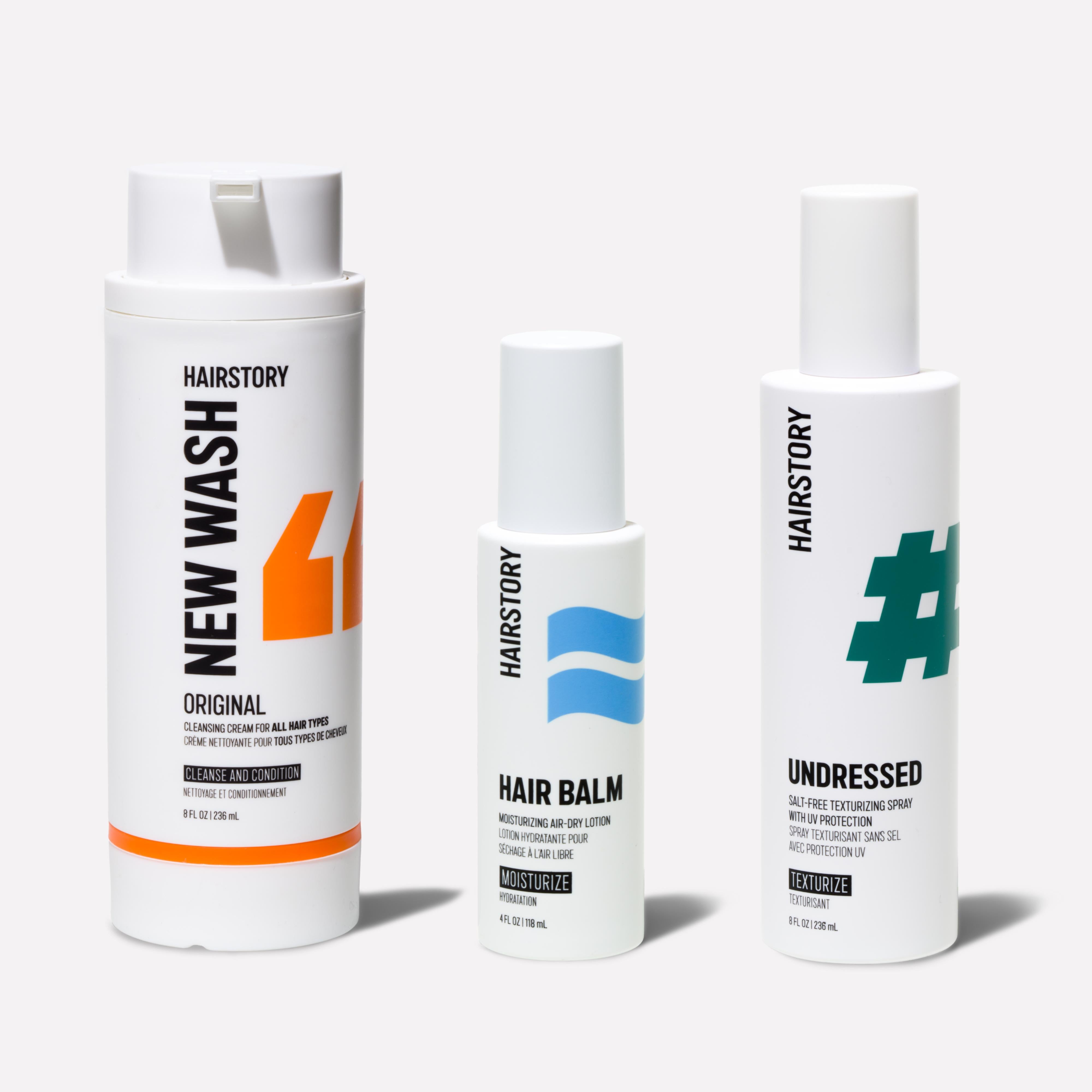
When washing and drying your hair, be extra gentle. Don’t pull at your hair, and don’t brush it when wet, as this stretches and can break your hair. If your hair has snarls, you want to start from the bottom and work your way up to avoid breakage. Or, if you want to avoid tangles altogether, use Hairstory New Wash to moisturize and clean your hair without stripping the naturally occurring, protective oils. And because New Wash is a detergent-free cleansing cream, its non-toxicity makes it the #1 choice for new moms.

Take prenatal vitamins and follow a healthy diet

Revitalize your hair from the inside out. Keep taking your prenatal vitamins, and make sure to eat a healthy and well-rounded diet. And drink plenty of water!

Use a gentle but moisturizing hair wash

Postpartum hair loss can be unavoidable, but depending on your choices, you can restart the growth phase in a way that encourages optimal growth while maintaining the scalp condition. By following our tips and using New Wash, you can.

Change your Hair story to restore your hair and support your new hair growth.

Frequently Asked Questions

  • What causes postpartum hair loss?
    Postpartum hair loss is caused by falling estrogen levels after pregnancy. During pregnancy, elevated estrogen prolongs the natural growth phase of your hair, which increases its length and density. Once estrogen levels drop after delivery, the growth phase ends and your hair enters a shedding phase, which is why many new moms notice significant shedding around month four postpartum.
  • When does postpartum hair loss usually start?
    Most new moms begin to notice postpartum hair loss within the first few months after giving birth, with shedding often peaking around the fourth month postpartum. This timing aligns with when estrogen levels have fully dropped back to pre-pregnancy levels, triggering the natural shedding phase. The shedding is temporary and part of your body's normal hormonal rebalancing.
  • Can postpartum hair loss be prevented?
    Postpartum hair loss is completely natural and cannot be fully prevented because it is driven by hormonal changes after pregnancy. However, you can mitigate the impact and encourage healthy regrowth by being gentle with your hair, avoiding heat styling, eating a well-rounded diet, continuing prenatal vitamins, and using a gentle, non-stripping cleanser like New Wash.
  • How can I restore my hair after postpartum hair loss?
    You can support hair restoration by avoiding heat tools, handling your hair gently when washing and detangling, continuing prenatal vitamins, eating a healthy diet, and drinking plenty of water. Switching to a detergent-free cleanser like Hairstory New Wash helps maintain scalp health and preserves the protective oils your hair needs to regrow strong.
  • Is it safe to heat style my hair during postpartum hair loss?
    Heat styling is not recommended during postpartum hair loss because heat damages hair that is already in a fragile shedding phase. Skip the blow dryer, curling iron, and flat iron, and let your hair air dry whenever possible. If you want to manage your natural texture, try a loose ponytail, French braid, or bun instead of using heat.
  • Should I keep taking prenatal vitamins after giving birth?
    Yes, continuing to take prenatal vitamins after giving birth can help support hair regrowth from the inside out. Combine your vitamins with a well-rounded, nutrient-dense diet and plenty of water to give your hair the building blocks it needs to recover. This approach nourishes your body during the postpartum recovery period and encourages healthier new growth.
  • Why is New Wash recommended for postpartum hair?
    New Wash is a detergent-free cleansing cream that moisturizes and cleans hair without stripping away the naturally occurring oils that protect your scalp and strands. Because it is non-toxic and free of harsh detergents, it is a top choice for new moms who want a gentle, effective alternative to traditional shampoo. Keeping the scalp healthy and hair hydrated supports optimal regrowth once the shedding phase ends.
  • How should I detangle my hair to avoid breakage postpartum?
    Never brush hair when it is wet, since wet hair stretches easily and is more prone to breakage. When working out tangles, start at the ends and gently work your way up toward the roots to minimize stress on fragile strands. Using a moisturizing, detergent-free cleanser like New Wash also helps prevent snarls in the first place by keeping hair soft and conditioned.

SO, WHAT’S YOUR STORY?

Answer a few (easy) questions to get your personalized routine.